オーストラリア・ニュージーランドの鉄道を紹介します!
AUandNZ Railfan
Australia and New Zealand Railfan
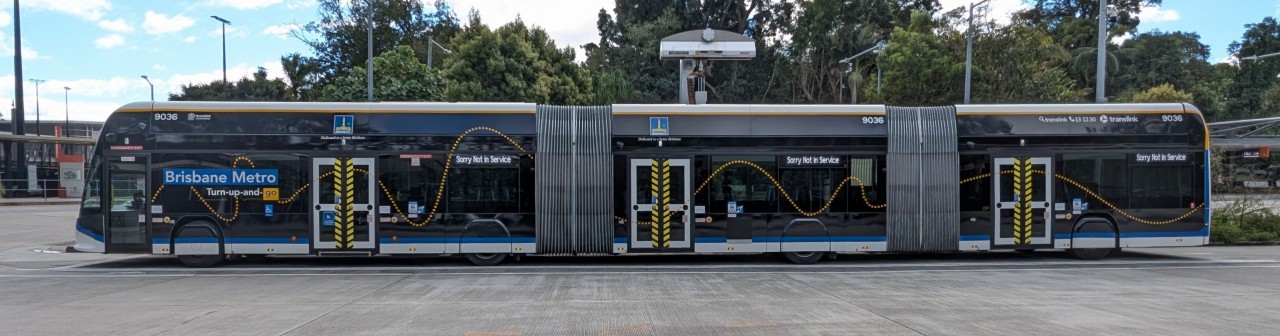
ブリスベンメトロ lighTram 25 TOSA
Brisbane Metro lighTram 25 TOSA
Brisbane Metro uses the HESS lighTram 25 TOSA, a 24.5-metre-long bi-articulated electric bus built in Switzerland. Combining tram-like passenger capacity with the flexibility of a bus, it forms the backbone of Brisbane’s next-generation public transport system.
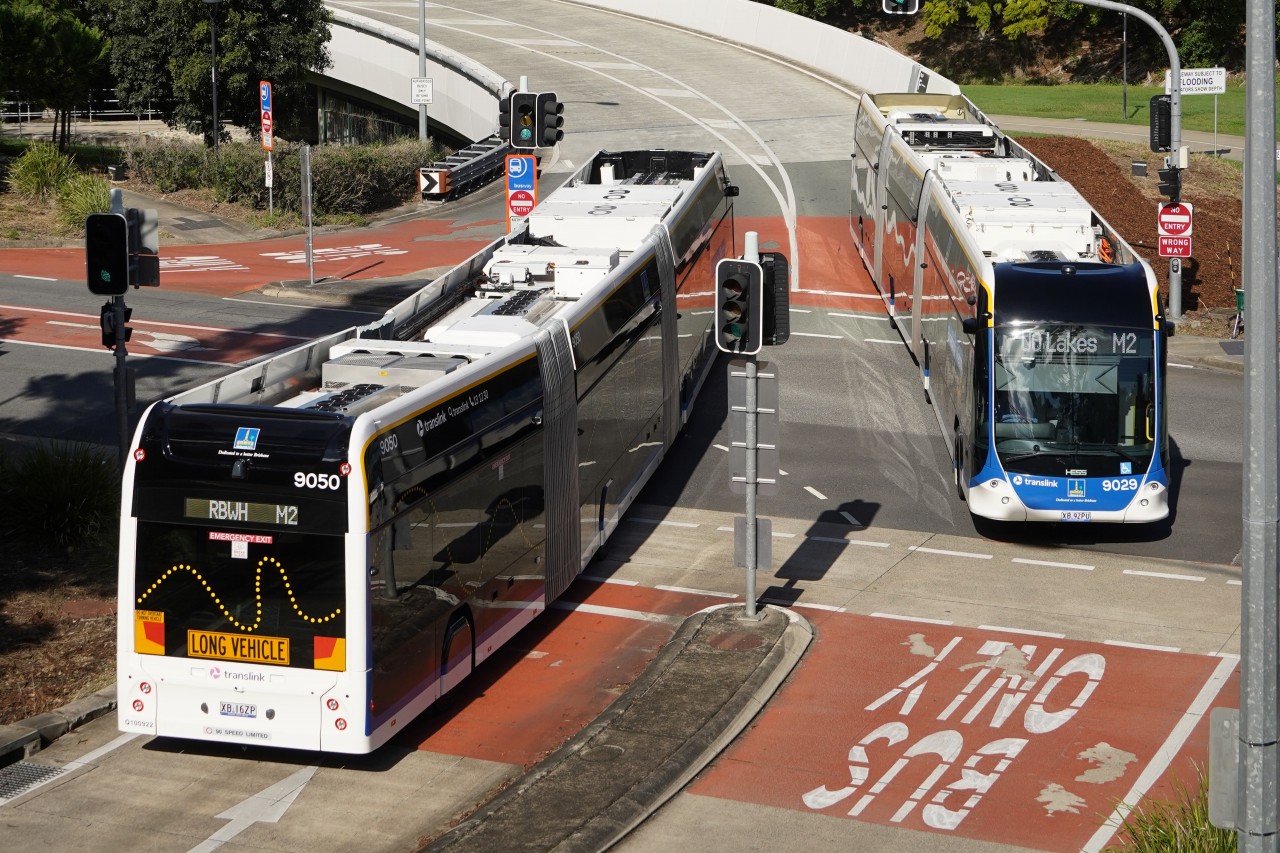
ブリスベンメトロの車両として採用されたlighTram 25 TOSAは、バスというよりライトレール(LRT)に近い近未来的な外観が特徴です。
前面は路面電車のようなデザインですが、バスとして運行するため後部は一般的なバスに近い形状となっており、前後で大きく異なるスタイルを持っています。
全長24.5mの3連接電気バスで、一度に多くの乗客を輸送できる高い輸送力を備えています。
The lighTram 25 TOSA, chosen for Brisbane Metro, features a futuristic appearance that resembles a light rail vehicle more than a conventional bus.
Its front end has a tram-like design, while the rear is styled more like a traditional bus, giving the vehicle a distinctly different look from front to back.
At 24.5 metres long, this bi-articulated electric bus offers high passenger capacity and is designed for efficient urban transport.
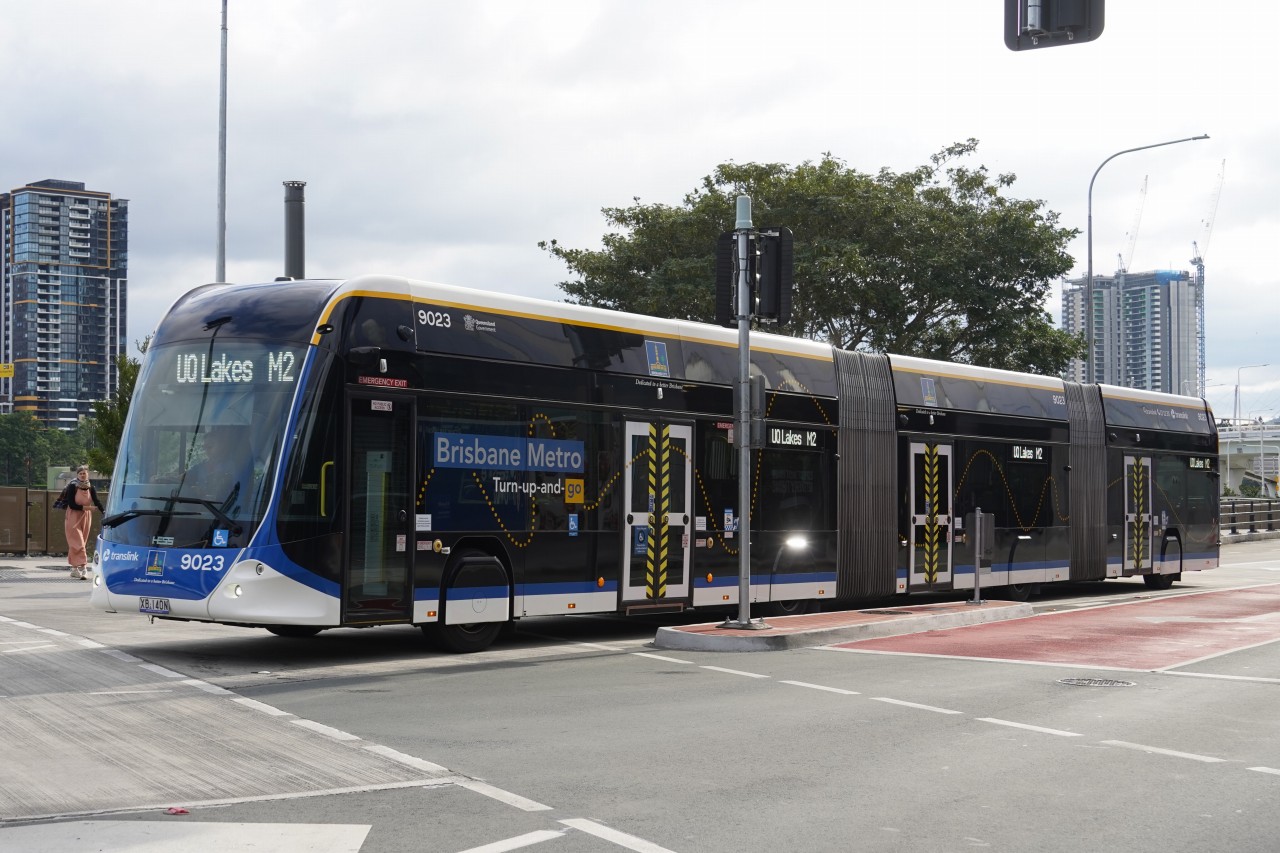
ブリスベンメトロの車両は、3連節の超低床車体で静かに電気走行する姿から、遠目にはライトレールそのものに見えます。
近年は架線を使わずバッテリーで走行するトラムも世界各地で増えており、車両上部に大きなパンタグラフが見当たらないことも珍しくありません。
そのため、事前知識がなければ多くの人が「新しいライトレール」と思ってしまうほど、鉄道車両に近い雰囲気を持っています。
With its bi-articulated low-floor design and quiet electric operation, the Brisbane Metro vehicle looks remarkably similar to a modern light rail vehicle at first glance.
In recent years, battery-powered trams that operate without overhead wires have become increasingly common around the world, making the absence of a pantograph less unusual.
As a result, many people unfamiliar with the system could easily mistake it for a new light rail service rather than a bus.
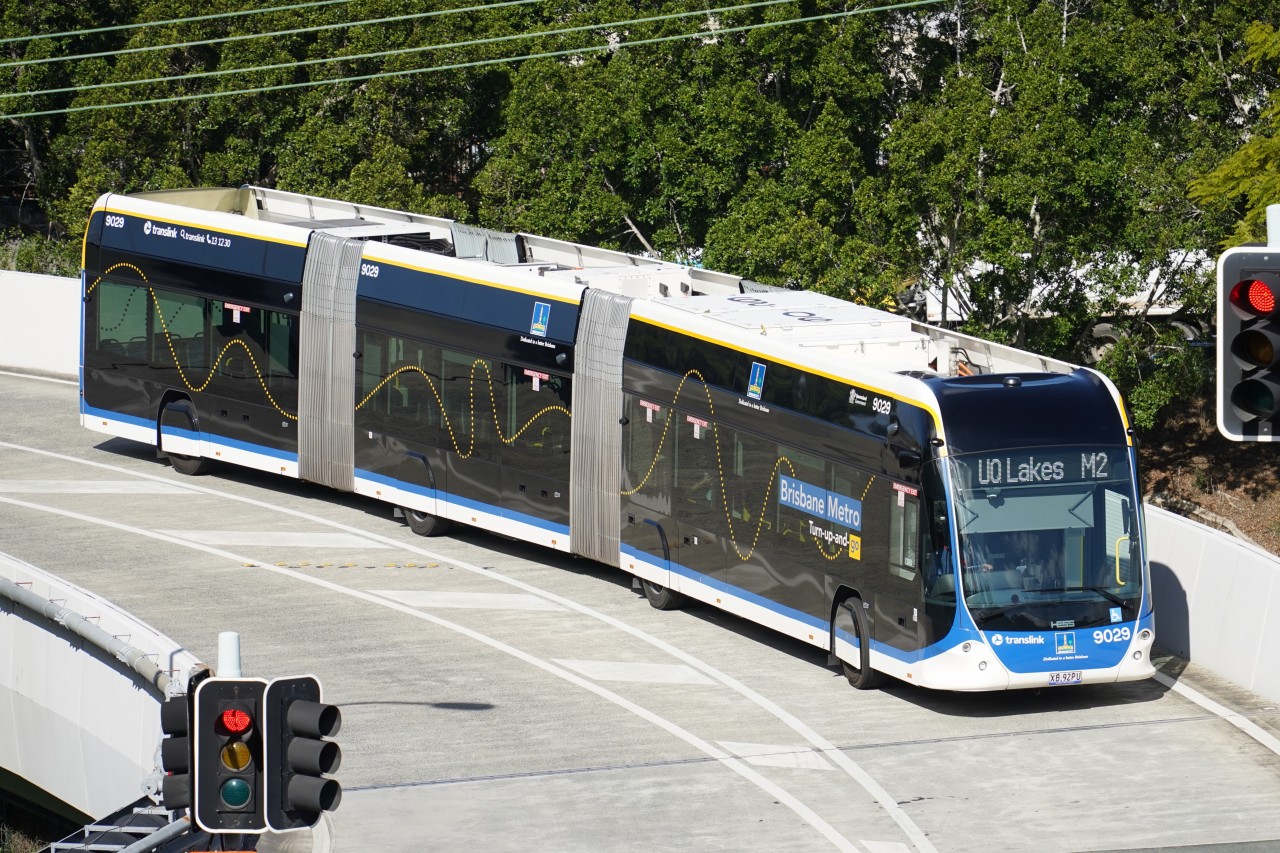
ブリスベンメトロの車両は、オーストラリアが日本と同じ左側通行であることから、日本の路線バスと同様に乗降扉が車体左側のみに設置されています。
一方で右側には乗降扉がなく、大きな窓が連続するすっきりとしたデザインとなっています。
ライトレールのような外観を持ちながらも、扉配置を見るとバスとして設計された車両であることが分かるポイントの一つです。
As Australia drives on the left, just like Japan, Brisbane Metro vehicles have all passenger doors located on the left-hand side of the vehicle.
The right-hand side has no passenger doors, resulting in a clean appearance with a continuous row of windows.
Although the vehicle closely resembles a light rail vehicle, its door arrangement clearly reflects its design as a bus.
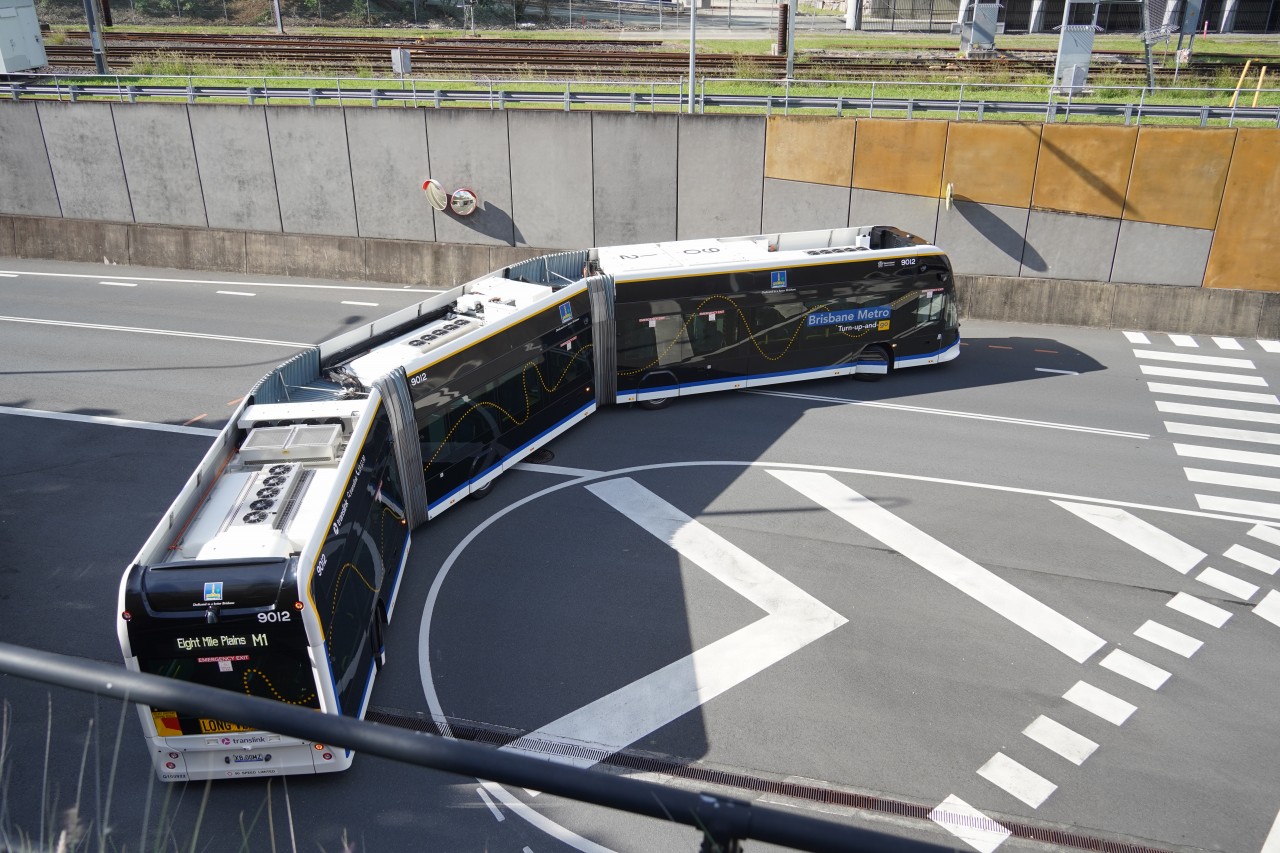
lighTram 25 TOSAは全長24.5mの3連節車体を持つため、運用は専用インフラが整備されたM1・M2系統に限られています。
M1・M2については、こちらのページで詳しく紹介しています。
M1・M2系統の紹介
これほど長い車体ながら小回り性能は非常に高く、連節部分を大きく曲げながらバスウェイの急カーブをスムーズに通過します。
実際に走行する様子を見ると、その長さからは想像できないほど軽快な動きを見せてくれます。
The lighTram 25 TOSA is 24.5 metres long with three articulated sections, so it is operated exclusively on the M1 and M2 routes, which use dedicated busway infrastructure.
You can learn more about the M1 and M2 routes here:
Introduction to the M1 and M2 Routes
Despite its impressive size, the vehicle offers excellent manoeuvrability and can negotiate surprisingly tight curves by flexing its articulated sections.
Watching it in operation, it appears far more agile than its length would suggest.
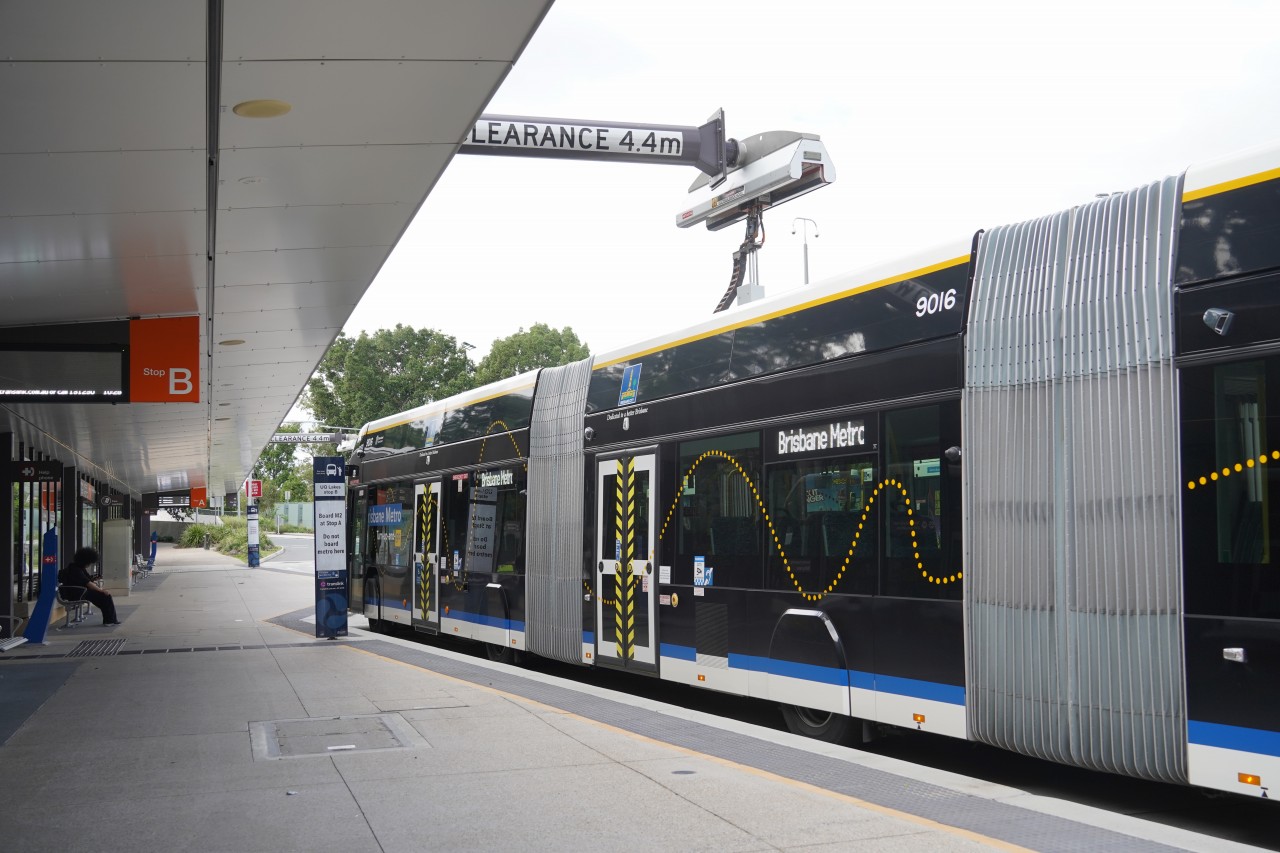
lighTram 25 TOSAは、エイトマイルプレーンズ近くにあるロシェデール車庫のほか、UQ Lakesやローマストリート付近などの終点にも急速充電設備が設置されています。
運行中は終点で数分間の充電を行いながら運用されており、車庫では夜間に低速充電が行われます。
急速充電には「TOSA(Trolleybus Optimisation du Systeme d’Alimentation)」と呼ばれるシステムを採用しており、停車すると車両上部の集電装置と充電設備が自動で接続されます。
架線を張る必要がないため景観への影響を抑えながら、高出力の充電を短時間で行えるのが特徴です。
UQ Lakesやローマストリート付近では、停車中にパンタグラフが上昇して充電する様子を見ることができます。
The lighTram 25 TOSA is supported by the Rochedale depot, located near Eight Mile Plains, as well as fast-charging facilities at key termini including UQ Lakes and near Roma Street.
During daily operation, the vehicles receive rapid charges at route termini, while slower overnight charging takes place at the depot.
The system uses TOSA (Trolleybus Optimisation du Systeme d’Alimentation) technology, which automatically connects the vehicle to a charging unit when it stops.
This allows high-power charging without the need for overhead wires, reducing visual impact while maintaining efficient operation.
At locations such as UQ Lakes and near Roma Street, passengers can often watch the pantograph rise automatically to recharge the vehicle during its layover.
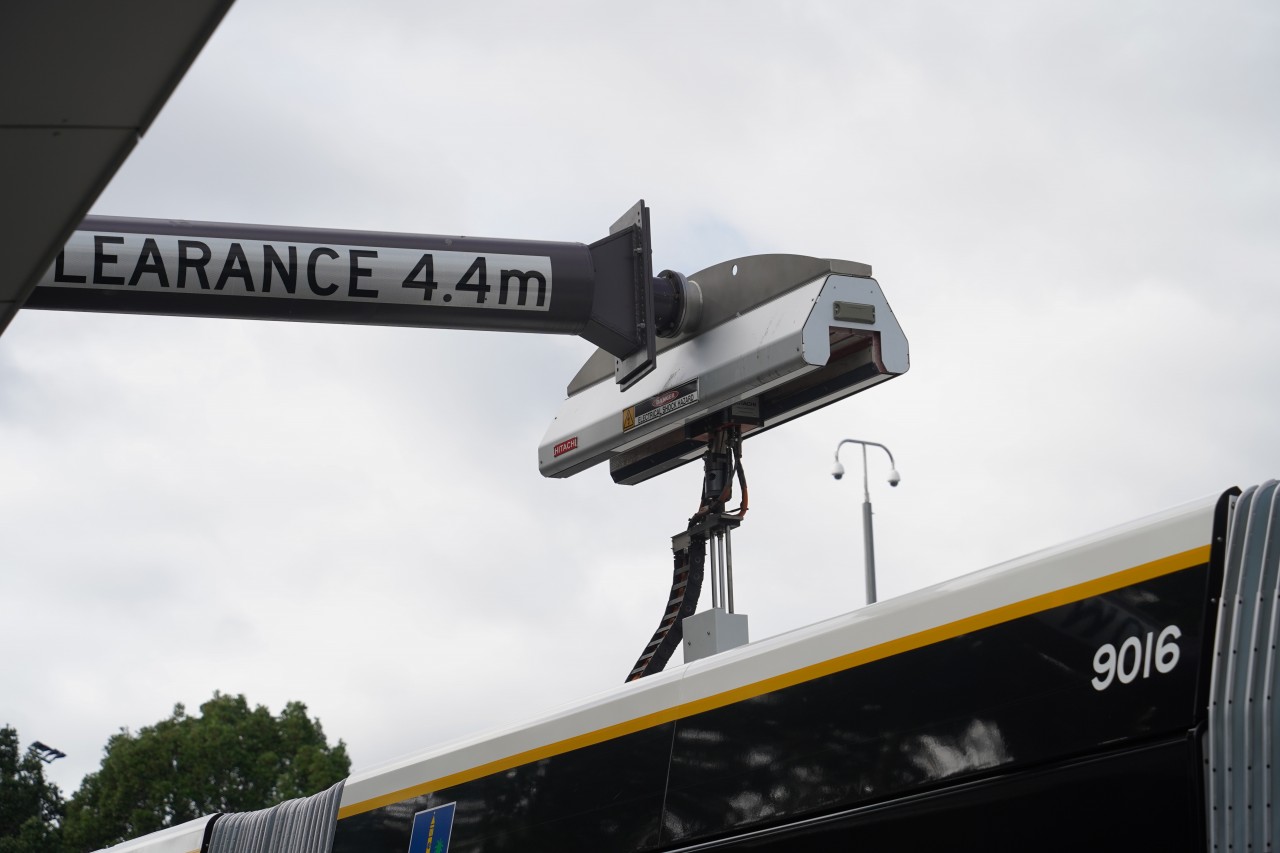
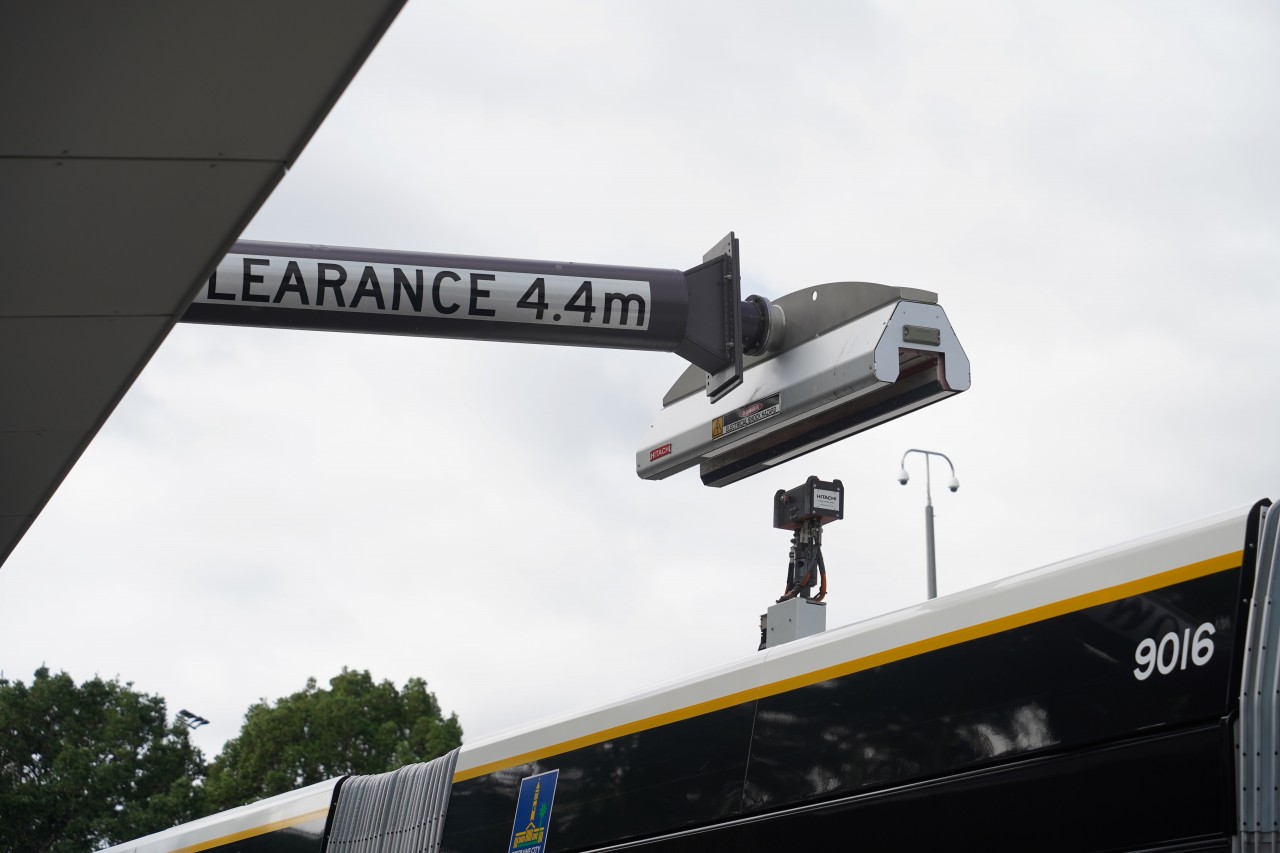
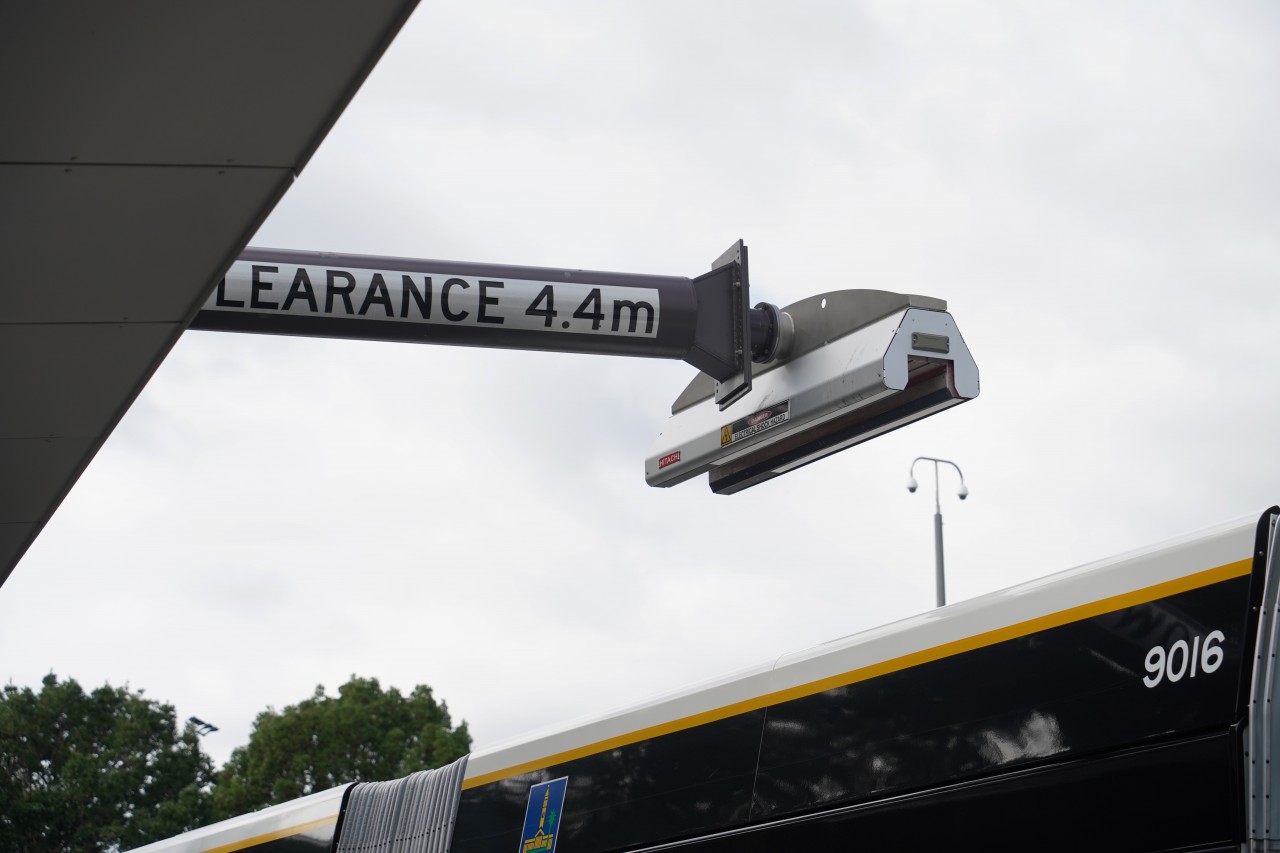
急速充電設備には日立製作所製の機器が採用されており、充電設備には日立のロゴを確認することができます。
充電時には車両上部に搭載されたパンタグラフが使用されますが、走行中は横向きに折りたたまれた状態となっています。
充電を開始する際は、まずパンタグラフが立ち上がり、その後さらに上方向へ伸びて充電設備との接続を行います。
接続が完了すると短時間で大電力の充電が行われ、充電終了後は逆の手順でパンタグラフが収納されます。
鉄道車両のようなパンタグラフの動作を間近で観察できることも、lighTram 25 TOSAの見どころの一つです。
The rapid charging system uses equipment manufactured by Hitachi, and the Hitachi logo can be seen on the charging units.
Charging is carried out using a roof-mounted pantograph, which remains folded sideways while the vehicle is in service.
When charging begins, the pantograph first pivots upright and then extends upward to connect with the charging infrastructure.
Once connected, high-power charging is completed in a short time before the pantograph retracts and folds back into its travel position.
The ability to watch a tram-style pantograph in operation is one of the most interesting features of the lighTram 25 TOSA.
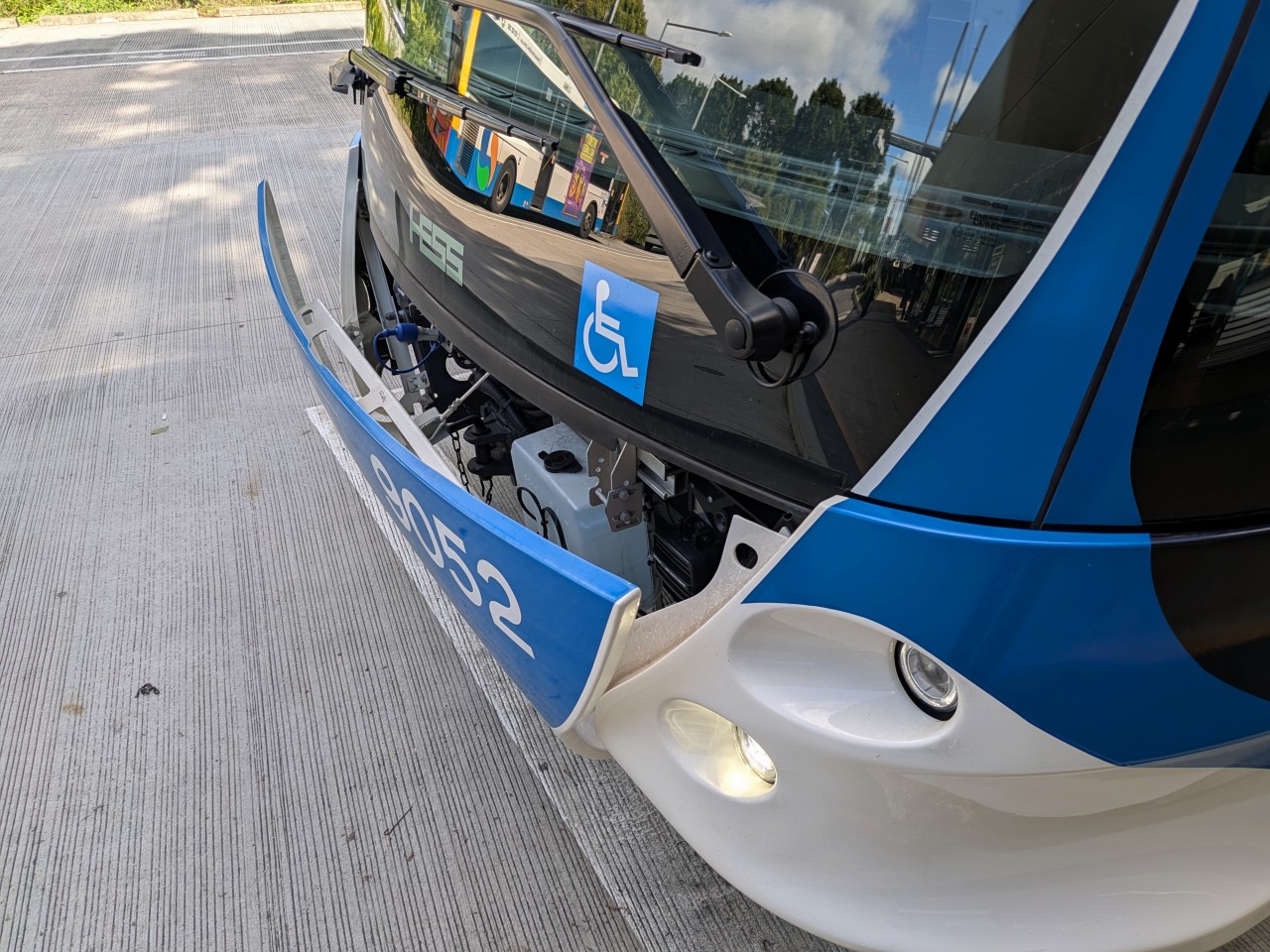
lighTram 25 TOSAの前面には大きなフロントパネルが設けられており、このパネルは比較的簡単に取り外せる構造となっています。
パネルの内側には電装機器などが配置されており、整備時には前面から直接アクセスできるため、効率的なメンテナンスが可能です。
普段はスタイリッシュなデザインの一部として見えますが、整備性も考慮した実用的な設計となっています。
The lighTram 25 TOSA features a large front panel that can be removed relatively easily when maintenance is required.
Electrical and control equipment is located behind this panel, allowing technicians to access key components directly from the front of the vehicle.
While it forms part of the vehicle’s sleek appearance, the design also improves maintenance efficiency and serviceability.
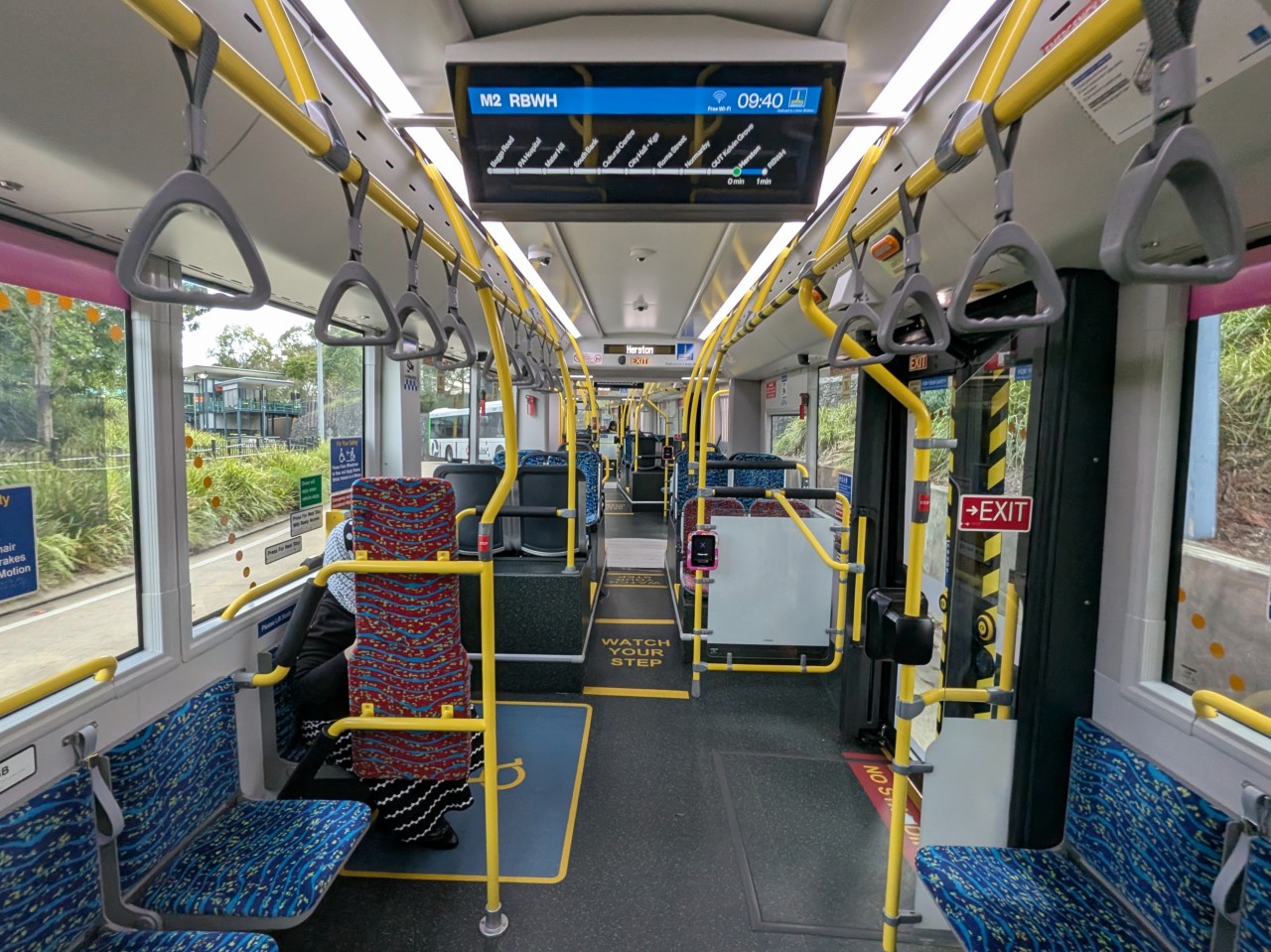
lighTram 25 TOSAの車内は、前から後ろまで段差のない超低床構造となっており、3つの車体をつなぐ連節部分もスムーズに行き来できます。
広い通路と大きな窓を備えた開放的な空間は、一般的な路線バスというよりライトレールや最新型トラムに近い印象を受けます。
車内中央部には広い立席スペースが確保されており、多くの乗客を効率よく輸送できる設計となっています。
実際に乗車すると、事前に説明されなければバスとは気付かないほど鉄道車両に近い雰囲気を感じることができます。
The interior of the lighTram 25 TOSA features a fully low-floor layout with no steps from end to end, allowing passengers to move freely through all three articulated sections.
Its wide aisles, large windows and spacious design create an atmosphere that feels more like a modern light rail vehicle or tram than a conventional bus.
Large standing areas in the centre sections help maximise passenger capacity and improve passenger flow.
For many first-time passengers, the interior feels so rail-like that they may not realise they are riding a bus unless they are told in advance.
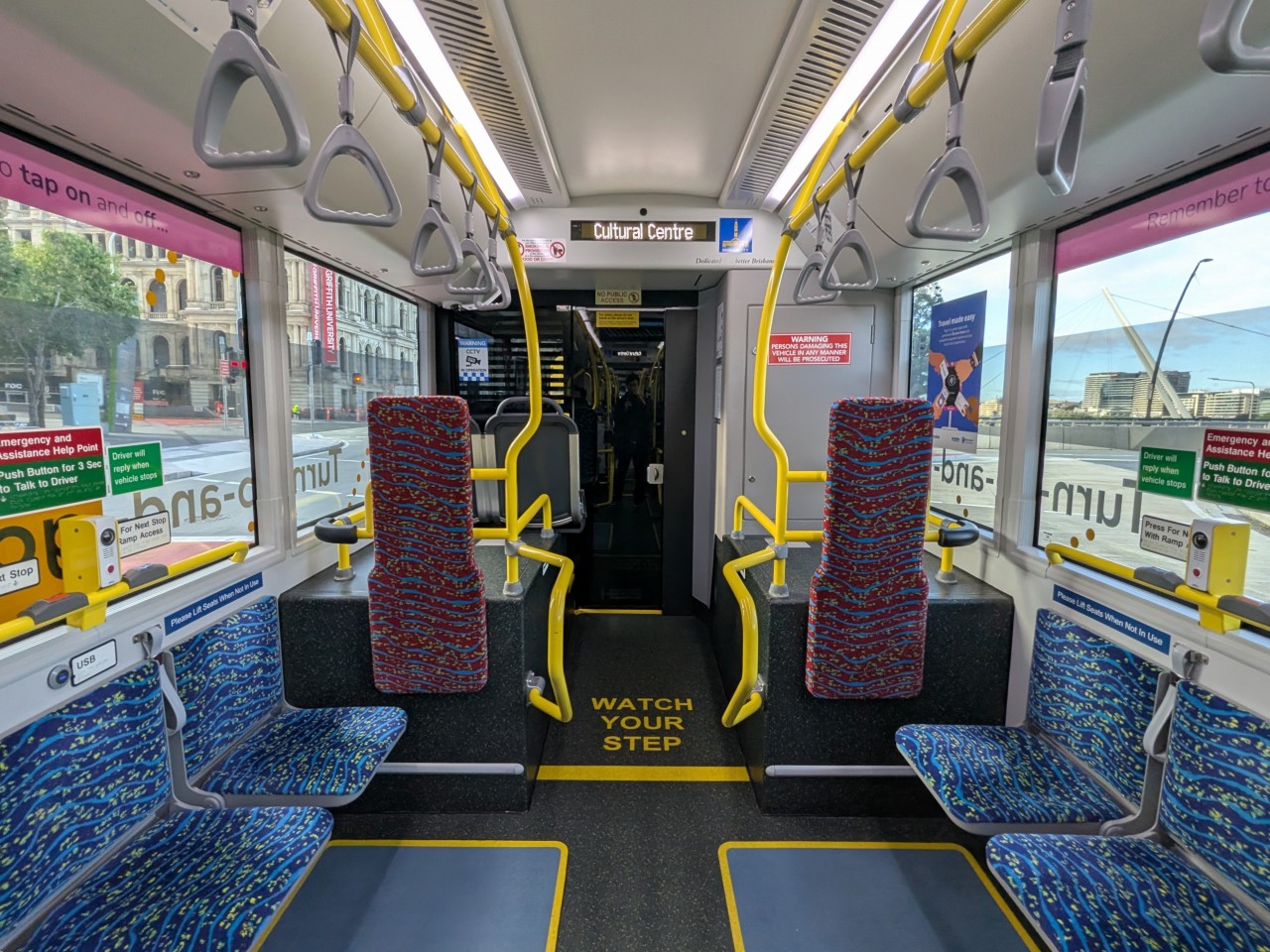
車内前方部分は、運転席と客室が完全に仕切られているのが特徴です。
一般的な路線バスのように運転席が客室に開かれているのではなく、鉄道車両に近い独立した運転室となっており、ライトレールらしい雰囲気を感じることができます。
運転室へは専用の仕切り扉を通じて出入りする構造となっており、乗客が運転席へ直接立ち入ることはできません。
また、終点では乗務員が反対側の運転台へ移動するため車内を通り抜けることが多く、その際には仕切り扉が開閉される様子を見ることができます。
The front section of the passenger compartment is characterised by a fully enclosed driver's cab separated from the passenger area.
Rather than the open layout commonly found on buses, the vehicle features an independent cab similar to those used on rail vehicles, enhancing its light rail-like atmosphere.
Access to the cab is provided through a dedicated partition door, preventing direct entry from the passenger area.
At route termini, drivers often walk through the vehicle to reach the cab at the opposite end, so passengers can frequently see the partition door being opened and closed during crew changes.
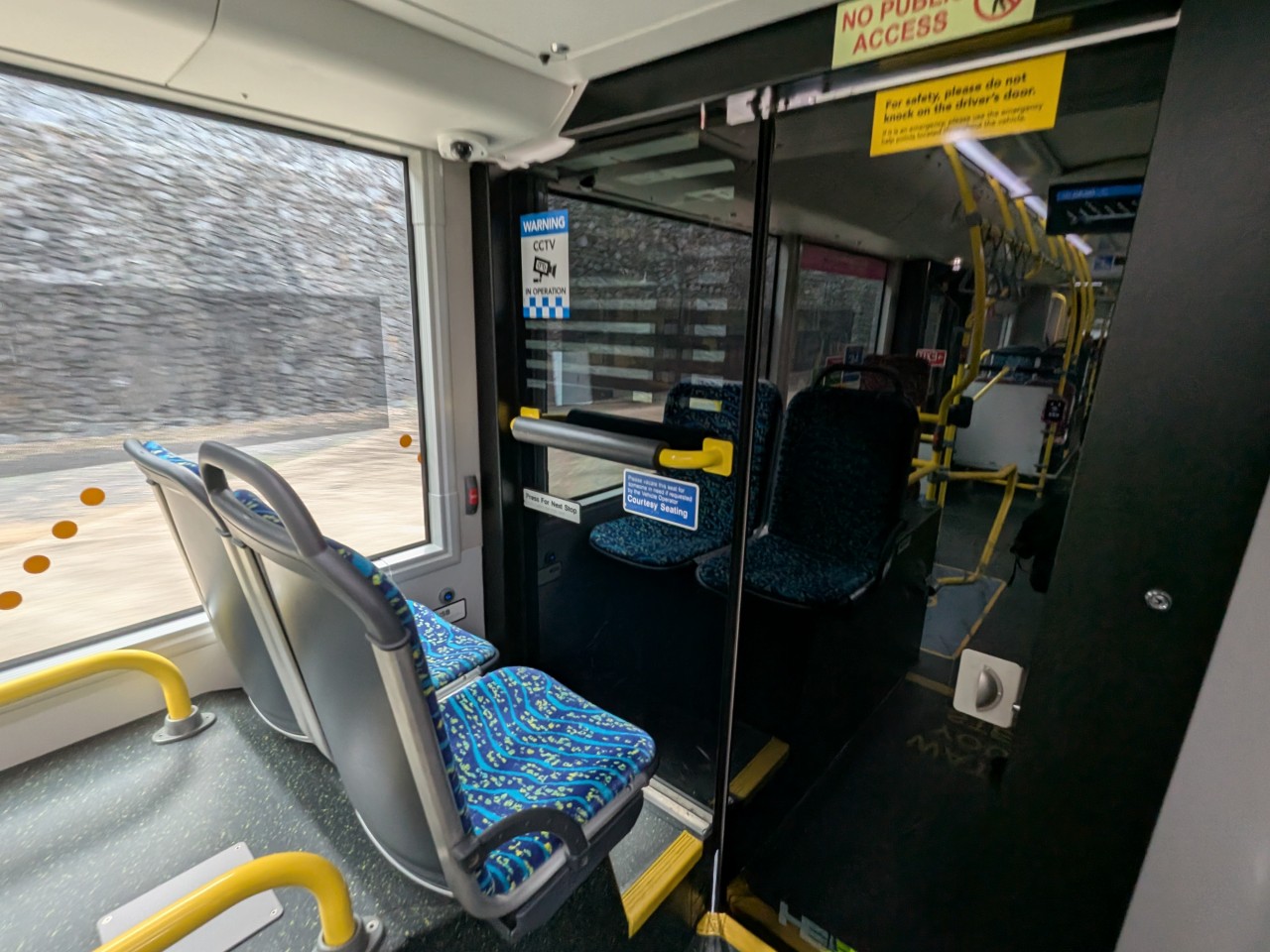
車内最前部には前面展望席が設けられており、走行中の景色を楽しむことができます。
日本では一般路線バスの低床化や機器配置・燃料タンクのレイアウト変更などにより、前面展望席を持つ車両は減少傾向にあります。
一方、ブリスベンではlighTram 25 TOSAだけでなく、一般路線バスも基本的に前面展望席が設けられており、混雑時でなくても最前列を目指して乗車する利用者が少なくありません。
ただしlighTram 25 TOSAでは運転室と客室の間に仕切りガラスが設置されており、ガラスにはブラインド状の横線が入っているため、前方の景色は隙間越しに「なんとなく見える」といった程度です。
At the very front of the passenger compartment is a forward-facing observation area where passengers can enjoy the view ahead while travelling.
In Japan, such seats have become less common on conventional city buses due to the widespread adoption of low-floor designs and changes in equipment and fuel tank layouts.
In Brisbane, however, front-view seating is provided not only on the lighTram 25 TOSA but also on most regular route buses, and many passengers choose these seats even when services are not crowded.
On the lighTram 25 TOSA, a partition window separates the driver's cab from the passenger area, and horizontal blind-like lines on the glass mean that the forward view is only partially visible through the gaps.
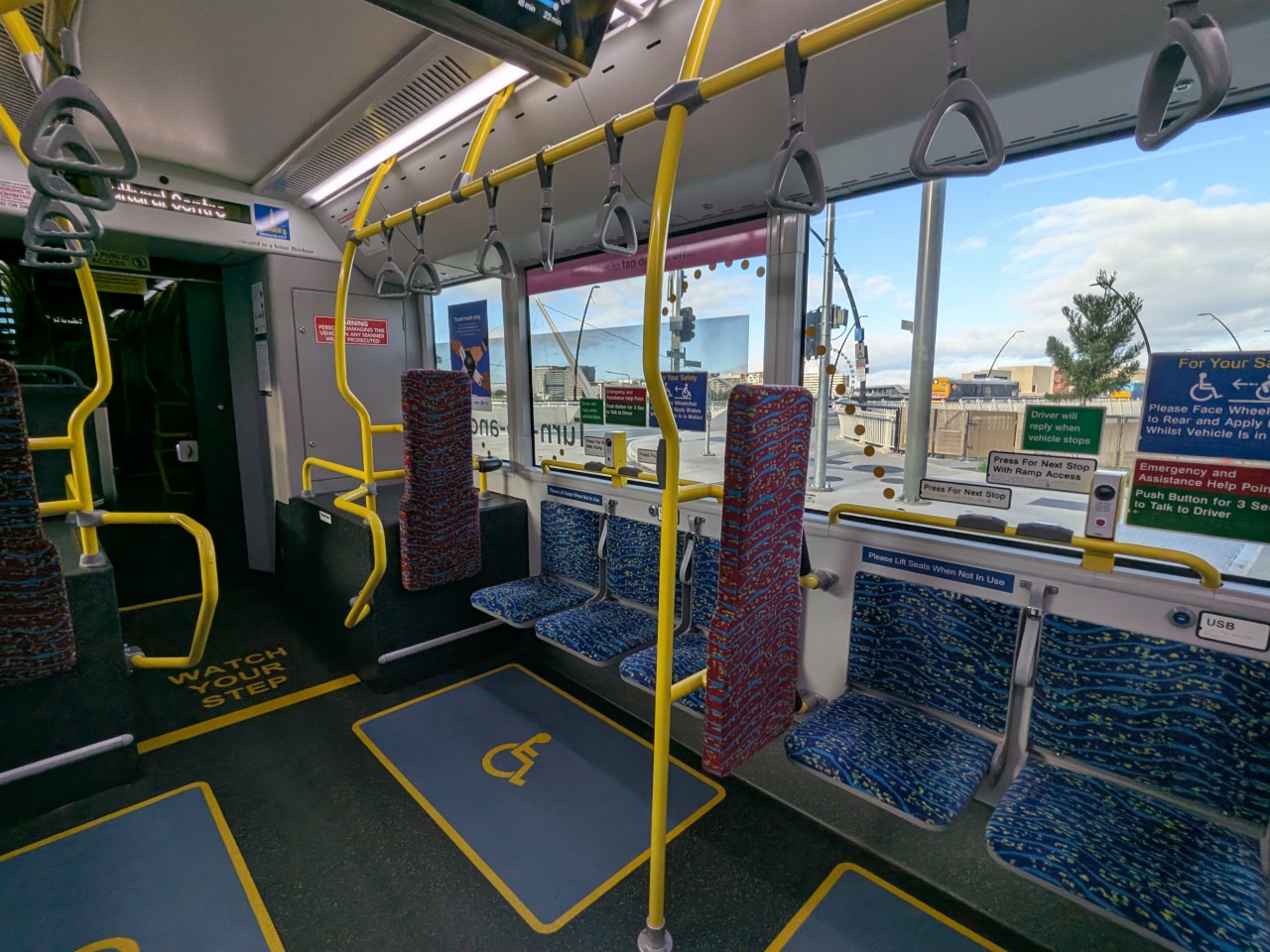
車内前方には複数の車椅子・ベビーカースペースが設けられており、大型車両ならではの広い多目的エリアが確保されています。
これらのスペースが前方に多く配置されているのは、乗務員が状況を確認しやすく、必要に応じて介助を行いやすくするためと考えられます。
一方で、lighTram 25 TOSAは段差のない超低床構造を採用しており、停留所では車椅子用スロープも自動で展開されます。
そのため実際には乗務員の介助を必要とせず、利用者が自力でスムーズに乗降している場面を見かけることも少なくありません。
バリアフリー設備が車両設計の段階から充実していることも、この車両の大きな特徴の一つです。
The front section of the vehicle contains several wheelchair and stroller spaces, providing a large multipurpose area made possible by the vehicle's generous dimensions.
Their location near the front likely allows drivers to monitor the area more easily and provide assistance when required.
However, the lighTram 25 TOSA features a completely low-floor design, and an accessibility ramp is deployed automatically at stops.
As a result, many passengers using wheelchairs are able to board and alight independently without requiring assistance from the driver.
This strong focus on accessibility is one of the key design features of the vehicle.
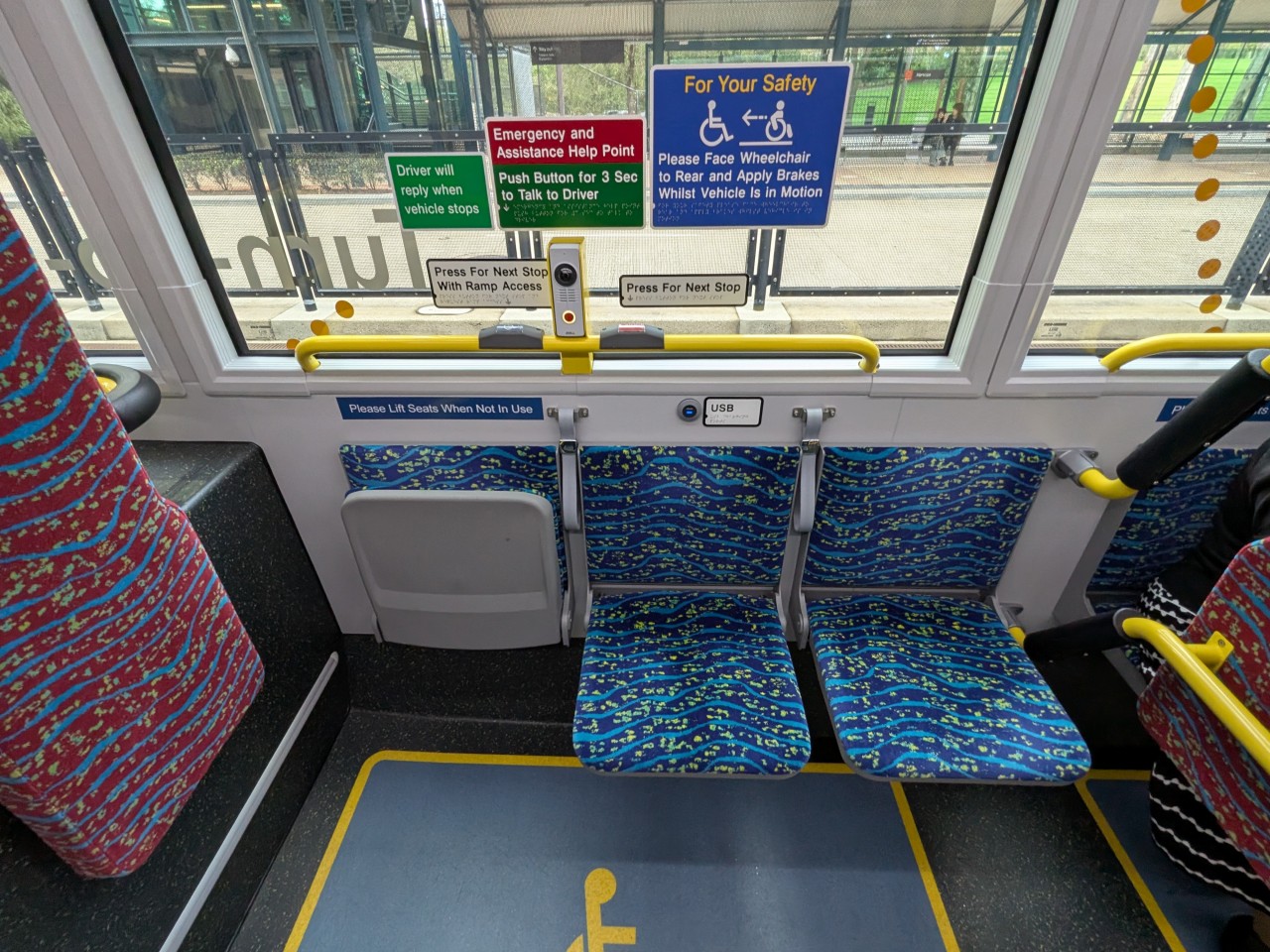
車椅子スペースには跳ね上げ式の座席が設置されており、車椅子利用者がいない時は一般の乗客も座席として利用することができます。
必要に応じて座席を折りたたむことで広いスペースを確保できるため、車椅子やベビーカー、大きな荷物にも柔軟に対応しています。
また、車椅子スペース付近には乗務員と通話できるインターホンが設置されており、必要な際には直接連絡を取ることができます。
このほか、USB充電設備も設置されており、移動中にスマートフォンなどを充電することが可能です。
The wheelchair areas are equipped with fold-up seats that can be used by other passengers when the space is not required by wheelchair users.
When needed, the seats can be folded away to create a larger area for wheelchairs, strollers, or bulky luggage.
An intercom is also provided nearby, allowing passengers to communicate directly with the driver when assistance is required.
In addition, USB charging ports are available, enabling passengers to charge smartphones and other devices while travelling.
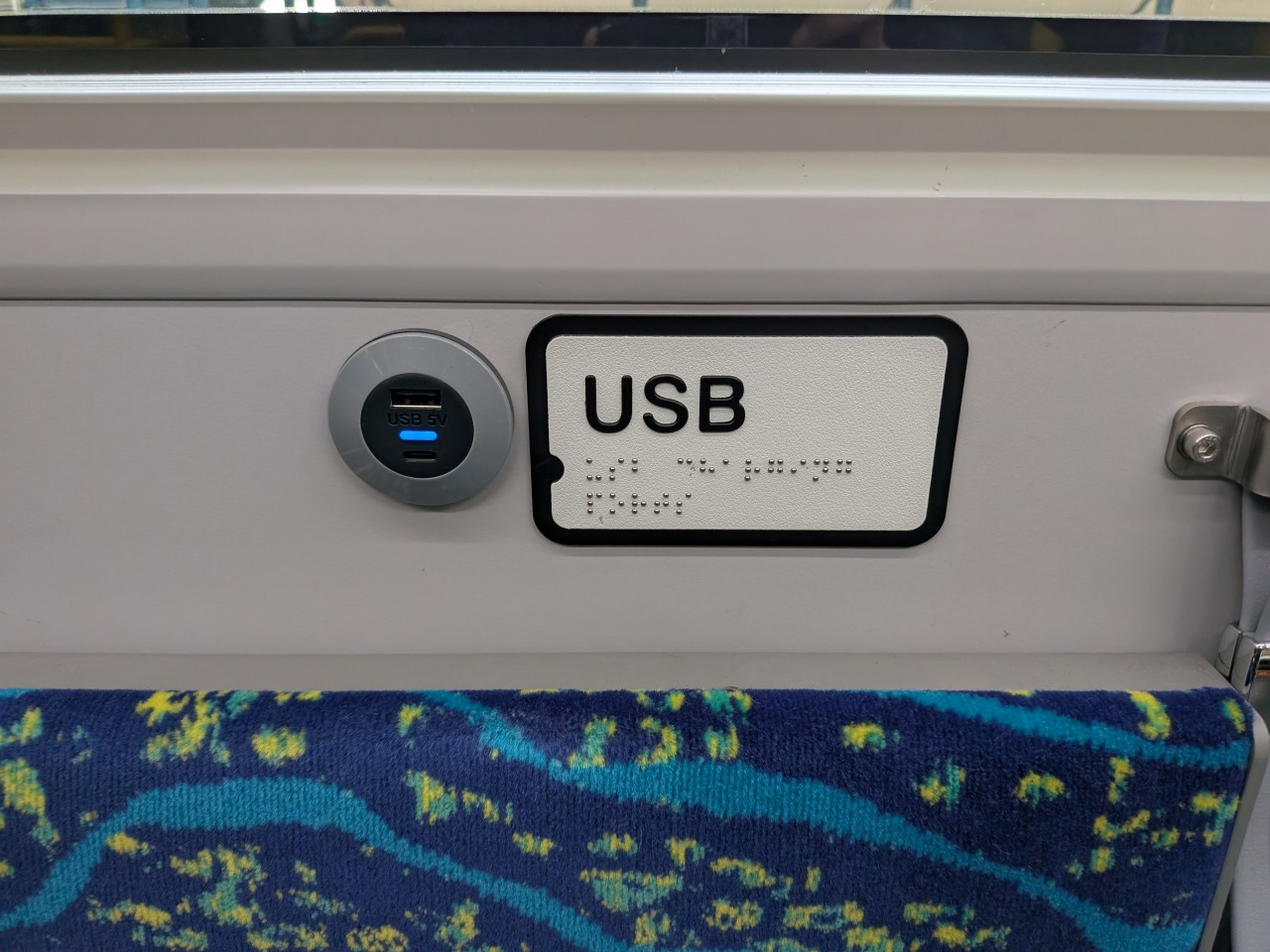
各座席には充電用USBユニットが設置されており、USB Type-AとUSB Type-Cの両方が1つのユニットにまとめられています。
利用するケーブルに応じてどちらの端子も使用できるため、さまざまなスマートフォンやモバイル機器に対応しています。
公共交通機関ではUSB端子そのものは珍しくありませんが、Type-AとType-Cを1つのユニットにまとめて全座席に設置している例は比較的珍しく、利便性の高さが感じられます。
オーストラリアではキャッシュレス決済が広く普及しており、乗車券の購入や決済、各種サービスの利用にスマートフォンを使う機会も多いため、こうした充電設備への需要は高いと考えられます。
Each seat is equipped with a USB charging unit featuring both a USB Type-A port and a USB Type-C port in a single module.
This allows passengers to charge a wide range of smartphones and mobile devices without needing a specific type of connection.
While onboard USB charging is becoming increasingly common on public transport, providing both Type-A and Type-C ports together in a single unit at every seat is relatively uncommon and offers excellent convenience.
As cashless payment is widely used in Australia and smartphones are commonly relied upon for payments, ticketing and everyday services, there is likely strong demand for onboard charging facilities such as these.
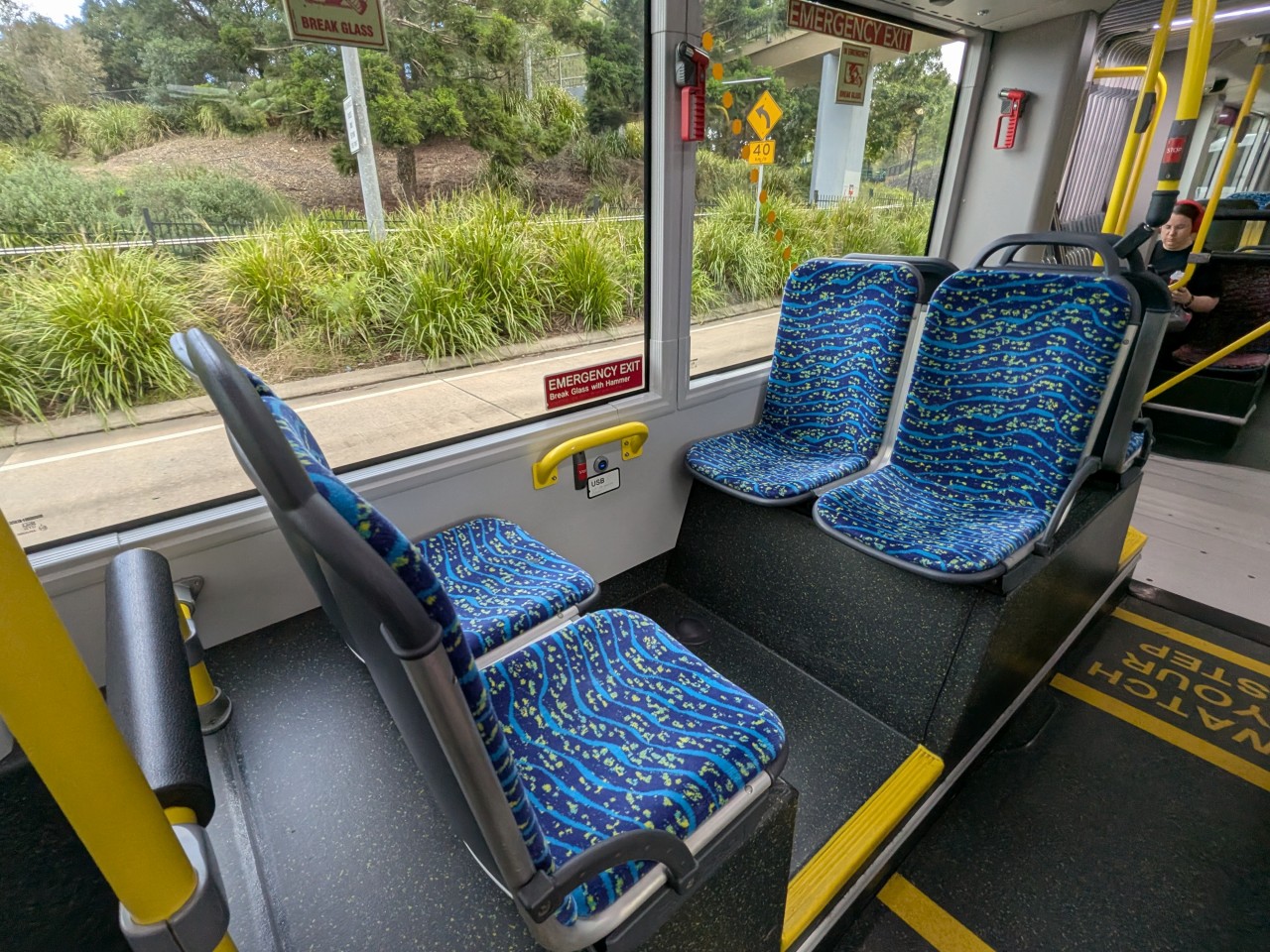
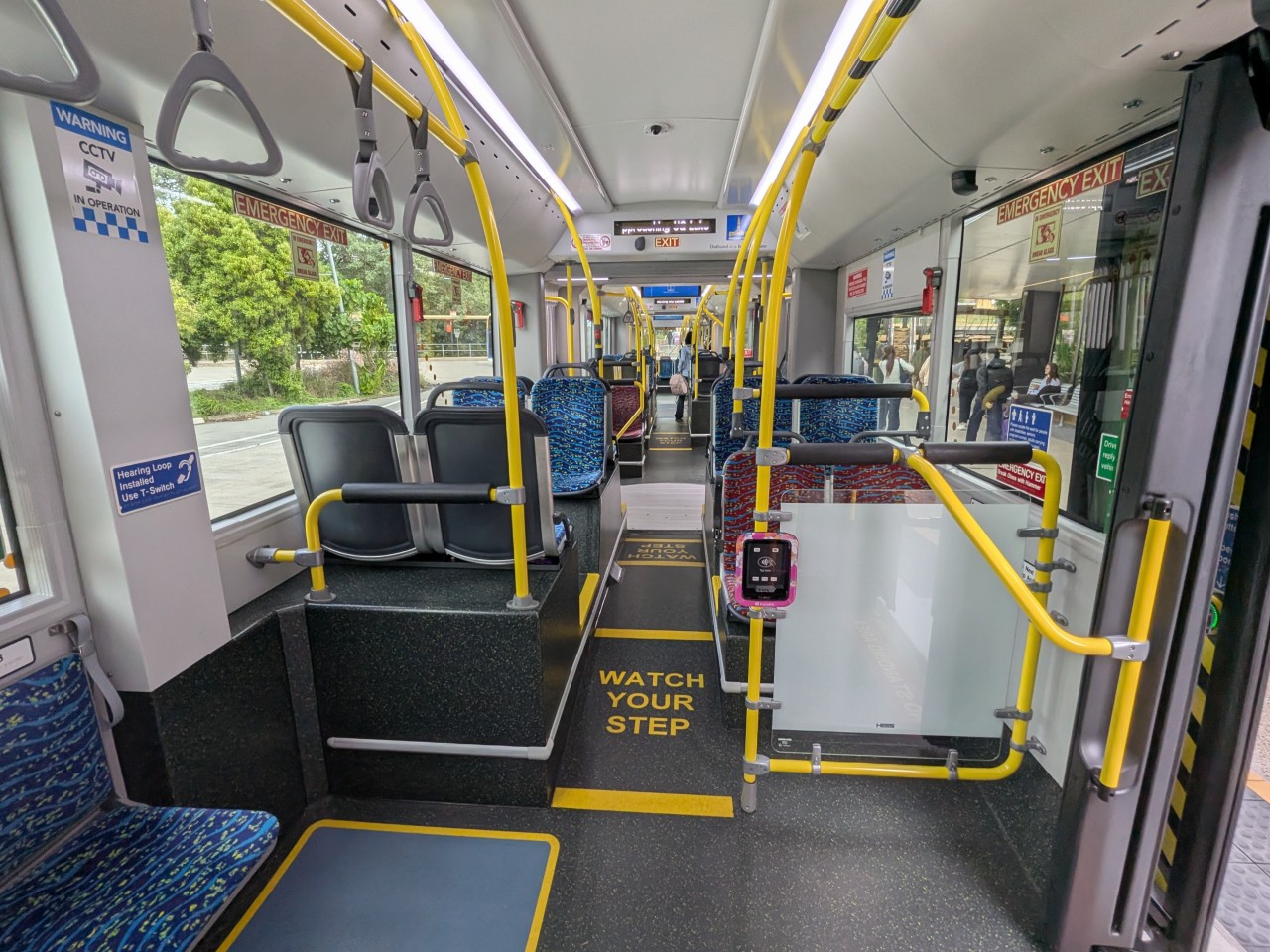
車内にはライトレールやトラムを思わせるボックスシートが設置されています。
向かい合わせに配置された座席は一般的な路線バスよりも鉄道車両に近い雰囲気を演出しており、車内がよりライトレールらしく感じられます。
これらの座席は超低床構造によって生じるタイヤハウス上のスペースを有効活用したもので、座席の下には車輪が収まっています。
低床化による制約をうまく活かしながら着席スペースを確保しており、機能性と快適性を両立した設計となっています。
The interior features box-style seating arrangements similar to those commonly found on light rail vehicles and trams.
These face-to-face seats create an atmosphere that feels more like a rail vehicle than a conventional bus, further enhancing the light rail impression.
The seating is positioned above the wheel housings, making effective use of the space created by the vehicle’s fully low-floor design.
By turning the raised wheel arch areas into seating, the vehicle maximises passenger capacity while maintaining accessibility and comfort.
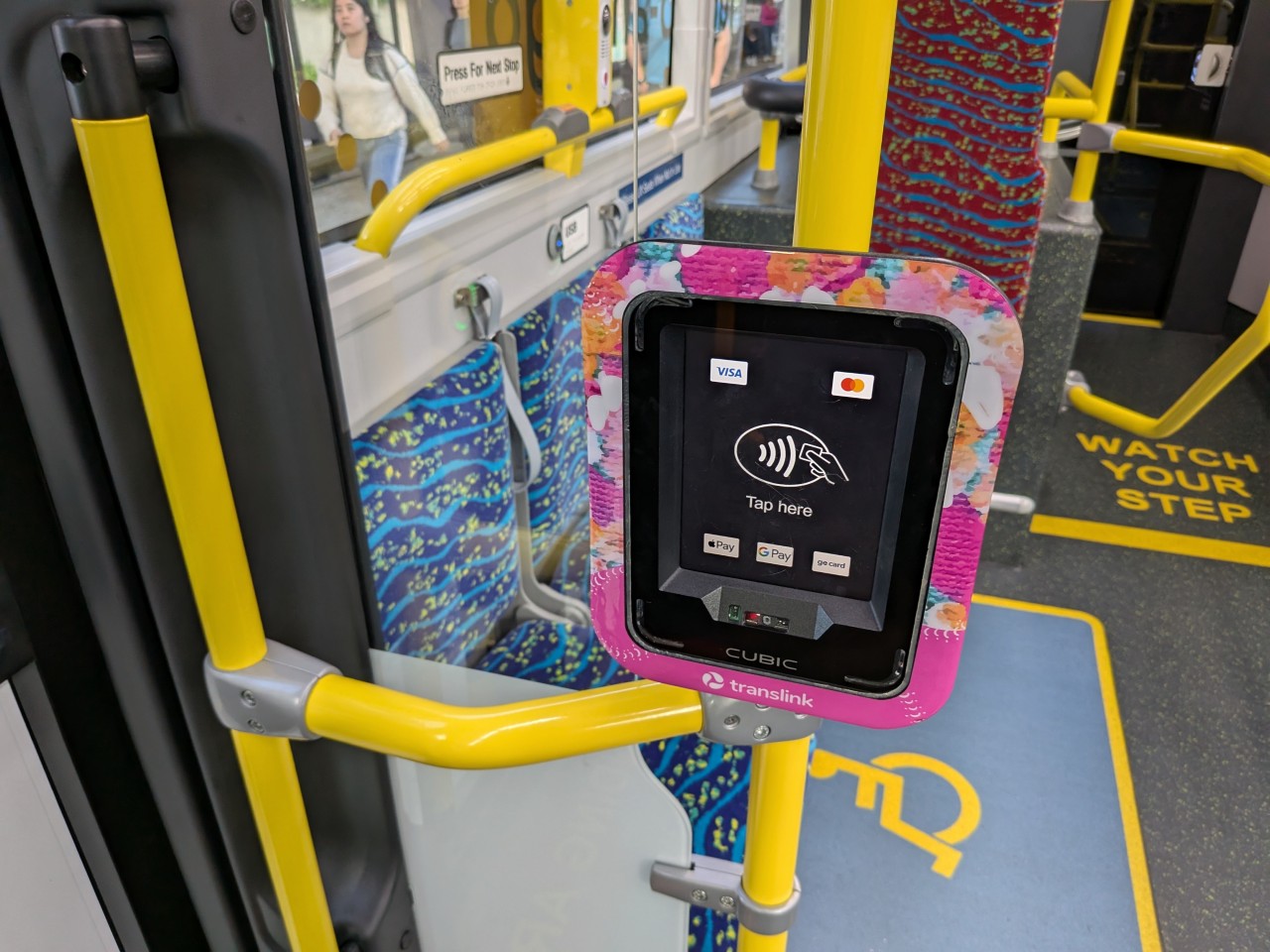
各扉の横にはキャッシュレス決済機が設置されており、乗降時に利用できます。
この端末は交通系ICカードのgo cardに加え、クレジットカードやデビットカード、スマートフォンやスマートウォッチなどのタッチ決済にも対応した一体型となっています。
乗車時だけでなく降車時にもタッチが必要なため、利用者は最寄りの端末を使ってスムーズに乗降できます。
なお、現金での支払いには対応しておらず、利用には何らかのキャッシュレス決済手段が必要です。
ブリスベンではキャッシュレス化が進んでおり、車内でもその方針が徹底されています。
Cashless payment validators are installed beside each doorway, allowing passengers to tap on and off conveniently when boarding and alighting.
These integrated devices support go card smartcards as well as contactless payments using credit cards, debit cards, smartphones and smartwatches.
Because passengers are required to tap both when entering and leaving the vehicle, multiple validators help speed up passenger flow through all doors.
Cash payments are not accepted, so passengers must use a supported cashless payment method.
The system reflects Brisbane’s strong adoption of cashless travel and modern fare collection technology.
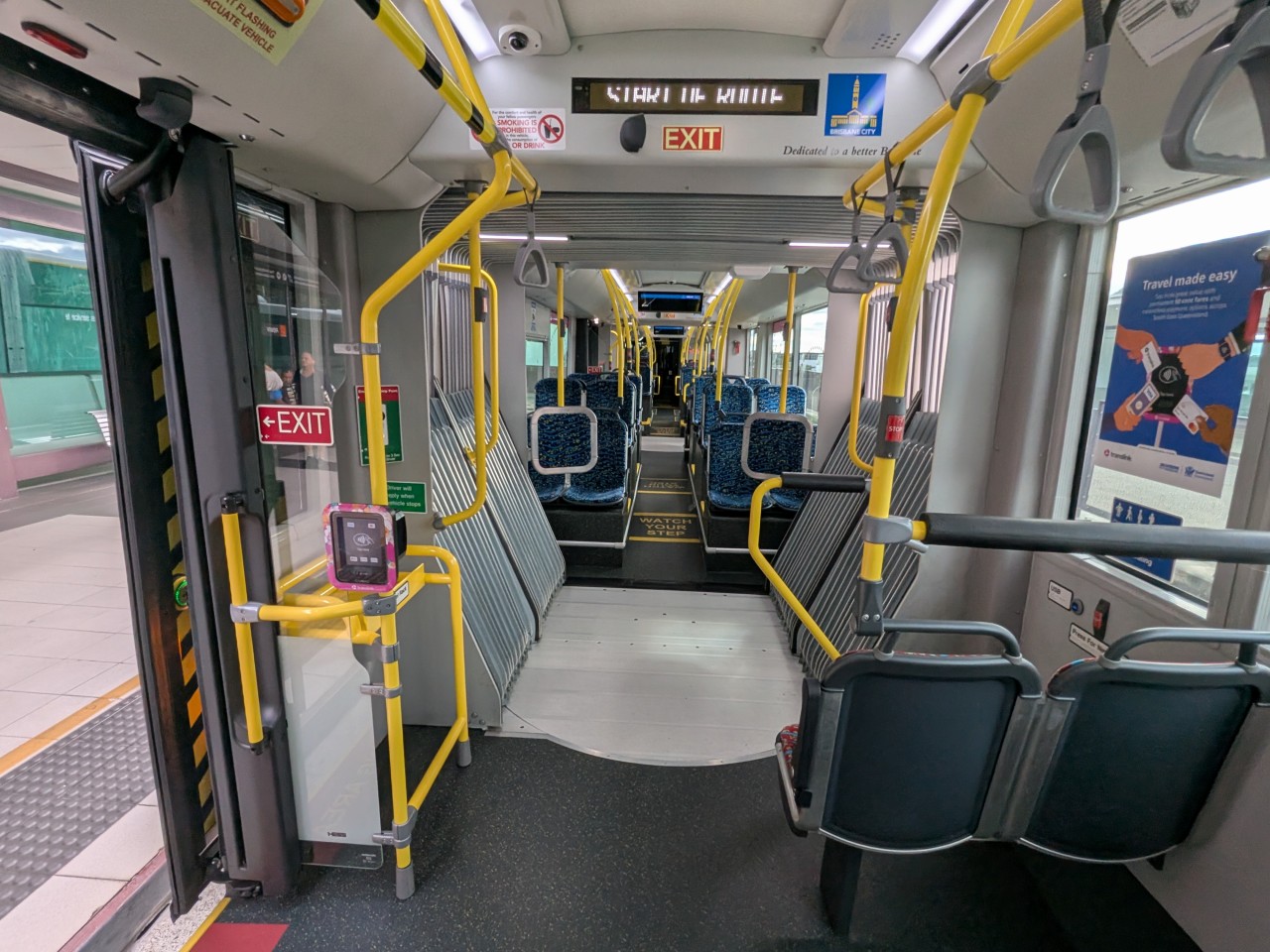
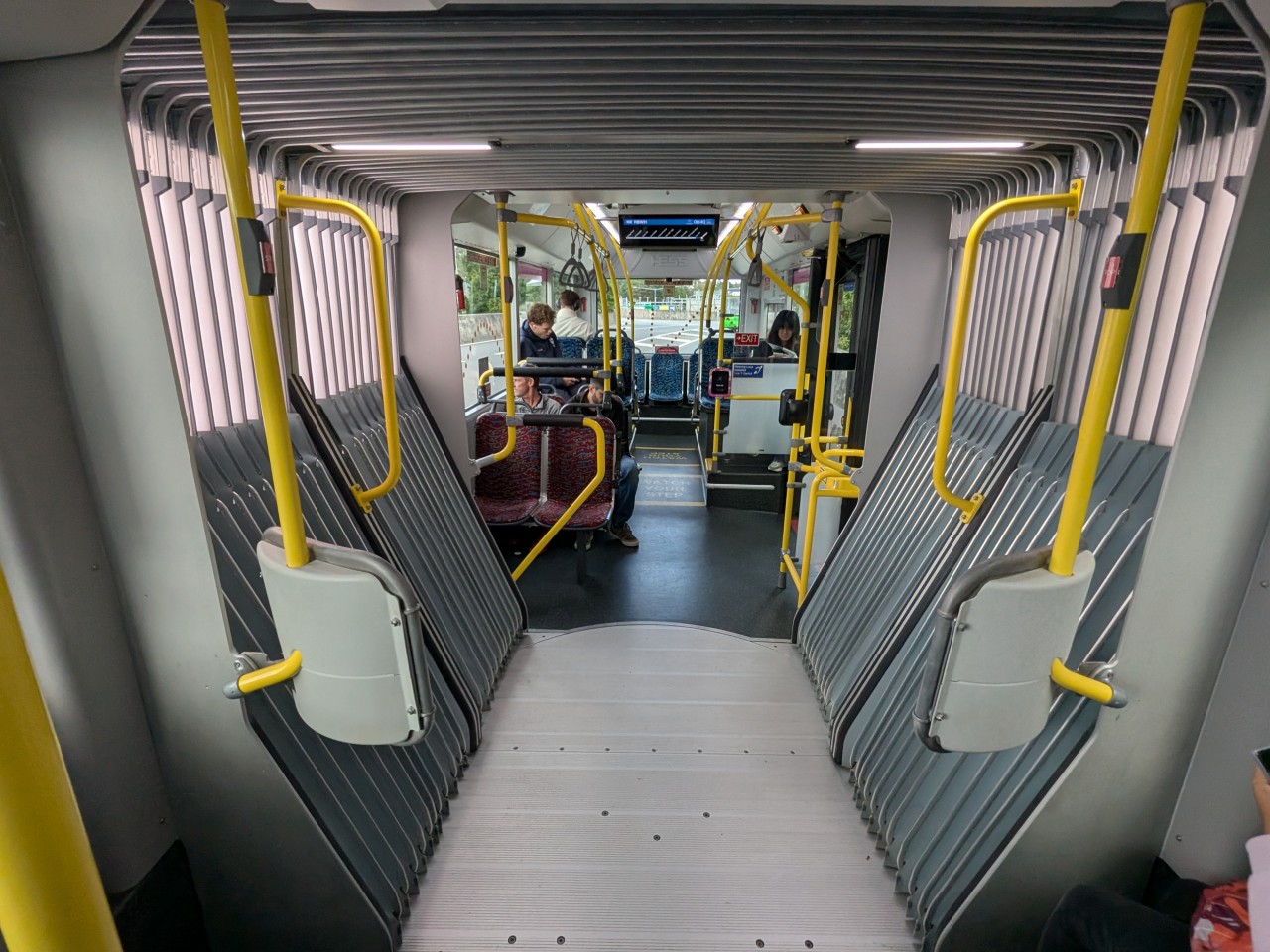
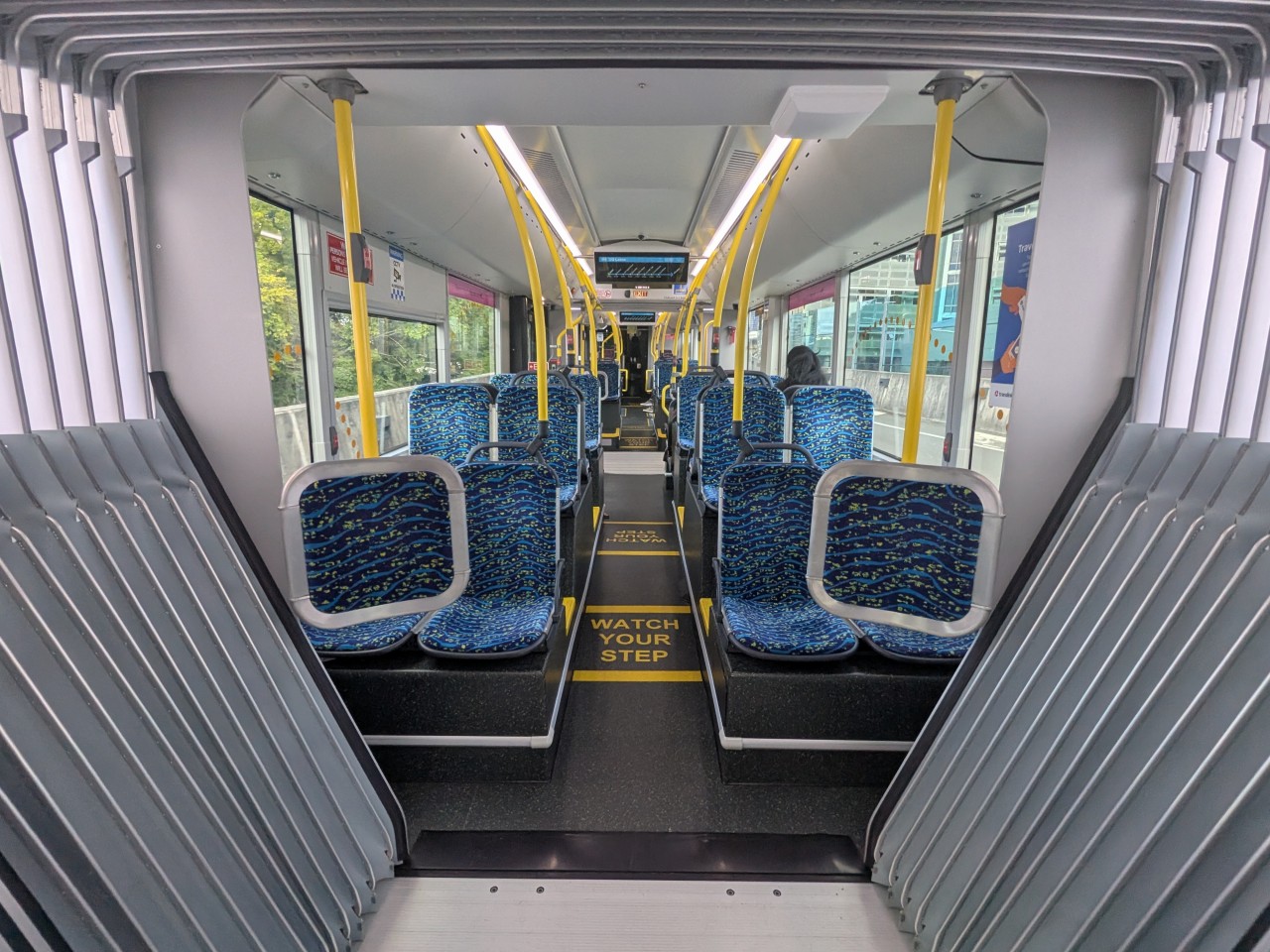
2か所の連接部分は主に立席スペースとして活用されています。
床面はフラットに保たれており、乗客は車両内をスムーズに移動することができます。
特に混雑時には多くの乗客が連接部分に立つことで車内全体に分散し、高い輸送力を支えています。
大きく湾曲する連接部分を間近で見ることができるのも特徴で、カーブでは各車体が滑らかに追従する様子を観察できます。
一般的なバスではあまり見られない広々とした空間は、ライトレールやトラムのような雰囲気をさらに強く感じさせます。
The two articulated sections are primarily used as standing areas for passengers.
The floor remains level throughout, allowing passengers to move easily between all sections of the vehicle.
During busy periods, these spaces accommodate large numbers of standing passengers and help maximise the vehicle’s high carrying capacity.
They also provide a close-up view of the articulation mechanisms, which can be seen flexing smoothly as the vehicle negotiates curves.
The spacious open areas are uncommon on conventional buses and further enhance the vehicle’s light rail-like atmosphere.
腰板のような設備が設置されているのも連接部分の特徴です。
立席客がもたれかかることができる構造となっており、混雑時には体を支えながら乗車することができます。
この設備は進行方向側のみに設置されており、急停車時に立席客が前方へ移動しようとする力を受け止める役割を考慮した配置と思われます。
大容量輸送を前提とした車両らしい工夫の一つであり、立席利用時の快適性と安全性の向上に貢献しています。
A leaning panel is one of the distinctive features found in the articulated sections.
It allows standing passengers to comfortably rest against it, particularly when the vehicle is busy.
The panel is installed only on the direction-of-travel side, likely to help support passengers during sudden braking when their momentum carries them forward.
This is a thoughtful design feature for a high-capacity vehicle, improving both comfort and safety for standing passengers.
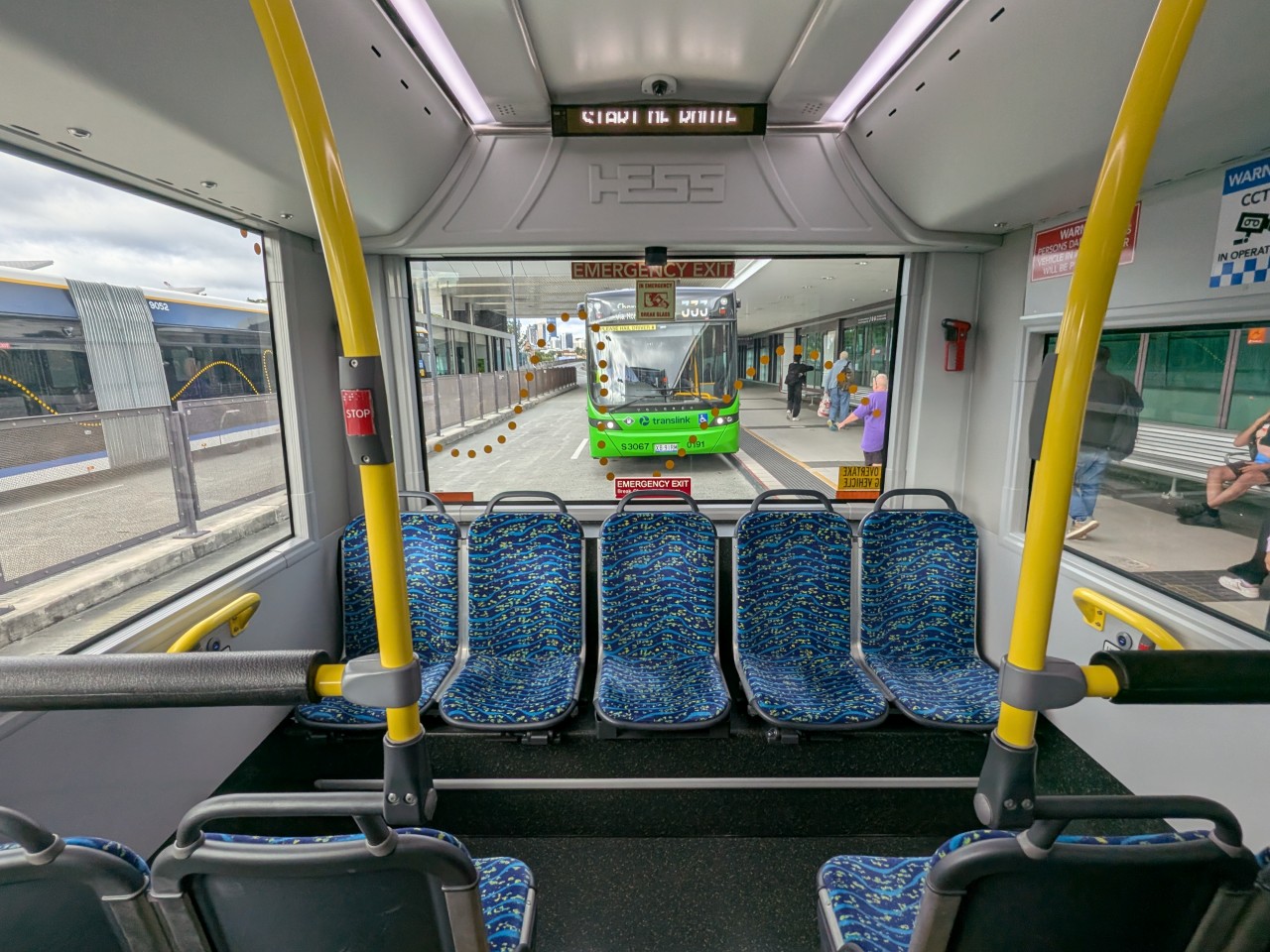
車内最後部は大きな窓ガラスが設置されており、開放感のある空間となっています。
最後部座席からは後方の景色を楽しむことができ、バスウェイや市街地を眺めながら乗車できます。
特に専用道を走行する区間では、後面展望ならではの迫力ある景色を楽しむことができます。
この大きな後面窓は非常口も兼ねており、緊急時には脱出経路として使用できるようになっています。
The rear section of the vehicle features a large window, creating a bright and open atmosphere.
Passengers seated at the back can enjoy a rear-facing view of the route, including the busway and surrounding cityscape.
On dedicated busway sections in particular, the rear view provides a unique and impressive perspective of the journey.
This large rear window also serves as an emergency exit and can be used as an evacuation route if required.
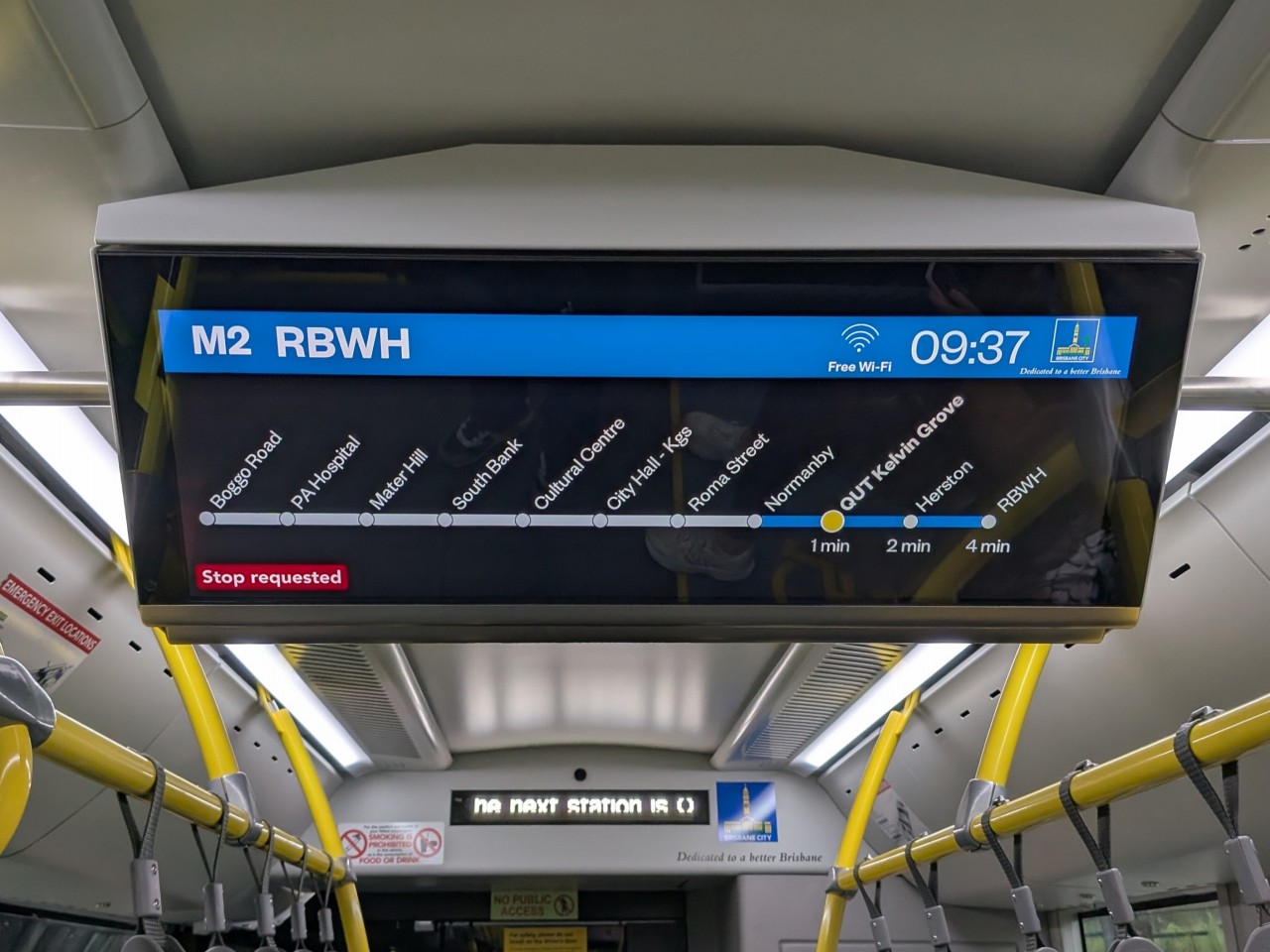
車内の案内表示器(PID)は複数設置されており、車両端部にはLED式の案内表示器が配置されています。
LED表示器には次の停留所や各種案内が表示され、車内のどこからでも確認しやすくなっています。
さらに車両中央部には大型の液晶ディスプレイが設置されており、LED表示器よりも多くの情報を表示することができます。
液晶ディスプレイでは次停留所案内に加え、路線全体図の中で現在どこを走行しているか、目的地までの所要時間なども表示されます。
また、停車ボタンが押されているかどうかも画面上で確認することができます。
ブリスベンメトロでは、停車ボタンが押されておらず、かつ停留所で乗車する利用者もいない場合はバス駅を通過するため、この表示は利用者にとって重要な情報となっています。
Multiple passenger information displays (PIDs) are installed throughout the vehicle.
LED information displays are located near the ends of the vehicle and provide clear information about the next stop and other announcements.
In addition, large LCD screens are installed in the centre sections, allowing far more information to be displayed.
These screens show the next stop, the vehicle's current position on the route map, and the estimated travel time to the destination.
Passengers can also see whether a stop request button has been pressed.
On Brisbane Metro services, stations may be skipped if no passenger has requested a stop and nobody is waiting to board, making this information particularly useful.
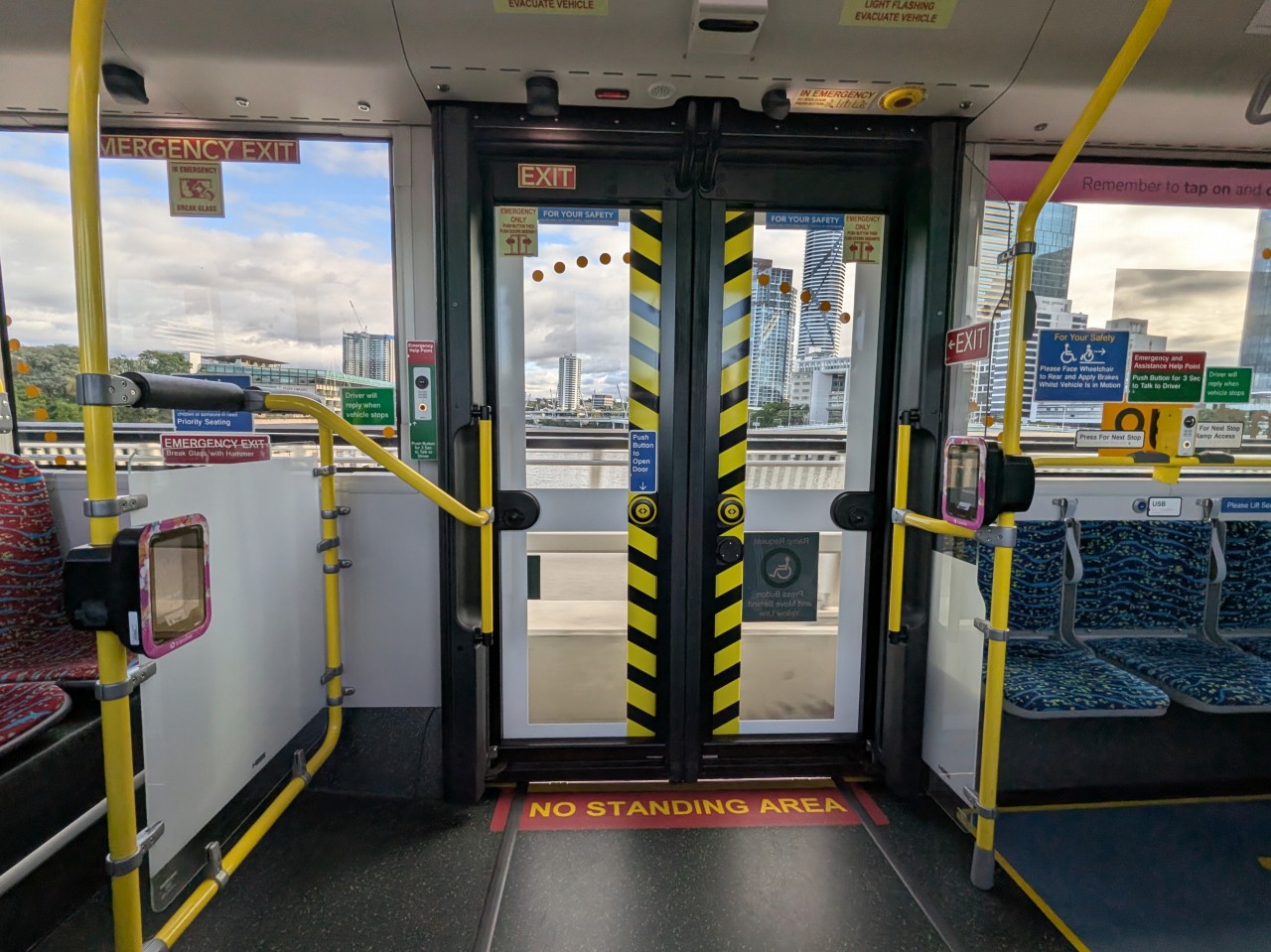
ドアには車内から操作する開扉ボタンが設置されており、停留所に到着してもボタンが押されなければドアは開きません。
必要な扉だけを開けることで空調効率の向上や停車時間の短縮につながっており、鉄道車両やライトレールでも広く採用されている方式です。
ドアの開閉時には、イギリスの「ウエストミンスターの鐘(Westminster Quarters)」をアレンジしたチャイムが流れます。
このメロディーはブリスベンのシンボルであるシティホールの時計塔でも毎時演奏されており、ブリスベンらしさを感じられる演出となっています。
日本では学校のチャイムとして親しまれているほか、旧大阪市営バスや神姫バスの一部車両でも、音色こそ異なるものの同じウエストミンスターの鐘をモチーフとしたドアチャイムが採用されています。
The doors are fitted with passenger-operated open buttons, and they remain closed until a passenger presses the button after the vehicle has stopped.
Opening only the required doors helps improve climate control and reduce dwell times, a system widely used on rail vehicles and light rail systems.
The doors are accompanied by a chime based on the Westminster Quarters, the famous bell melody also played by the clock tower of Brisbane City Hall, one of the city's best-known landmarks.
While many Japanese people recognise it as a school bell melody, similar Westminster-inspired door chimes have also been used on some former Osaka Municipal Bus vehicles and certain Shinki Bus vehicles, although with different tones.
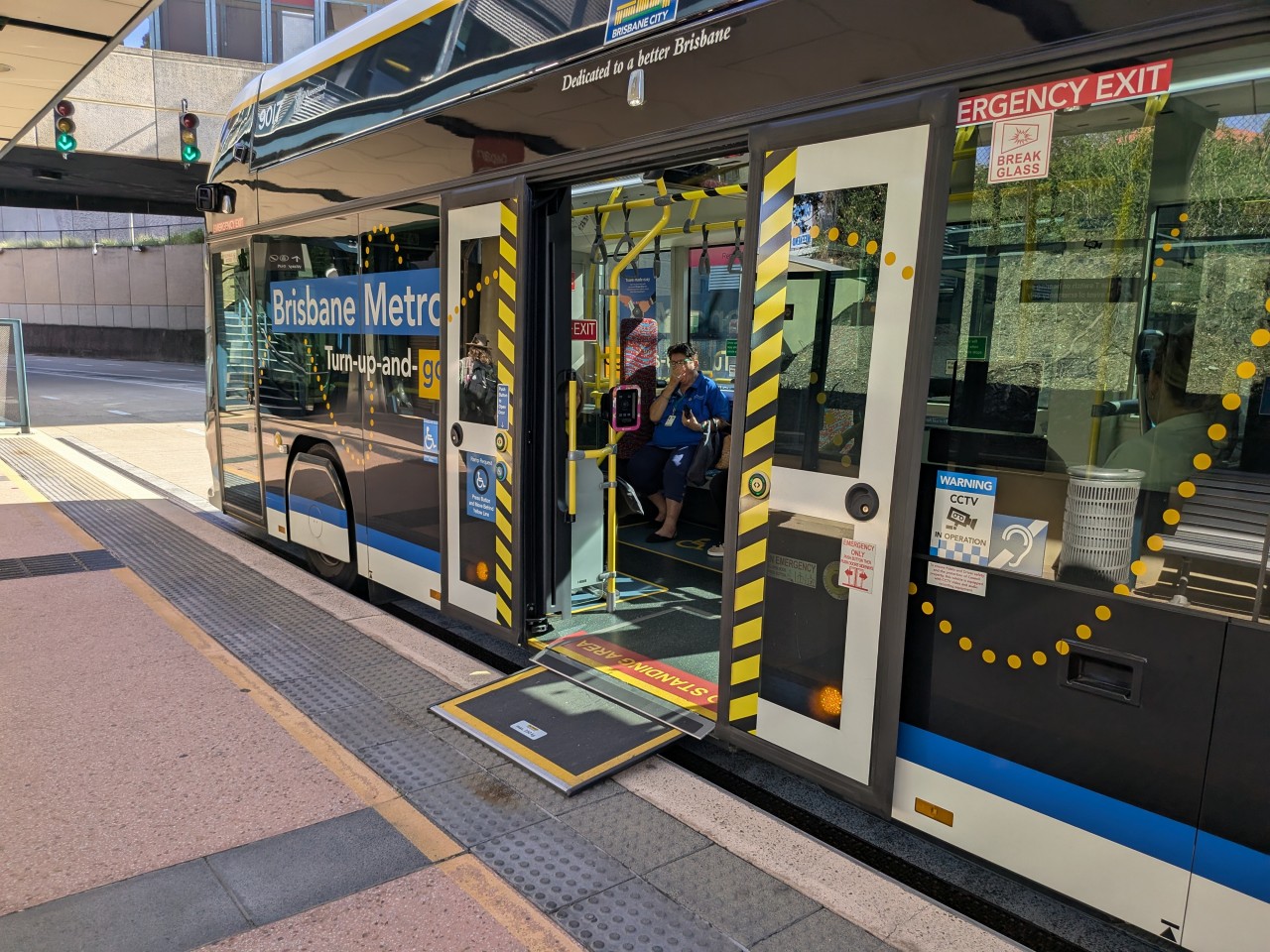
車内と車外には車椅子・ベビーカー利用者向けのアクセシブルドアボタンが設置されています。
このボタンを使用すると通常のドア開閉に加え、車両に搭載されたスロープが自動で展開されます。
車両自体が超低床構造であることに加え、スロープも自動化されているため、車椅子やベビーカー利用者は比較的容易に乗降することができます。
Accessibility door buttons for wheelchair users and passengers with strollers are provided both inside and outside the vehicle.
When activated, these buttons not only open the doors but also automatically deploy a boarding ramp.
Combined with the vehicle's fully low-floor design, this allows wheelchair users and passengers with strollers to board and alight with ease.
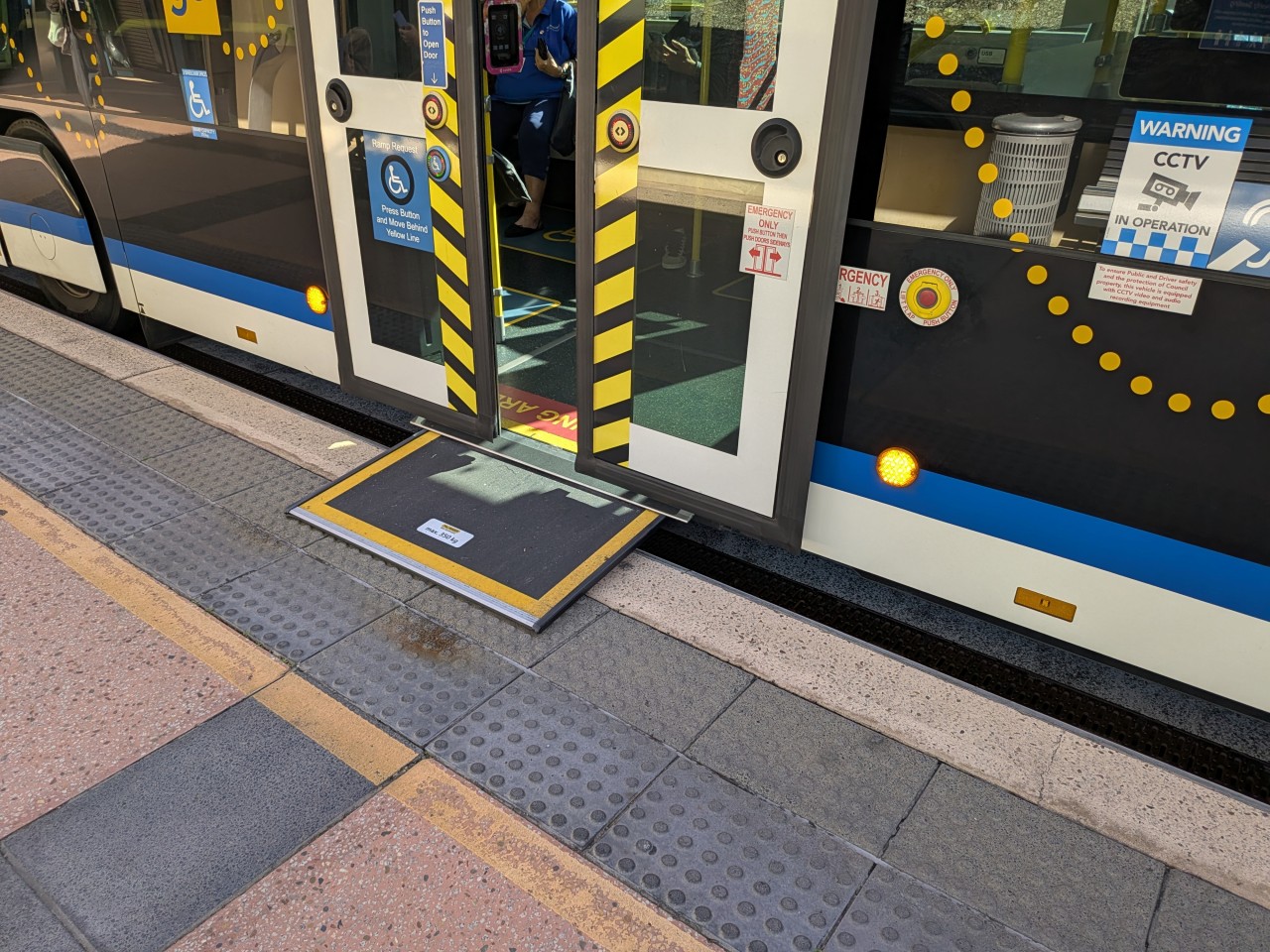
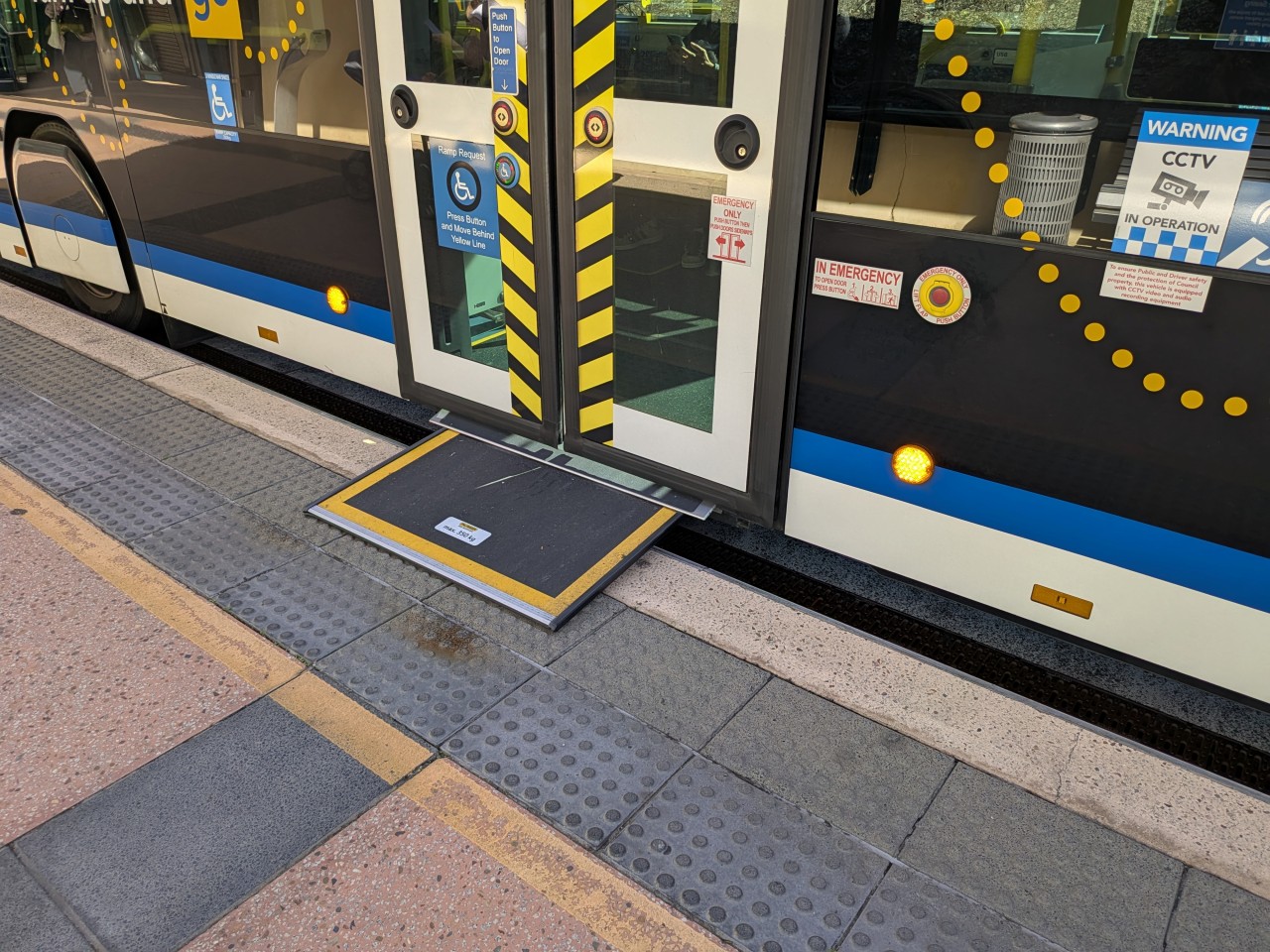
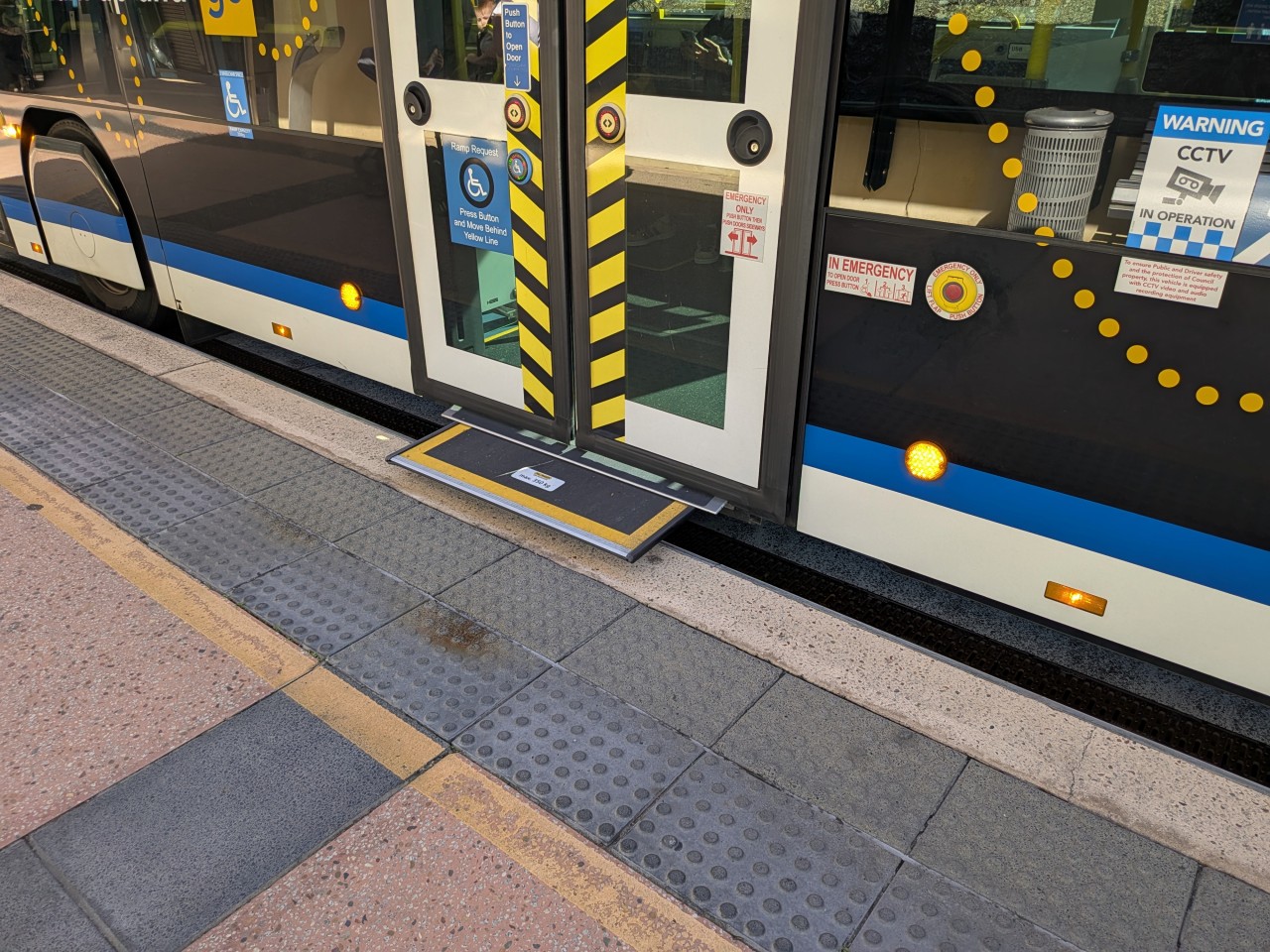
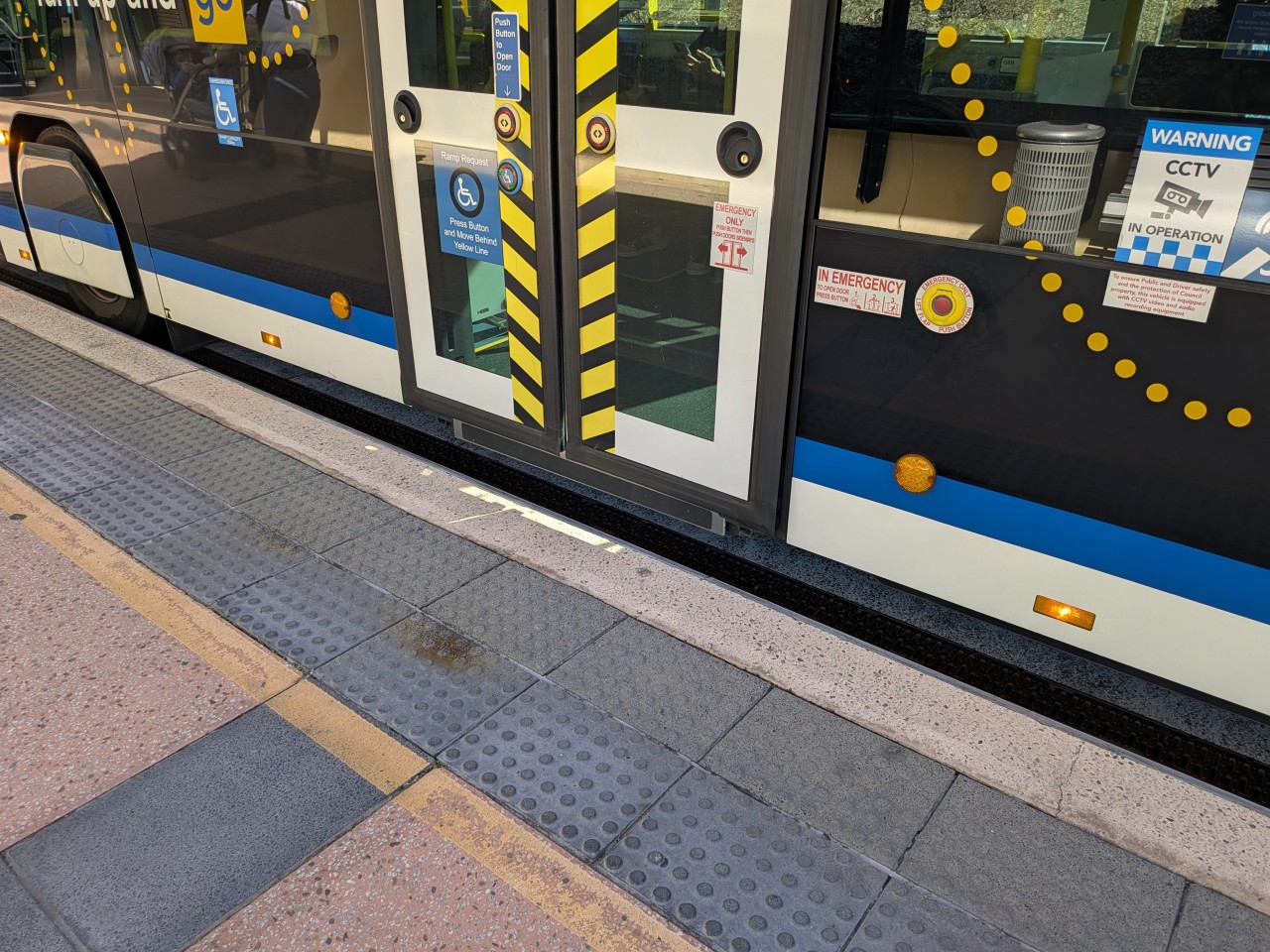
アクセシブルボタンによるスロープの動作も興味深いポイントです。
扉とスロープは独立して動作する仕組みとなっており、乗降が完了した後は先に扉が閉まり、その後にスロープが収納されます。
一連の動作は自動で行われ、利用者は安全に乗降することができます。
一般的な路線バスではあまり見られない動作のため、観察してみると面白い設備の一つです。
The operation of the accessibility ramp is also an interesting feature to observe.
The doors and ramp operate independently, and after boarding or alighting is complete, the doors close first before the ramp retracts.
This sequence is carried out automatically, allowing passengers to board and alight safely.
It is an uncommon feature on conventional buses and an interesting detail of the vehicle's accessibility system.
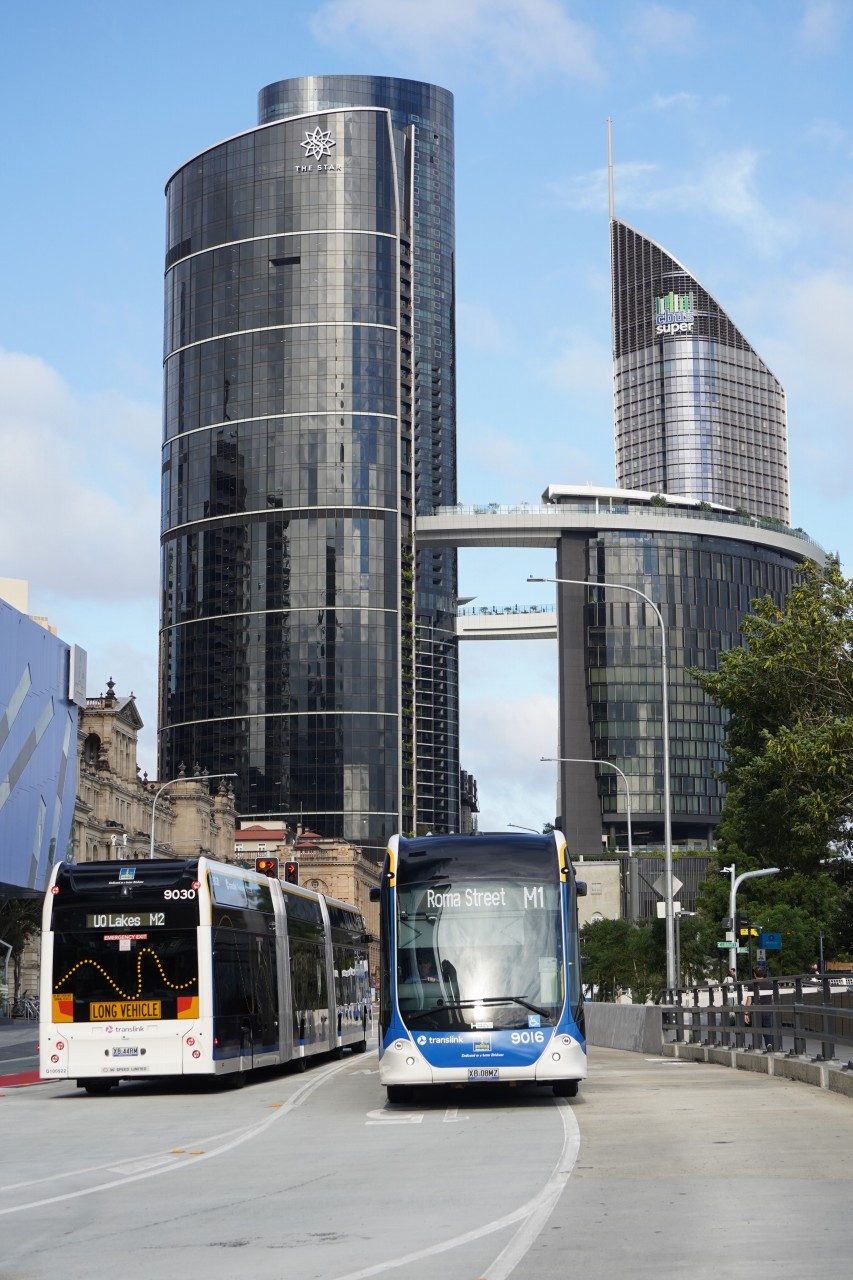
ブリスベンの摩天楼を背景に走る lighTram 25 TOSA。
A lighTram 25 TOSA passing Brisbane's skyline.
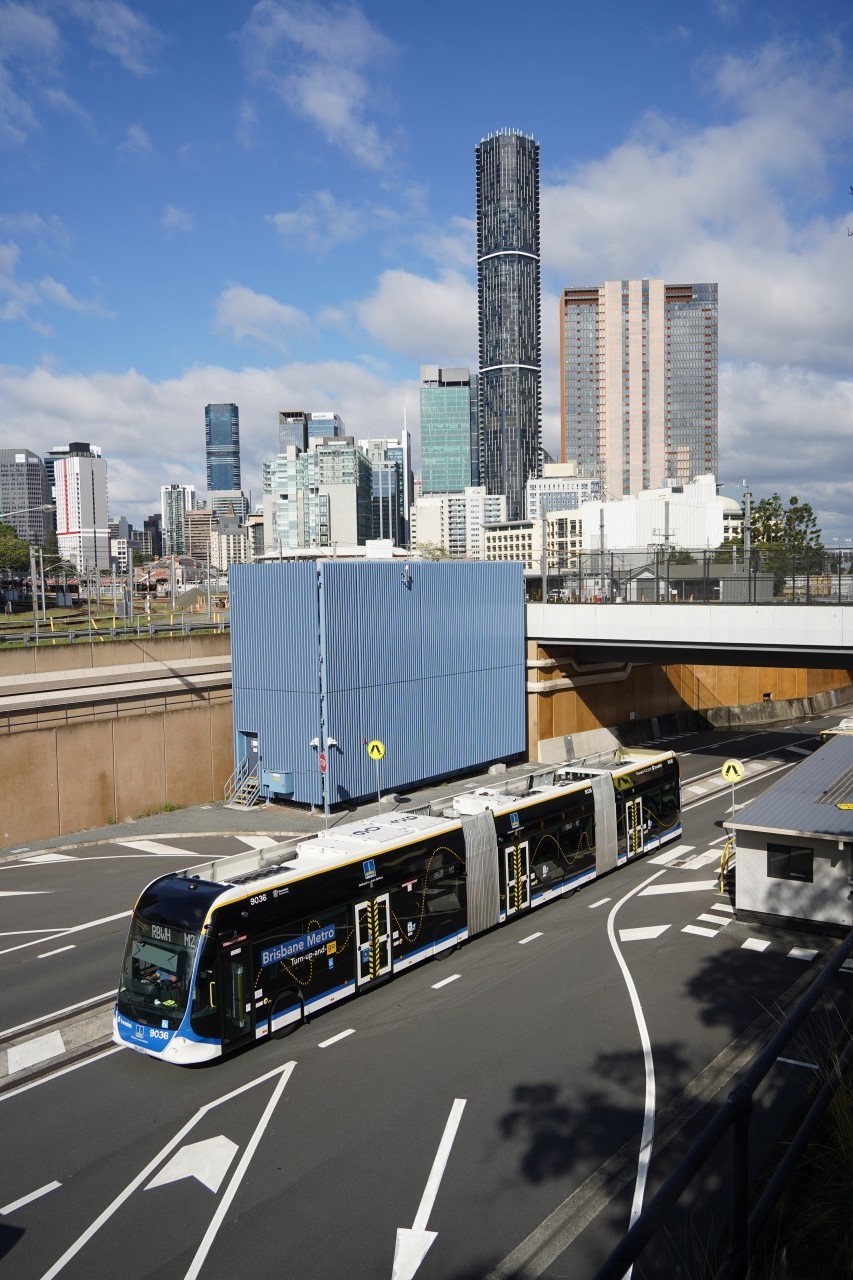
ライトレールのような外観と車内を持ちながら、バスならではの柔軟性も兼ね備えたlighTram 25 TOSA。
ブリスベンメトロの象徴として、これからも多くの利用者を運び続けることでしょう。
With its light rail-like appearance and interior combined with the flexibility of a bus, the lighTram 25 TOSA is a unique vehicle.
As the flagship of Brisbane Metro, it will continue to play a key role in the city's public transport network.
Eight Mile Plains駅からRoma Street駅までを走行するブリスベンメトロM1の4K前面展望です。
サウスイースト・バスウェイを通り、郊外から都心へ向かう走行シーンとともに、電気バスならではの静かな走行音も楽しめます。
Brisbane Metro M1 4K front view from Eight Mile Plains to Roma Street, running along the South East Busway from suburbs to the city centre, featuring the quiet sound of electric bus operation.
オーストラリアのブリスベンメトロ M2系統、UQ LakesからRBWHまでの全区間前面展望です。
車内では、日本では学校のチャイムとして親しまれているメロディーの原曲であるイギリス・ウェストミンスター宮殿(ビッグ・ベン)の鐘「ウェストミンスター・チャイム」をモチーフにした特徴的なドアチャイムが流れます。
途中で通過するKing George Square停留所の近くには、ブリスベンを代表する建築物であるBrisbane City Hallがあり、その時計塔でもウェストミンスター・チャイムが鳴り響きます。ブリスベンメトロのドアチャイムは、この街のシンボルを感じさせる演出の一つとなっています。
Experience a full 4K front view journey aboard Brisbane Metro M2 in Brisbane, Queensland, Australia, travelling from UQ Lakes to RBWH via the city's dedicated busway.
One of the Metro's most distinctive features is its Westminster Chime door sound. While many people know this melody as a school bell, it actually originated from the famous clock tower of the Palace of Westminster (Big Ben) in London.
The route passes King George Square in the heart of Brisbane, beside the iconic Brisbane City Hall, whose clock tower also plays the Westminster Chime. As one of Brisbane's best-known landmarks, the Metro's door chime reflects a sound that has become part of the city's identity.
Enjoy Australia's newest electric metro bus system, featuring a smooth and quiet ride, dedicated busways and spectacular views through central Brisbane.
