オーストラリア・ニュージーランドの鉄道を紹介します!
AUandNZ Railfan
Australia and New Zealand Railfan
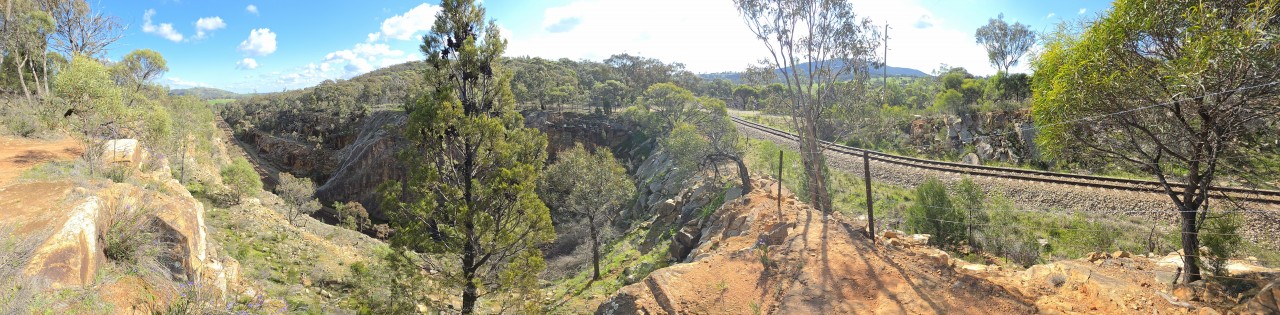
ベサングラ・スパイラルループ線
Bethungra Rail Spiral
急勾配を克服するために造られたこのユニークな鉄道路線では、列車が雄大なオーストラリアの風景の中を走り抜けます。
鉄道技術と自然が織り成す壮大な風景は、多くの鉄道ファンを魅了しています。
The Bethungra Spiral is one of the most remarkable railway landmarks in New South Wales, Australia.
Built to overcome the steep terrain, this unique railway alignment offers spectacular scenes of trains travelling through the vast Australian lanDSCape.
The magnificent combination of railway engineering and natural scenery continues to fascinate railway enthusiasts from around the world.
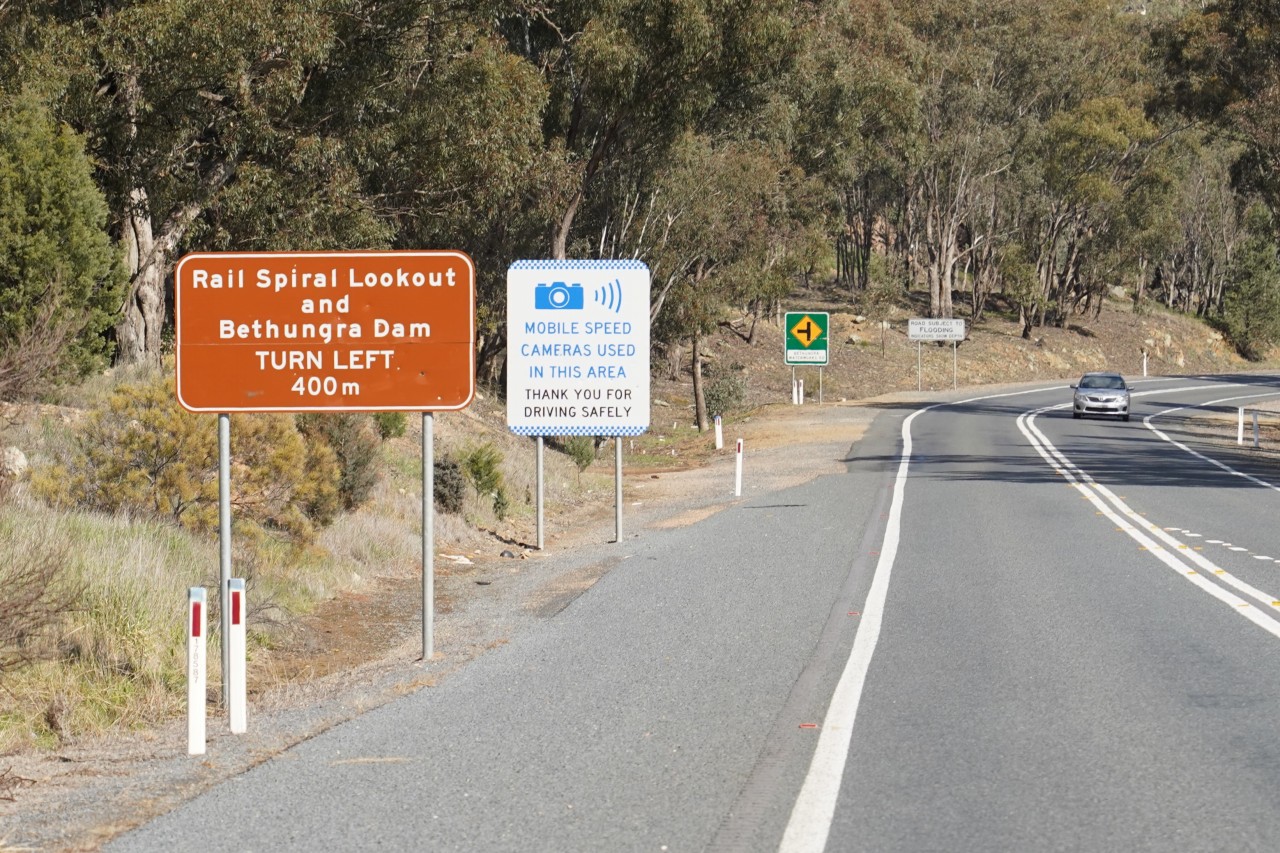
ベサングラスパイラルは、シドニーから南西へ約400km、ニューサウスウェールズ州のベサングラ近郊に位置しています。
車で訪れる場合、オリンピック・ハイウェイ沿いには「Rail Spiral Lookout」への案内看板が設置されており、地域の観光スポットとしてPRされています。
The Bethungra Spiral is located approximately 400 km southwest of Sydney, near the village of Bethungra in New South Wales.
Visitors travelling by car can find signs along the Olympic Highway directing them to the Rail Spiral Lookout, promoting the site as a local tourist attraction.
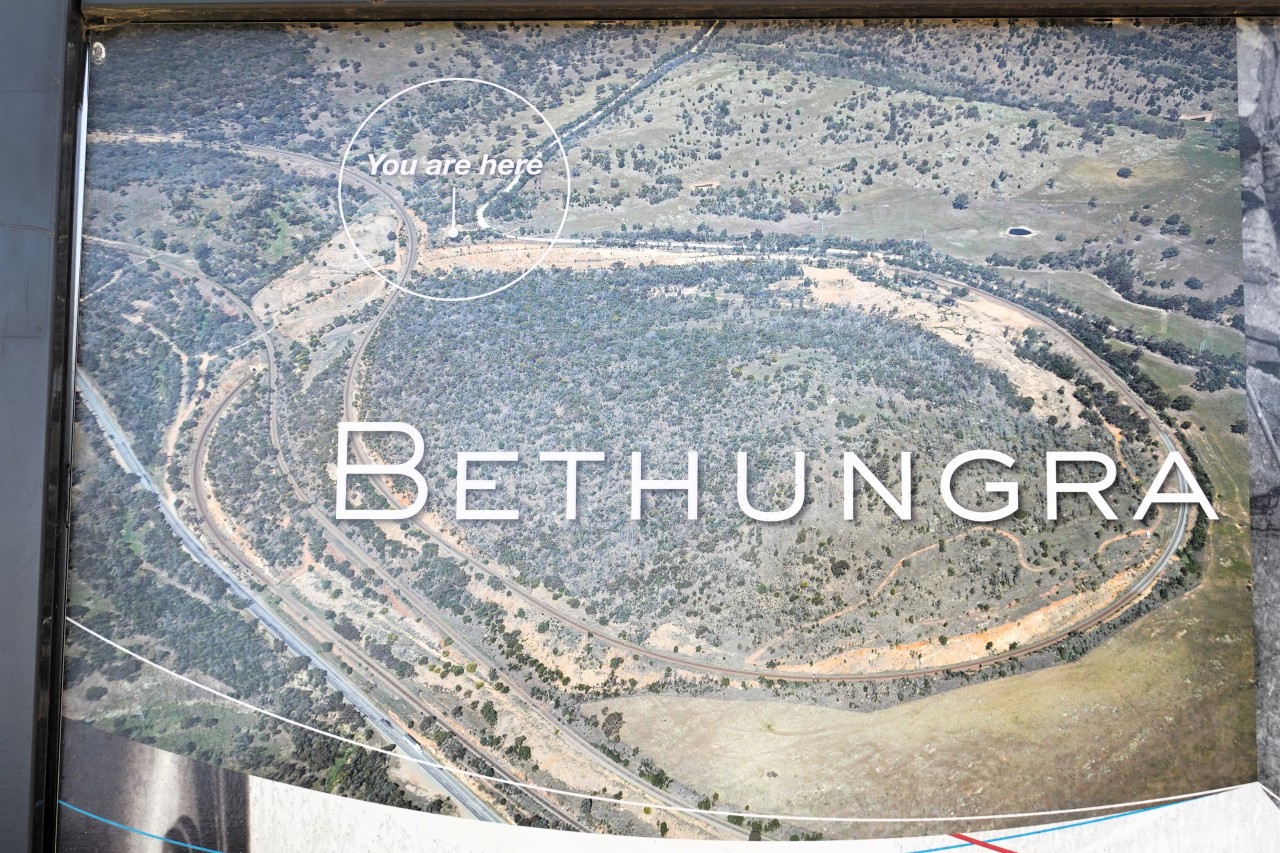
案内看板に掲載されたベサングラスパイラルの航空写真。
下り線が山を一気に下っているのに対し、上り線は山を大きく1周することで距離を稼ぎ、緩やかな勾配で高度を上げていることがよく分かります。
An aerial photograph of the Bethungra Spiral shown on the information sign.
While the Down line descends the hillside in a relatively direct route, the Up line makes a large loop around the mountain, adding distance to gain elevation with a gentler gradient.
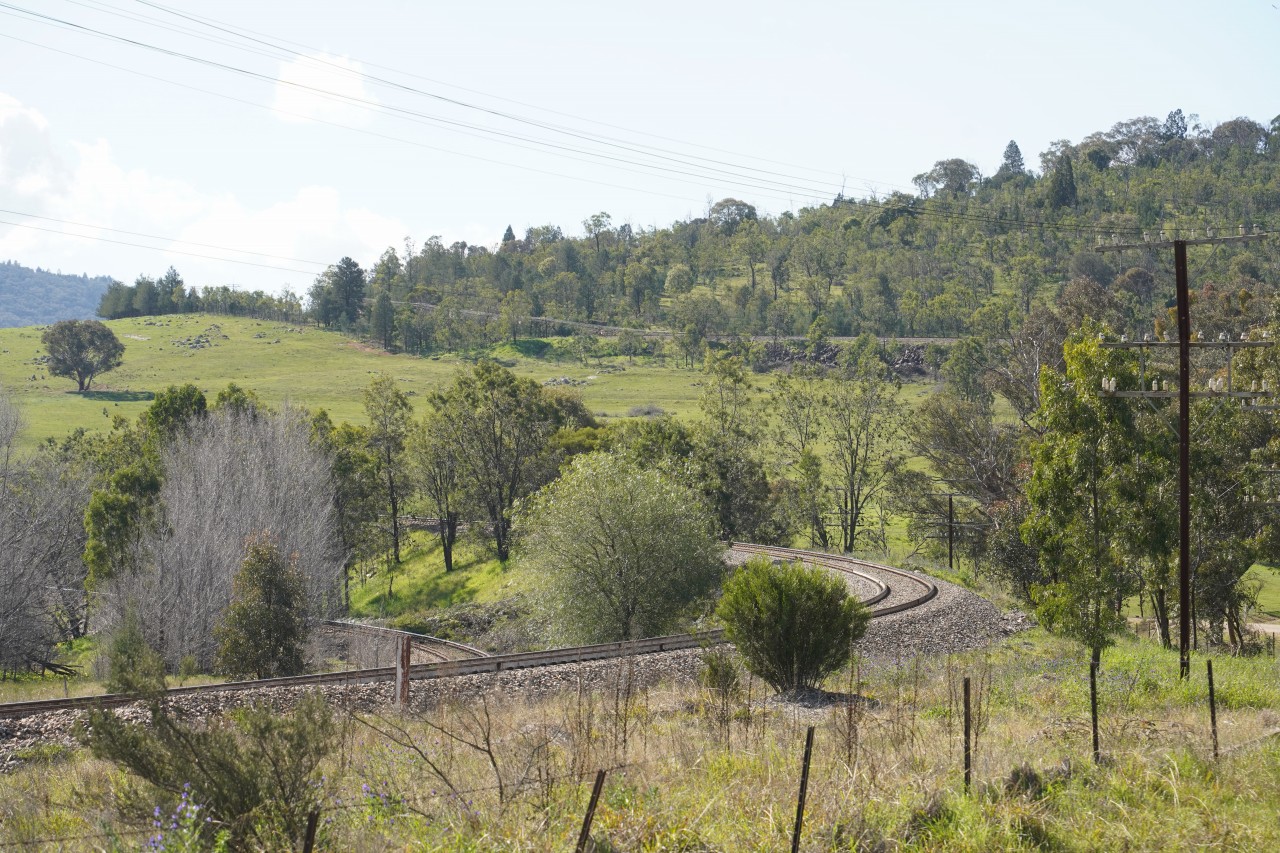
メルボルン側から見たベサングラスパイラル。
画像左側の下方を走る線路はシドニー方面へ向かうルートで、右側の線路はメルボルン方面へ向かうルートです。
さらに山の上方に目を向けると、シドニー方面へ向かう線路が山腹を横切っている様子も見ることができます。
この場所では、シドニー方面へ向かう列車とメルボルン方面へ向かう列車が、それぞれ異なる経路を通行します。
急勾配が課題となっていた区間の輸送力を改善するため、複線化工事の一環として現在のスパイラル線が建設されました。
The Bethungra Spiral as seen from the Melbourne side.
The railway line in the lower left of the image is the route towards Sydney, while the line on the right is used by trains travelling towards Melbourne.
Looking further up the hill, the Sydney-bound railway can also be seen crossing the hillside.
At this location, trains travelling towards Sydney and Melbourne use different railway alignments.
The present spiral route was constructed as part of a major improvement project to overcome the steep gradients that had previously limited railway operations.
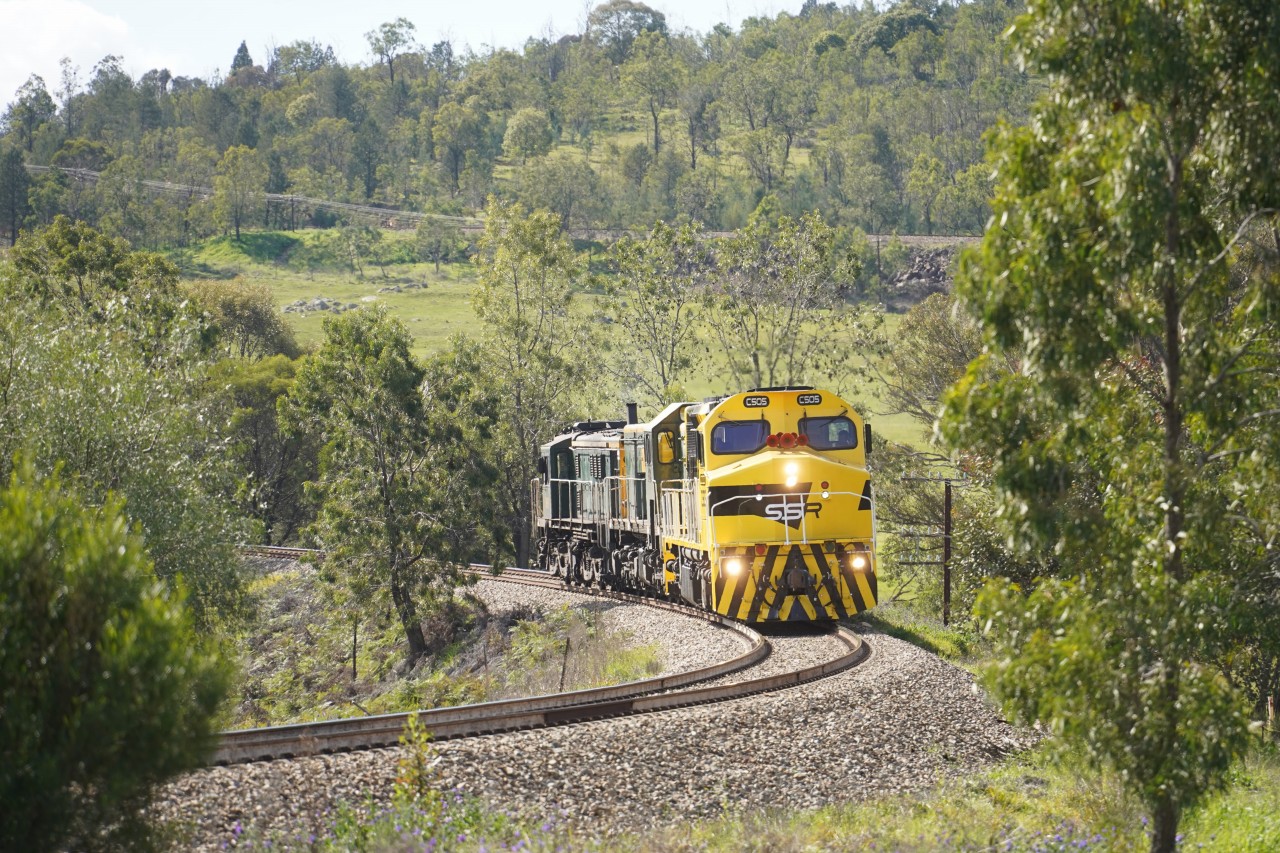
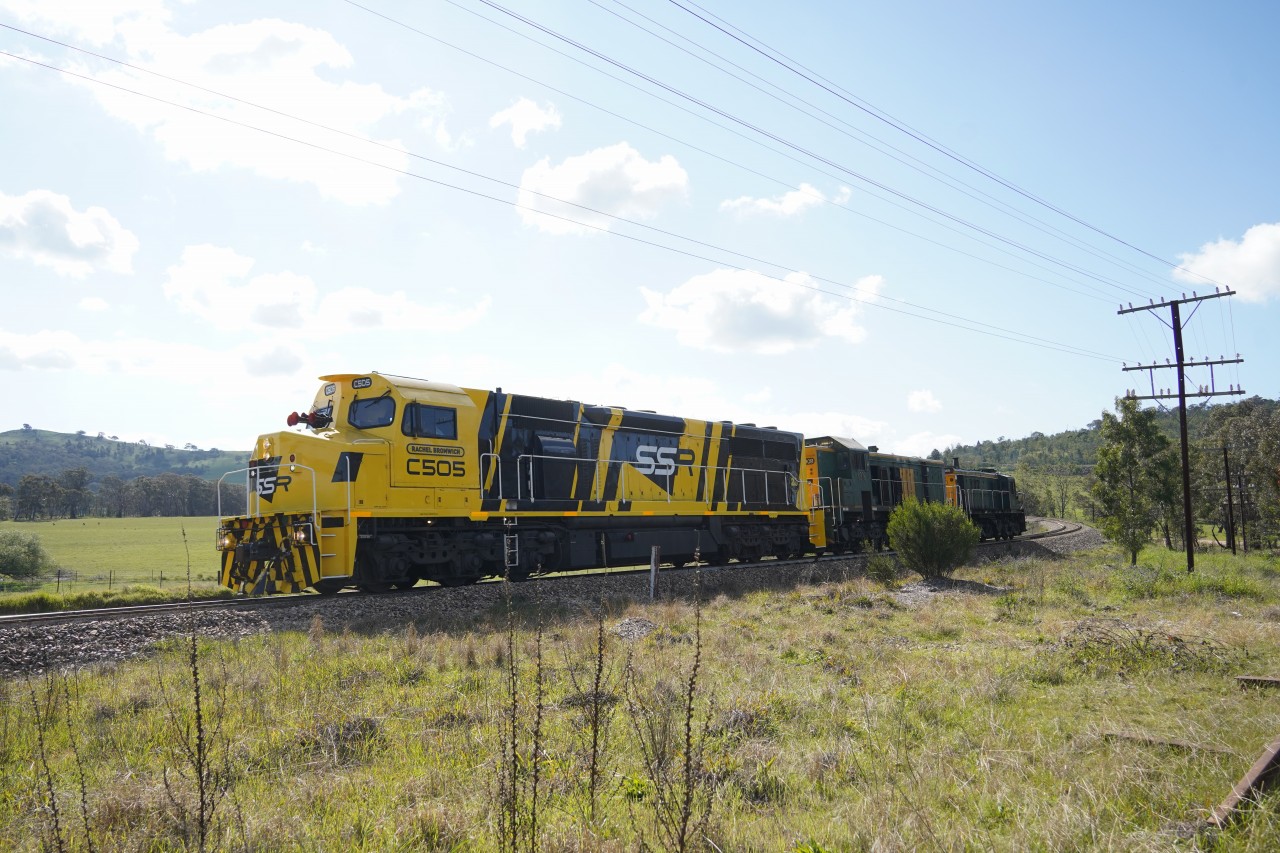
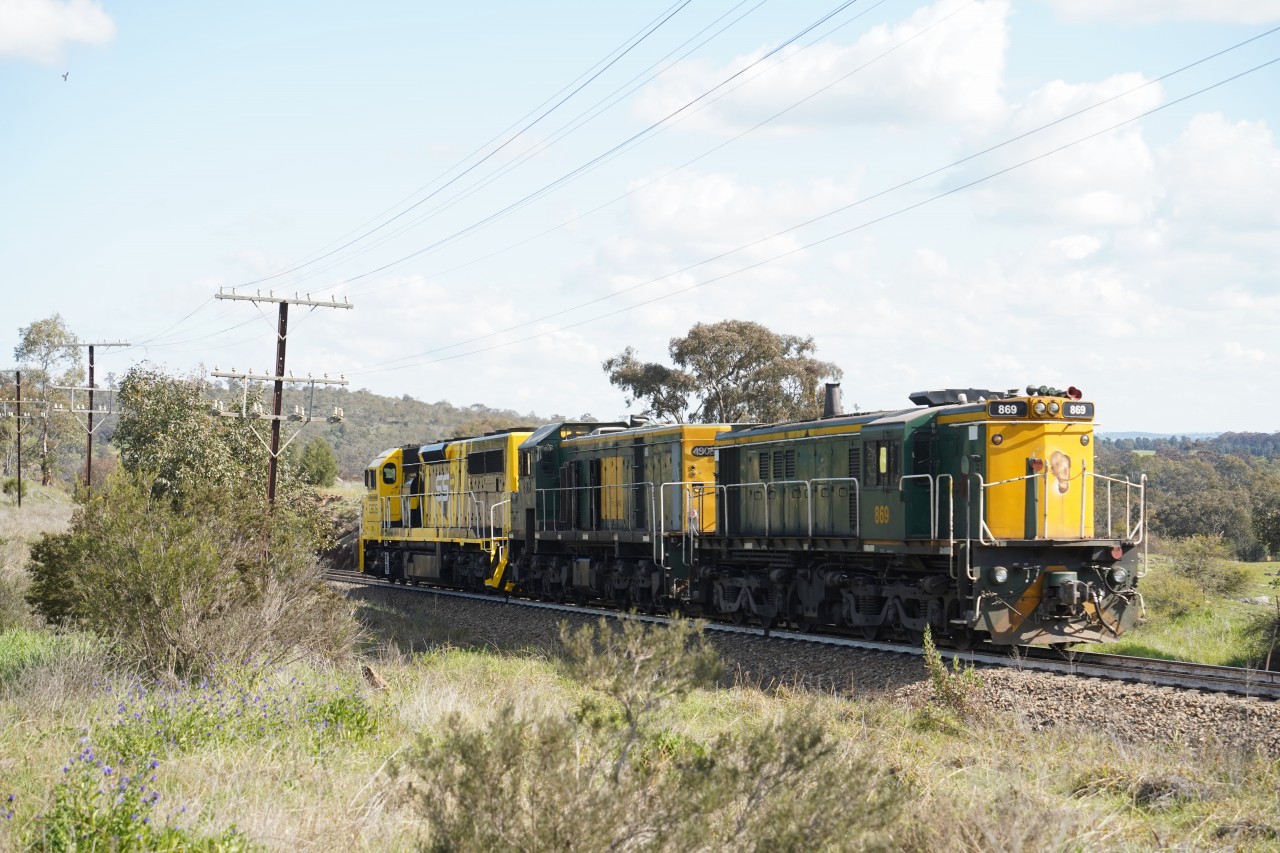
メルボルン方面へ下る、C505を先頭とした4908、869の3重連による機関車回送が通過しました。
この列車はメルボルン方面へ向かうため、ベサングラスパイラルの特徴であるループ状の線路を通過せず、別のルートを走行します。
先頭のC505は、ビクトリア州の鉄道で活躍したCクラスのディーゼル機関車です。
続く4908は、ニューサウスウェールズ州の49クラスディーゼル機関車です。
最後尾の869は、南オーストラリア鉄道(SAR)の830クラスディーゼル機関車で、異なる州で活躍した3形式の機関車が連なる興味深い編成となりました。
The locomotive transfer, led by C505 and followed by 4908 and 869, passes through Bethungra on its way towards Melbourne.
As the locomotives are travelling towards Melbourne, they do not pass through the loop-shaped section that gives the Bethungra Spiral its distinctive appearance, instead following a different route.
C505 is a C Class diesel locomotive that formerly operated in Victoria.
The following locomotive, 4908, is a New South Wales 49 Class diesel locomotive.
The final locomotive, 869, is an 830 Class diesel locomotive originally built for the South Australian Railways (SAR), making this an interesting combination of three locomotive classes with histories in different Australian states.
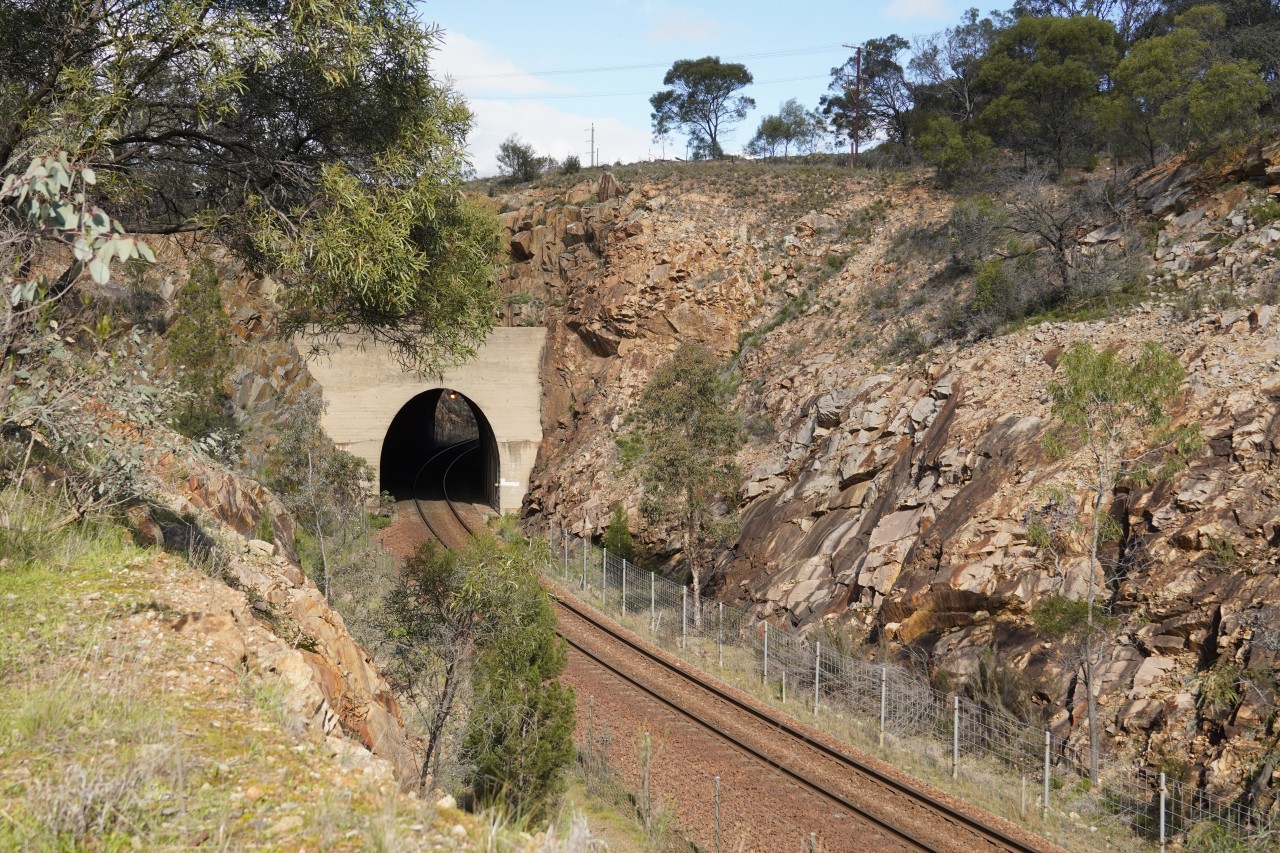
写真に見えるトンネルは、シドニー方面へ向かう上り線が使用するトンネルです。
そのトンネルの上を、メルボルン方面へ向かう下り線が走っており、上下線が立体的に交差する構造になっています。
トンネル入口には常時点灯しているライトがあり、遠くからでもその位置を確認できます。
もし上り線と下り線を列車が同時に通過すれば、上下に重なった2本の線路を列車が走る、まるで鉄道模型のレイアウトを見ているような光景になります。
The tunnel seen in the photograph is used by the Up line towards Sydney.
The Down line towards Melbourne runs directly over the top of the tunnel, creating a distinctive grade-separated railway structure.
A light that remains illuminated at the tunnel entrance can be seen from a distance.
If trains were to pass on both the Up and Down lines at the same time, the sight of the two trains travelling on the overlapping tracks would look almost like a railway model layout.
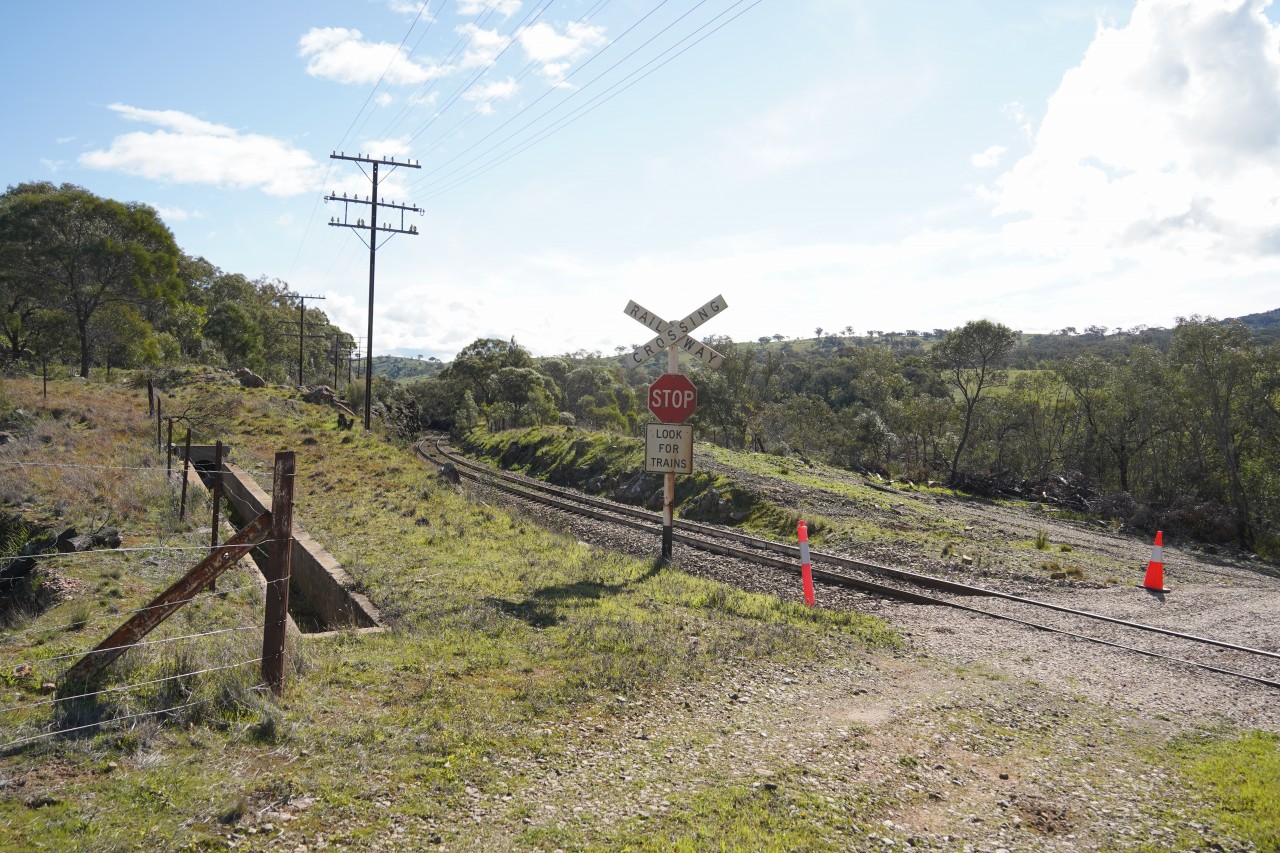
上り線のトンネルのすぐ上には、メルボルン方面へ向かう下り線の踏切があります。
列車がトンネルを通過する一方、その真上では踏切を横切る道路があり、上下線の立体的な構造をさらに印象的なものにしています。
The level crossing on the Melbourne-bound Down line is located directly above the Up line tunnel.
While a train passes through the tunnel below, a road crosses the railway immediately above it, adding another fascinating feature to the complex three-dimensional railway layout.
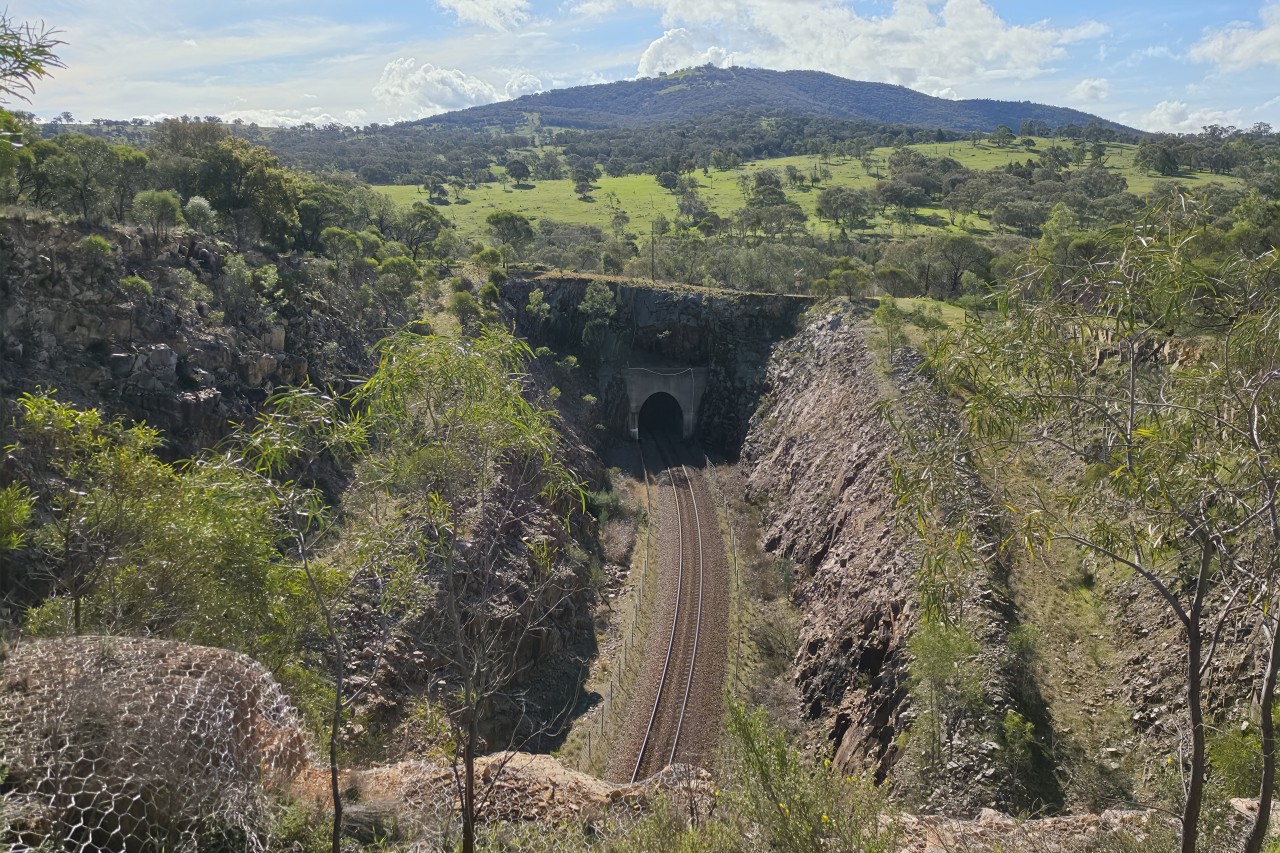
下り線をくぐるトンネルの反対側から見下ろすと、上下線が立体的に交差する様子をよりはっきりと見ることができます。
タイミングよく上下線を列車が同時に通過すれば、異なる高さを走る2本の列車を一枚に収めることができ、ベサングラスパイラルならではの素晴らしい写真になりそうです。
Looking down from the opposite side of the tunnel, the three-dimensional arrangement of the Up and Down lines can be seen more clearly.
If trains happen to pass on both lines at the same time, it would be possible to capture two trains running at different levels in a single photograph, creating a spectacular scene unique to the Bethungra Spiral.
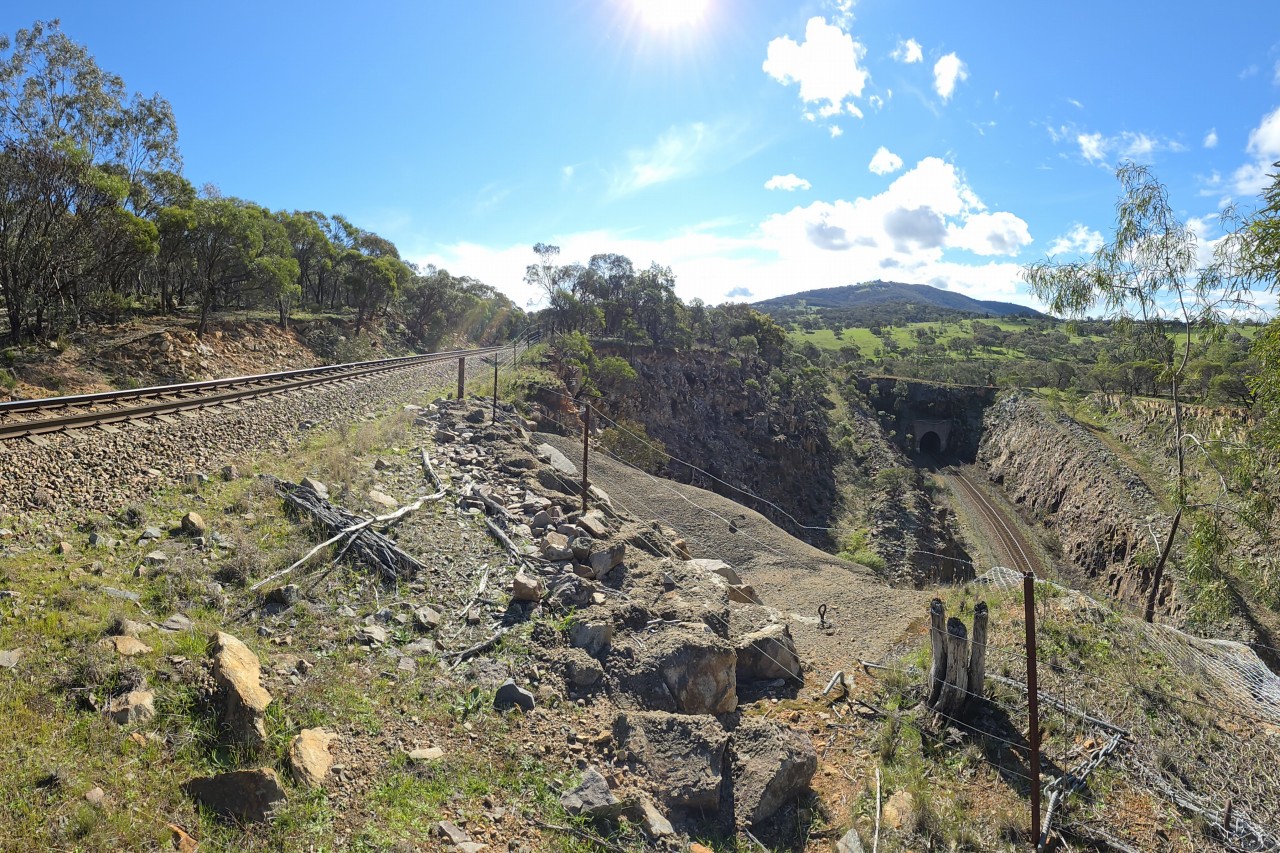
さらに視野を広げて見下ろすと、上り線をくぐるトンネルの上を走る、もう一つの上り線まで見渡すことができます。
タイミングよく上り線と下り線の列車が交差し、さらに上り線の編成が非常に長ければ、異なる位置を走る3つの車体を一枚の写真に収めることができるかもしれません。
Looking further back and widening the view, the Up line running above the tunnel can also be seen, revealing an even more complex three-dimensional arrangement of the railway.
If an Up and Down train happen to pass each other at just the right moment, and the Up train is particularly long, it may be possible to capture three train sections at different positions in a single photograph.
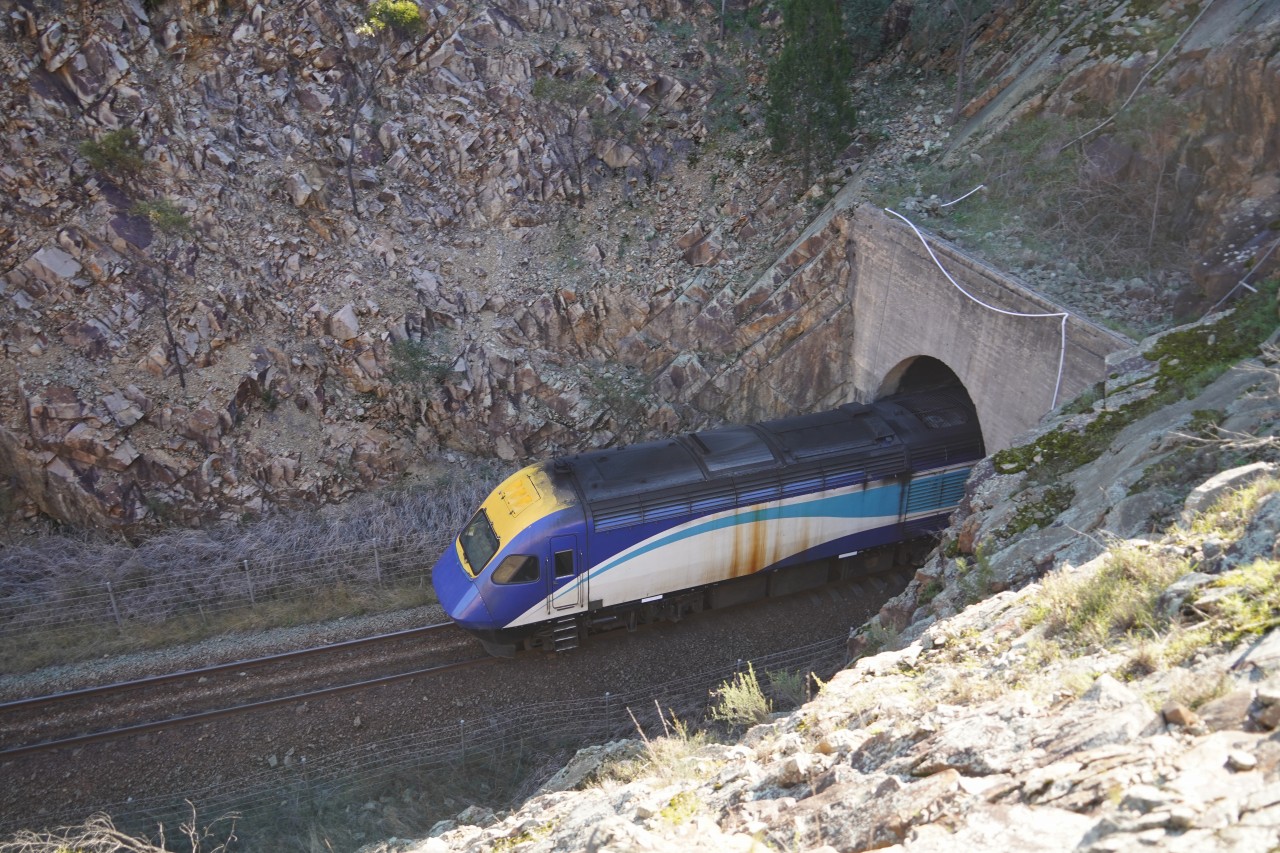
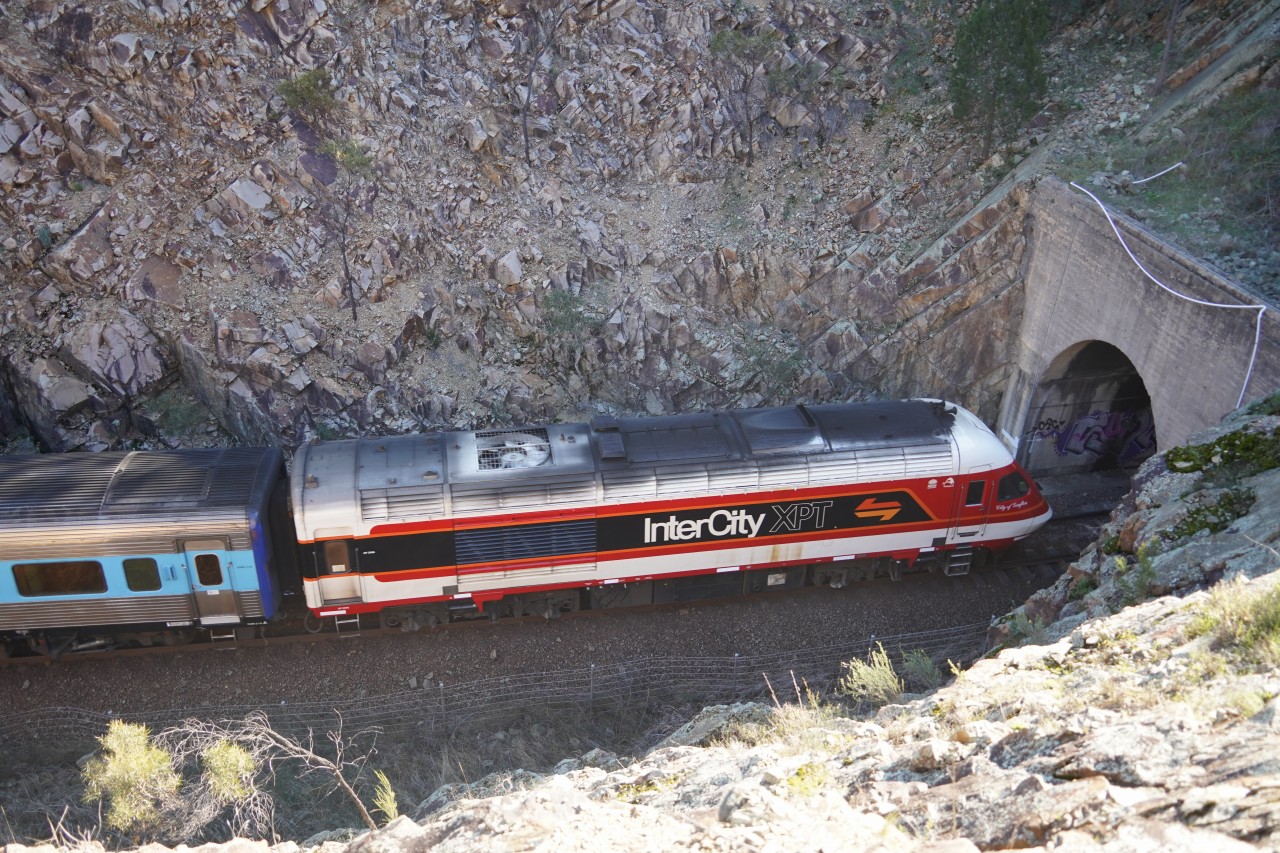
下り線をくぐるトンネルから出てきた、シドニー行きのXPT。
このスパイラルを日中に毎日走行する唯一の定期列車で、ベサングラスパイラルを撮影する上でも特に注目される列車です。
この時期には、XPT登場当初の「キャンディ」塗装を復刻した編成が運行されていましたが、この時は一時的に復刻塗装の車両が別々の編成に分かれていました。
そのため、この列車ではメルボルン方面側の機関車のみがキャンディ塗装となっています。
An XPT bound for Sydney emerges from the tunnel beneath the Down line.
It is the only regular passenger service that runs through the spiral every day during daylight hours, making it a particularly notable train for photographers visiting the Bethungra Spiral.
At the time, an XPT set featuring the original “Candy” livery was in service, but the restored-livery vehicles had temporarily been split between different sets.
As a result, only the locomotive at the Melbourne end of this train was wearing the Candy livery.
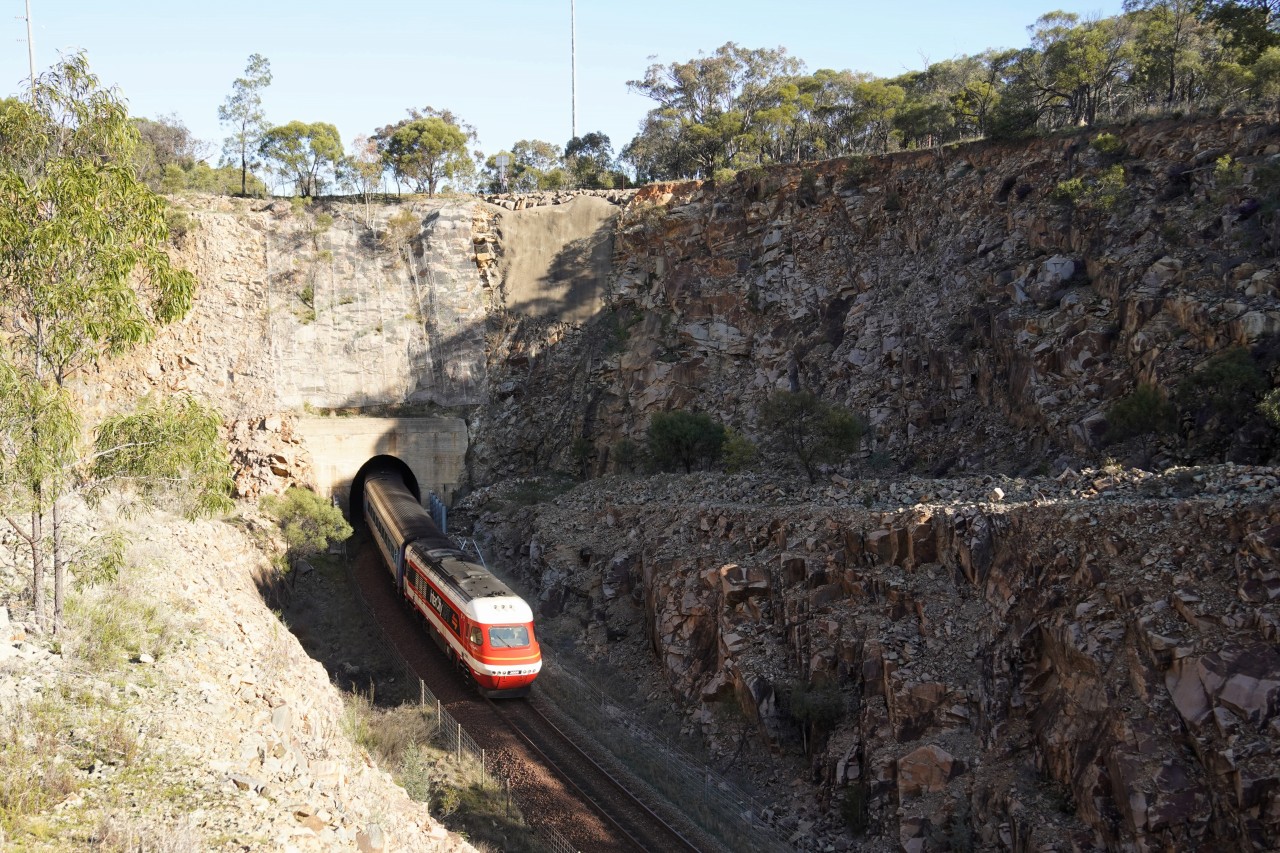
進行方向から数えて2本目のトンネル、これから上り線がループ状に山を一周する区間へ入るシドニー行きXPT。
トンネルの上に見える山の稜線には、この先XPTが走行する上り線が通っています。現在の線路と稜線上の線路との間には、かなりの高低差があることが分かります。
A Sydney-bound XPT entering the second tunnel along its route, marking the beginning of the section where the Up line loops around the hillside.
The railway line visible along the ridge above the tunnel is the same Up line that the XPT will travel on further ahead. The considerable difference in elevation between the current track and the line along the ridge is clearly visible.
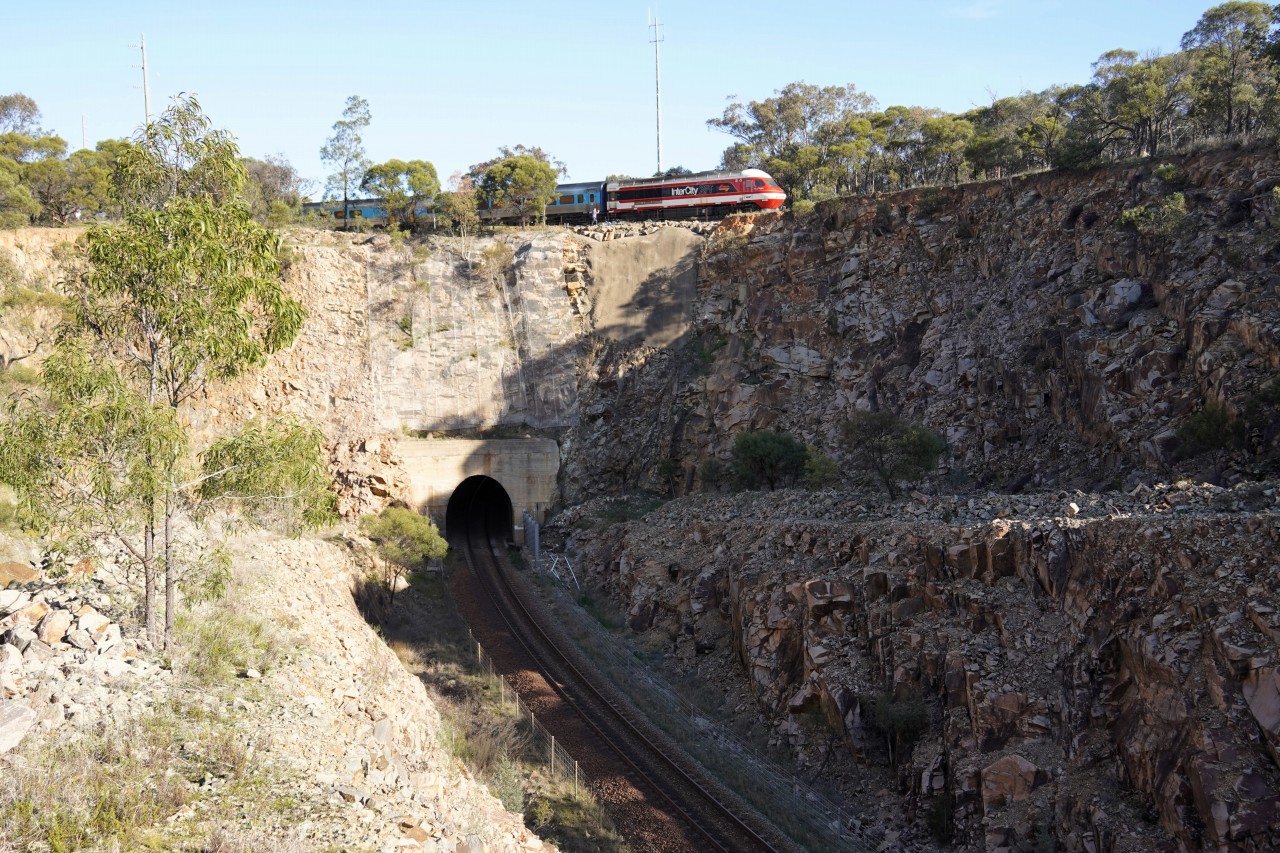
山を大きく一周したXPTが、先ほど見えていた稜線上の上り線を走行します。
山の中でも、鮮やかなキャンディ塗装はひときわ目立つ存在です。
After making a wide loop around the hillside, the XPT runs along the Up line on the ridge seen earlier.
Even among the surrounding hills, the bright Candy livery stands out prominently.
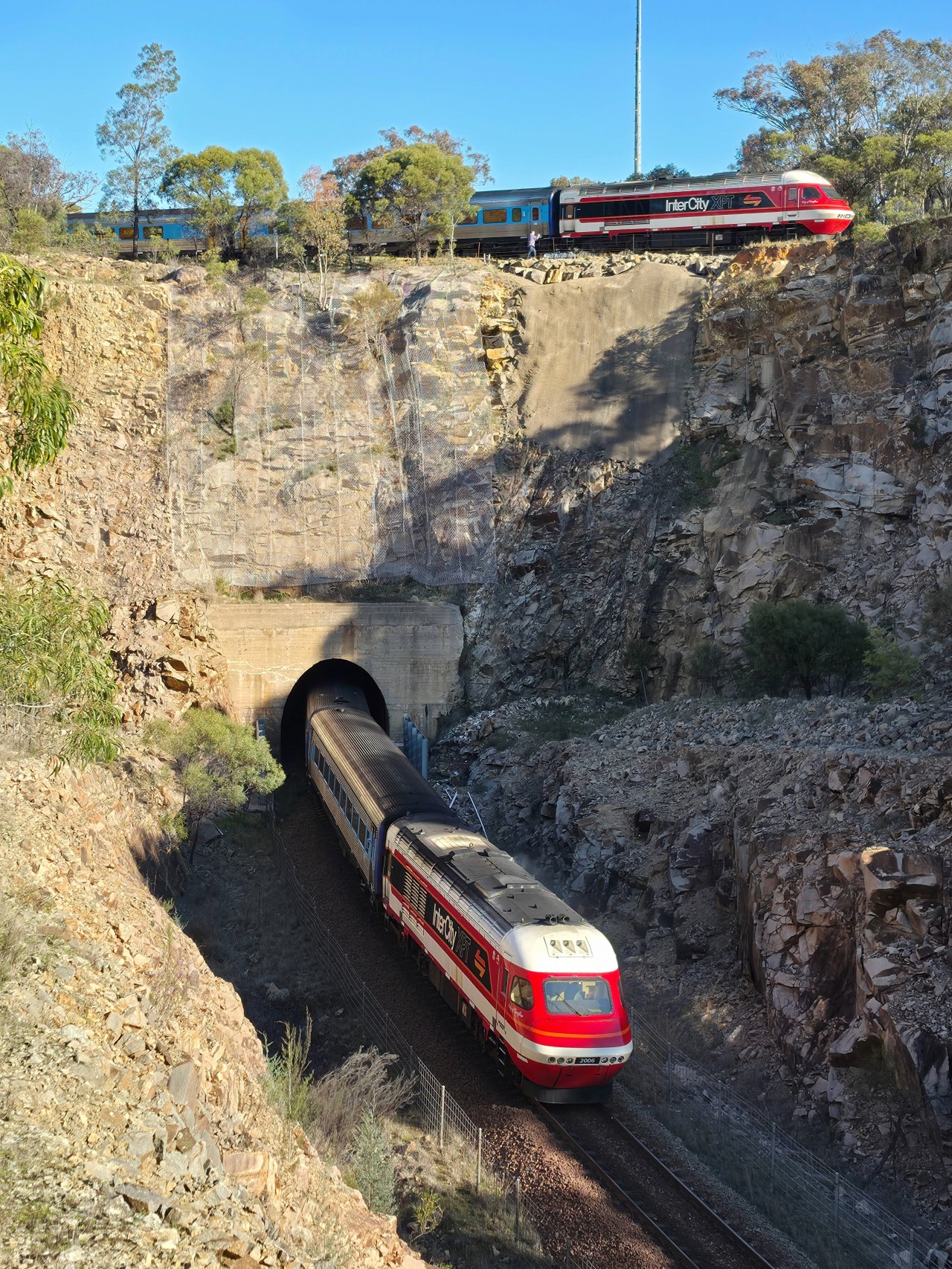
上り線を走るXPTがトンネルへ入り、先ほど走行したトンネルの上を通過する様子を分かりやすくするため、2枚の写真を合成しました。
上下に重なる線路を同じ写真に収めると、まるで鉄道模型のレイアウトを見ているような光景になります。
編成の長い貨物列車であれば、このような合成をしなくても、先頭と最後尾を一枚の写真に収めることができるかもしれません。
Two photographs have been composited to clearly show the XPT entering the tunnel on the Up line and then travelling above the tunnel it passed through earlier.
With the two sections of track overlapping vertically in the same image, the scene looks almost like a railway model layout.
A long freight train might make it possible to capture both the front and rear of the train in a single photograph without the need for compositing.
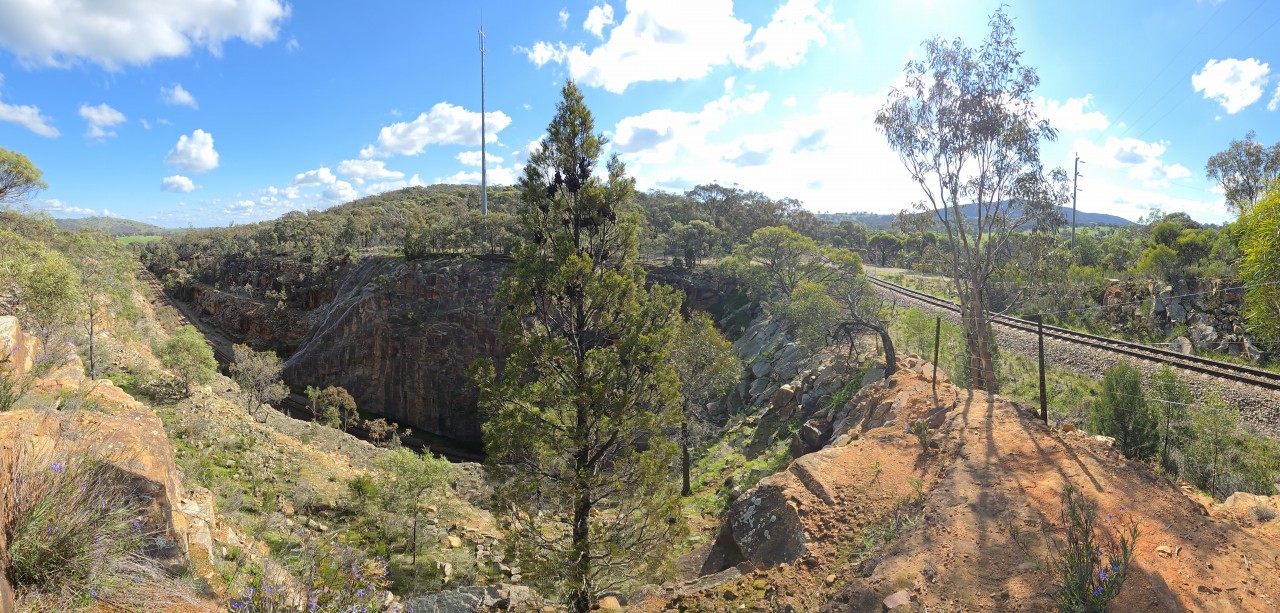
上り線をくぐるトンネルを抜けると、勾配を緩和して高度を稼ぐため、線路は山を大きく回り込むように約1周します。
そして、先ほど潜ったトンネルの上を通り、さらに高い位置へと進んでいきます。
After passing through the tunnel beneath the Up line, the railway makes a wide loop around the hillside to gain elevation while maintaining a manageable gradient.
The line then runs above the tunnel it passed through earlier, continuing at a higher elevation.
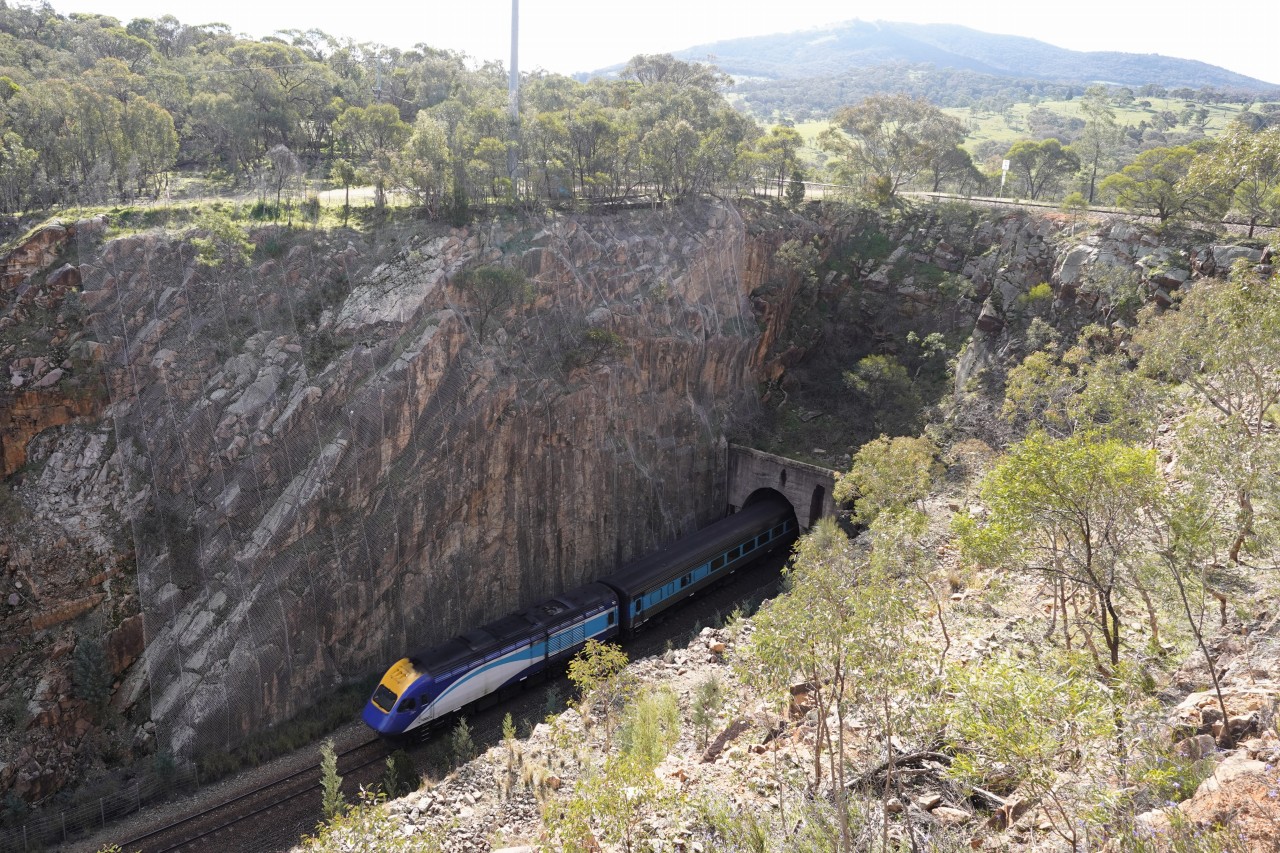
上り線をくぐるトンネルを抜けた、シドニー行きXPT。
観光用に整備された展望台から、山を大きく回り込んで進むXPTを見渡すことができます。
A Sydney-bound XPT emerges from the tunnel beneath the Up line.
From the lookout specially developed for visitors, the XPT can be seen as it continues around the hillside.
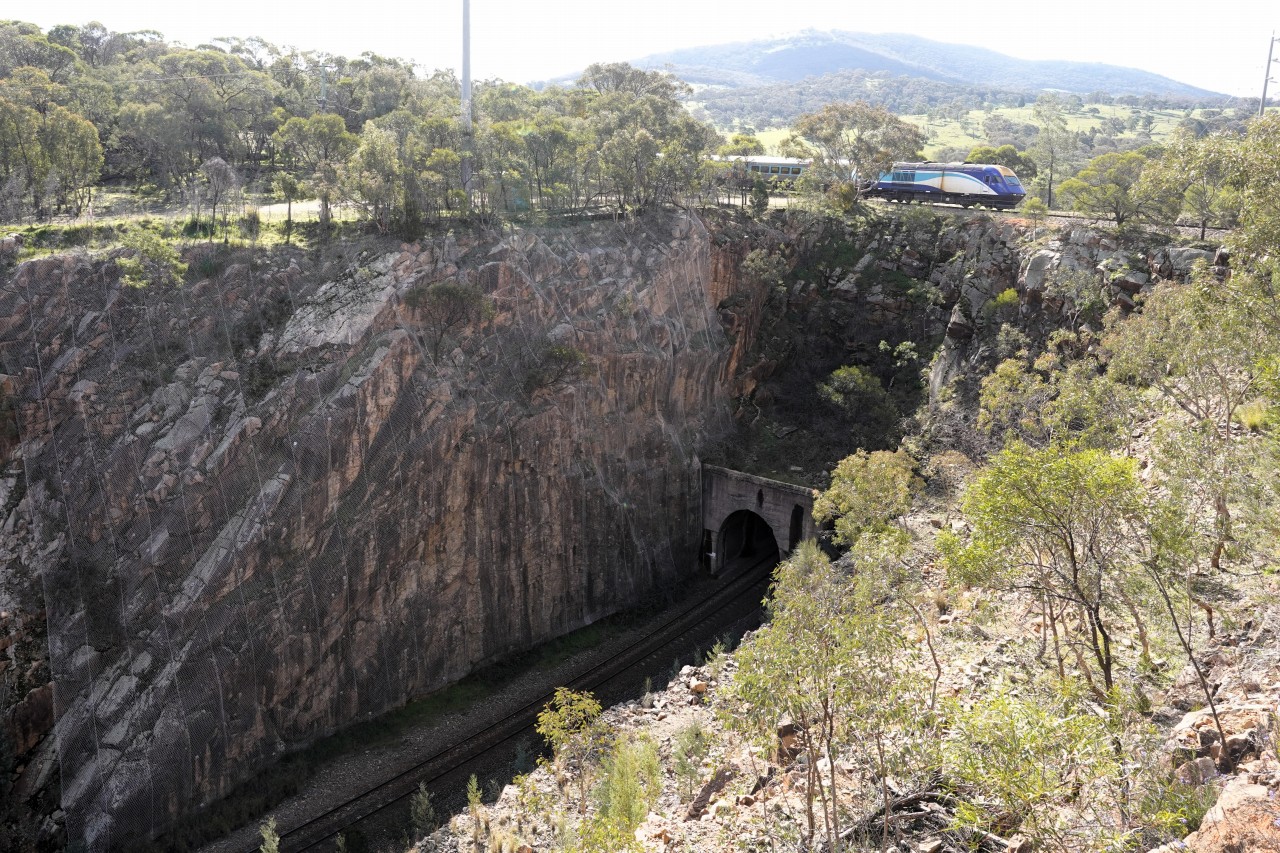
トンネルを抜けて数分後、XPTは先ほど走行した上り線のトンネル上にある稜線を通過しました。
A few minutes after emerging from the tunnel, the XPT passed along the ridge above the Up line tunnel it had travelled through earlier.
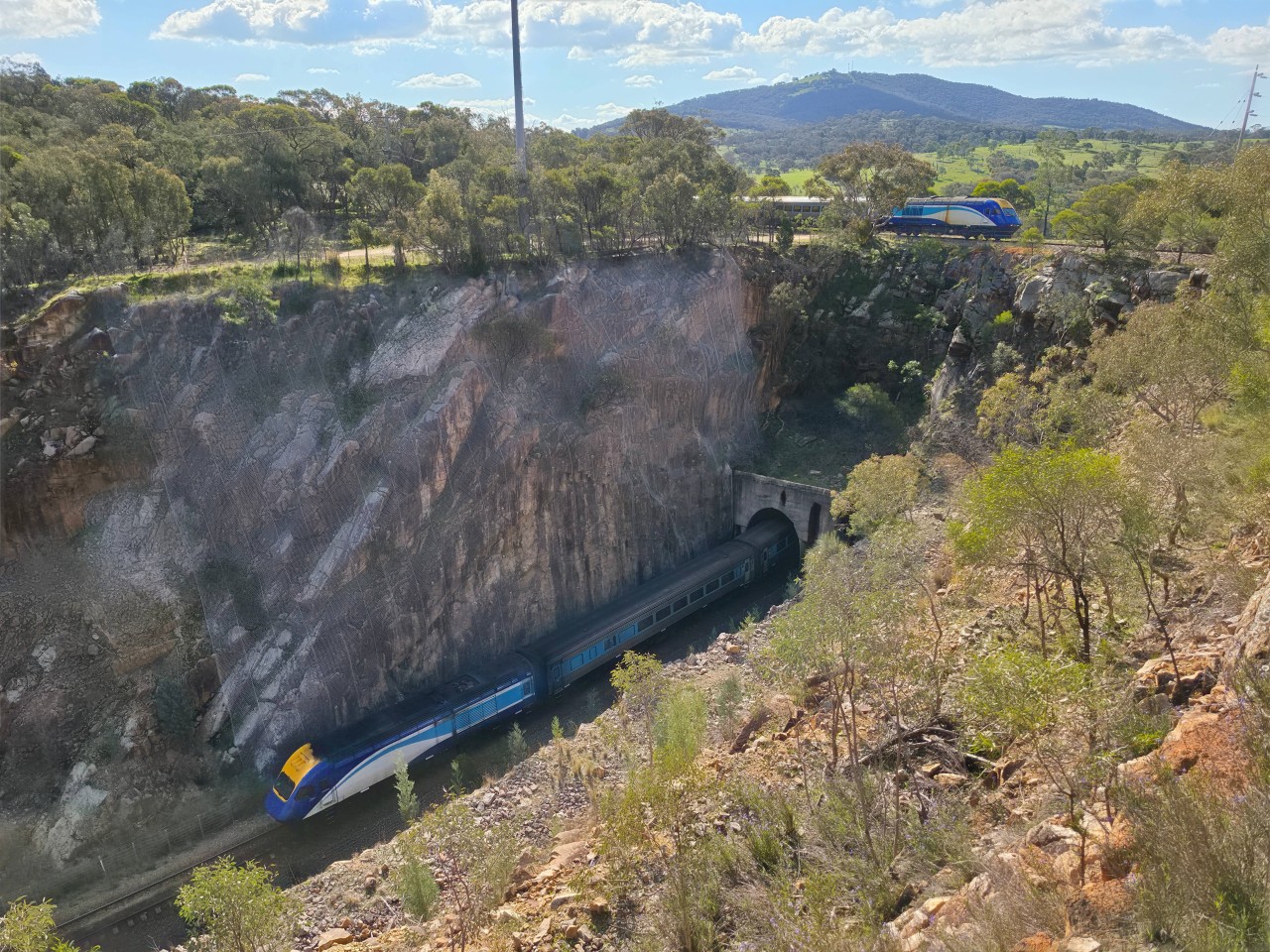
上り線のトンネルを出たXPTが、スパイラルを大きく1周して高度を稼ぎ、先ほど通過したトンネルの上を走行する様子が分かるよう、複数の写真を合成しました。
By compositing multiple photographs, this image shows how the XPT emerges from the Up line tunnel, makes a wide loop around the hillside to gain elevation, and then travels above the tunnel it passed through earlier.
ベサングラスパイラルを走行す、シドニー行きXPTを4K映像で撮影しました。
急勾配を克服するため、シドニー方面の上り線は山を大きく1周する約8.9kmのルートを走り、距離を稼ぎながら高度を上げていきます。
トンネルを抜け、山を大きく回り込み、先ほど通過した場所よりも高い稜線上を走るXPTは、ベサングラスパイラルならではの光景です。
4Kの高精細映像で、トンネルへの進入からスパイラルを大きく回り、稜線を走行するまでの様子をお楽しみください。
An XPT bound for Sydney travelling through the spectacular Bethungra Spiral in New South Wales, Australia, captured in 4K.
To overcome the steep gradient, the Sydney-bound Up line takes an approximately 8.9-kilometre route around the hillside, gaining elevation by adding considerable distance to the journey.
After emerging from the tunnel, the XPT makes a wide loop around the mountain before travelling along the ridge at a much higher elevation, creating the unique scenery that makes the Bethungra Spiral so fascinating.
Filmed in high-resolution 4K, this video captures the XPT entering the tunnel, travelling around the spiral and eventually passing along the ridge.
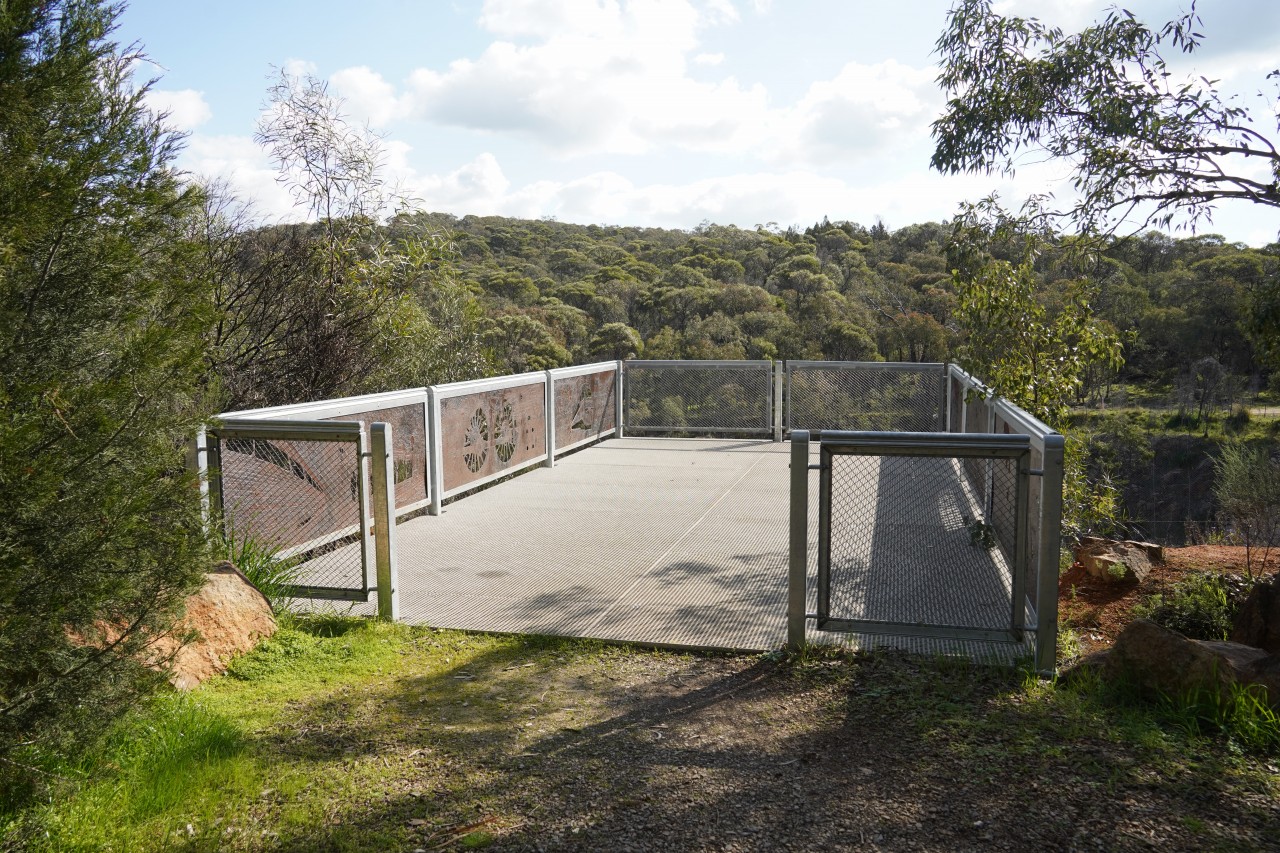
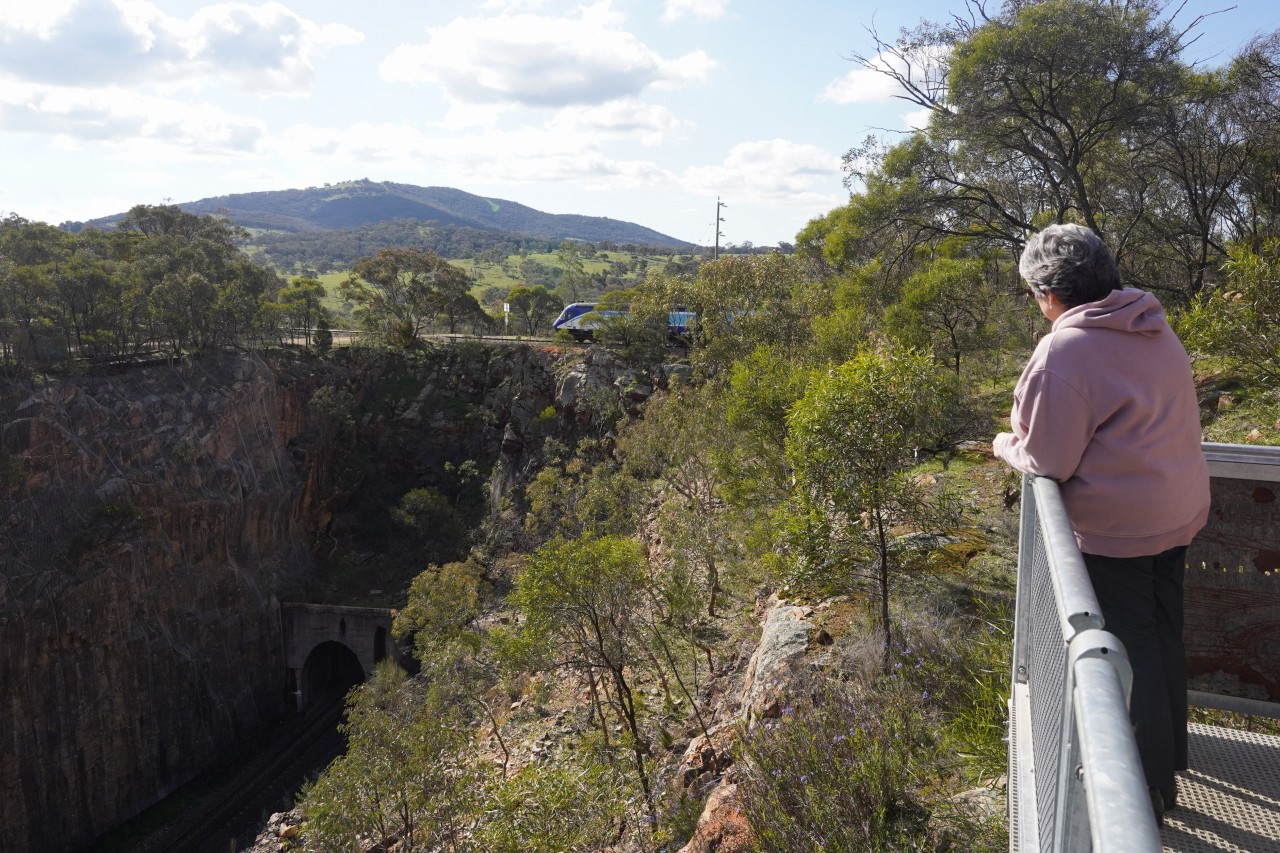
ベサングラスパイラル展望台の風景。
展望台が整備されており、誰でも簡単に上り線が立体的に交わる様子を眺めることができます。
The view from the Bethungra Spiral Lookout.
A dedicated lookout has been provided, allowing visitors to easily view the Up line crossing over itself at different levels.
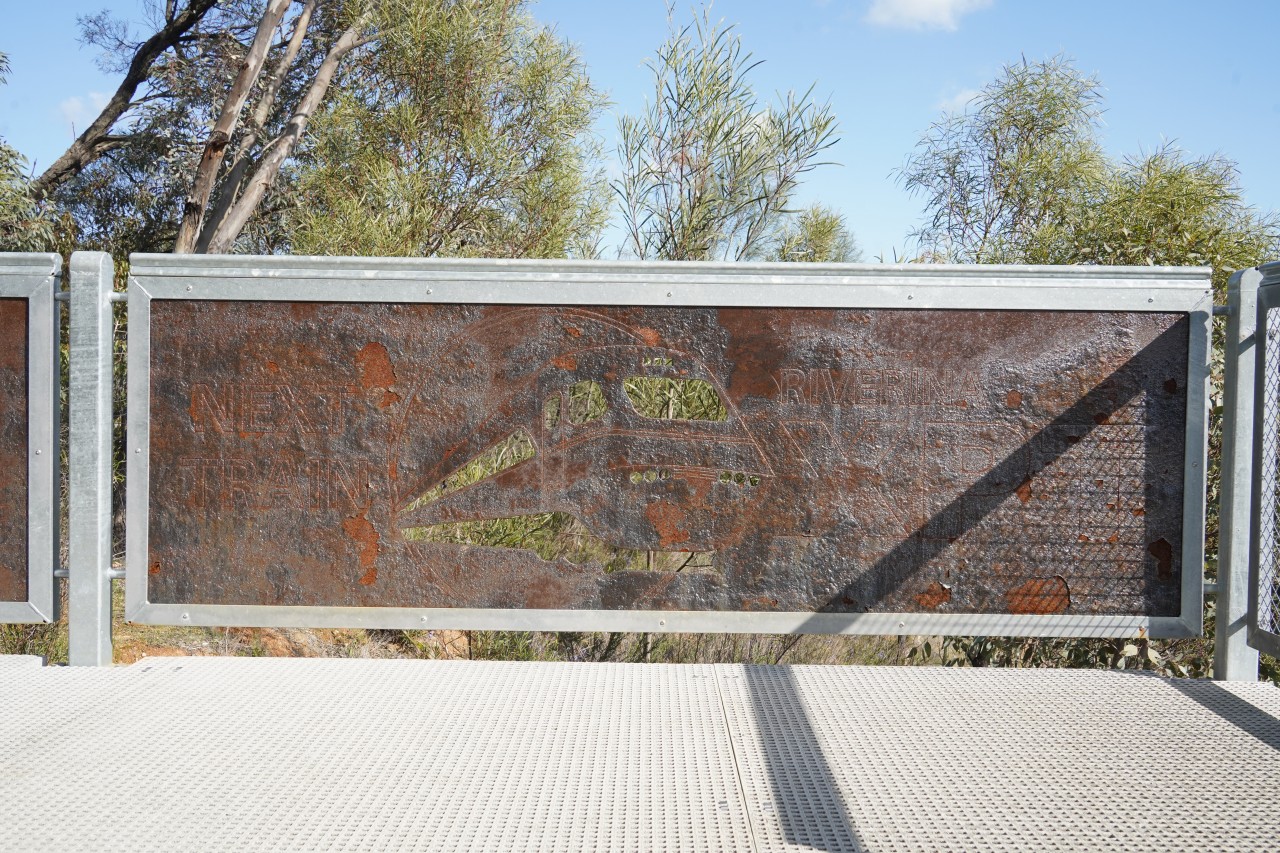
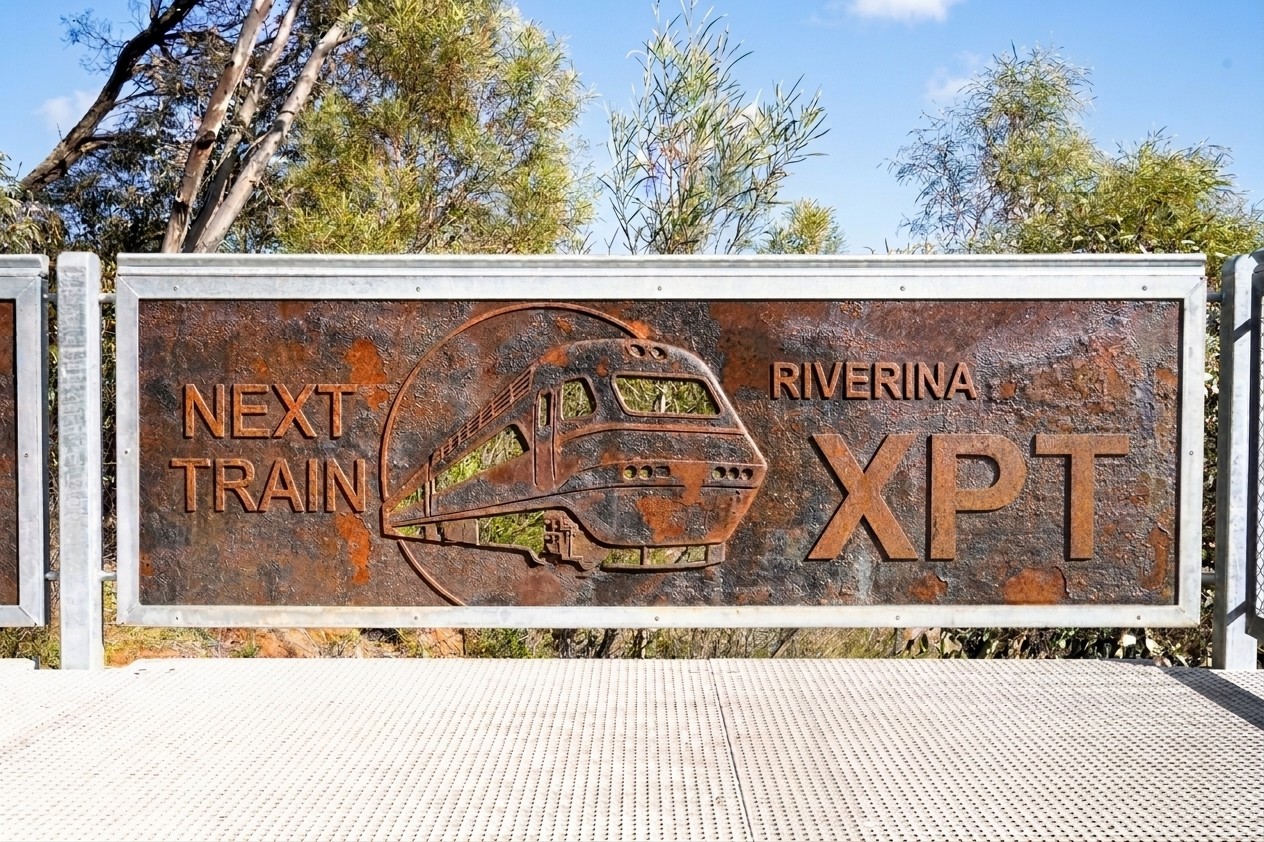
展望台の柵には、鉄道にちなんだレリーフがはめ込まれており、XPTを描いたものもあります。
長年の風雨によってかなり劣化していますが、AIで修復したイメージも参考として紹介します。
このレリーフに描かれているのは、かつてシドニーとリベリナ地方を結んでいたRiverina XPTです。
そのルーツとなったRiverina Expressは1949年9月に登場し、運行期間中は日中にメイン・サウス線を走り、グリフィスとアルバリーの両方面へ向かう列車として運行されていました。
1982年8月にXPTによる運行へ変更されると、Riverina XPTとなり、すべての列車がアルバリーまで運行するようになりました。
その後、1993年11月にはメルボルンまで運行区間が延長され、翌1994年には昼行のメルボルン方面XPTとして運行されるようになりました。
一方、グリフィス方面への旅客列車はその後再び設定され、現在はXPTではなくXplorerが使用されています。
このレリーフは、現在とは異なる時代にXPTがリベリナ地方を走り、シドニーとアルバリー、さらにメルボルンを結んでいた歴史を伝える貴重な鉄道遺産です。
The fences at the lookout feature railway-themed relief panels, including one depicting an XPT.
The relief has deteriorated considerably over the years, but an AI-restored image is also shown as a reference.
The train depicted in this relief represents the Riverina XPT, which once served the Riverina region.
Its predecessor, the Riverina Express, was introduced in September 1949 and operated during daylight hours along the Main South line, serving both Griffith and Albury at various stages during its history.
When the service was converted to XPT operation in August 1982, it became the Riverina XPT, with all services operating to Albury.
In November 1993, the service was extended to Melbourne, and the daylight Melbourne service subsequently operated as the Melbourne Daylight XPT.
Passenger services to Griffith were later reintroduced, and today the Griffith service is operated by Xplorer trains rather than XPTs.
The relief therefore preserves a fascinating part of railway history, recalling the era when XPTs served the Riverina region and operated between Sydney, Albury and eventually Melbourne.
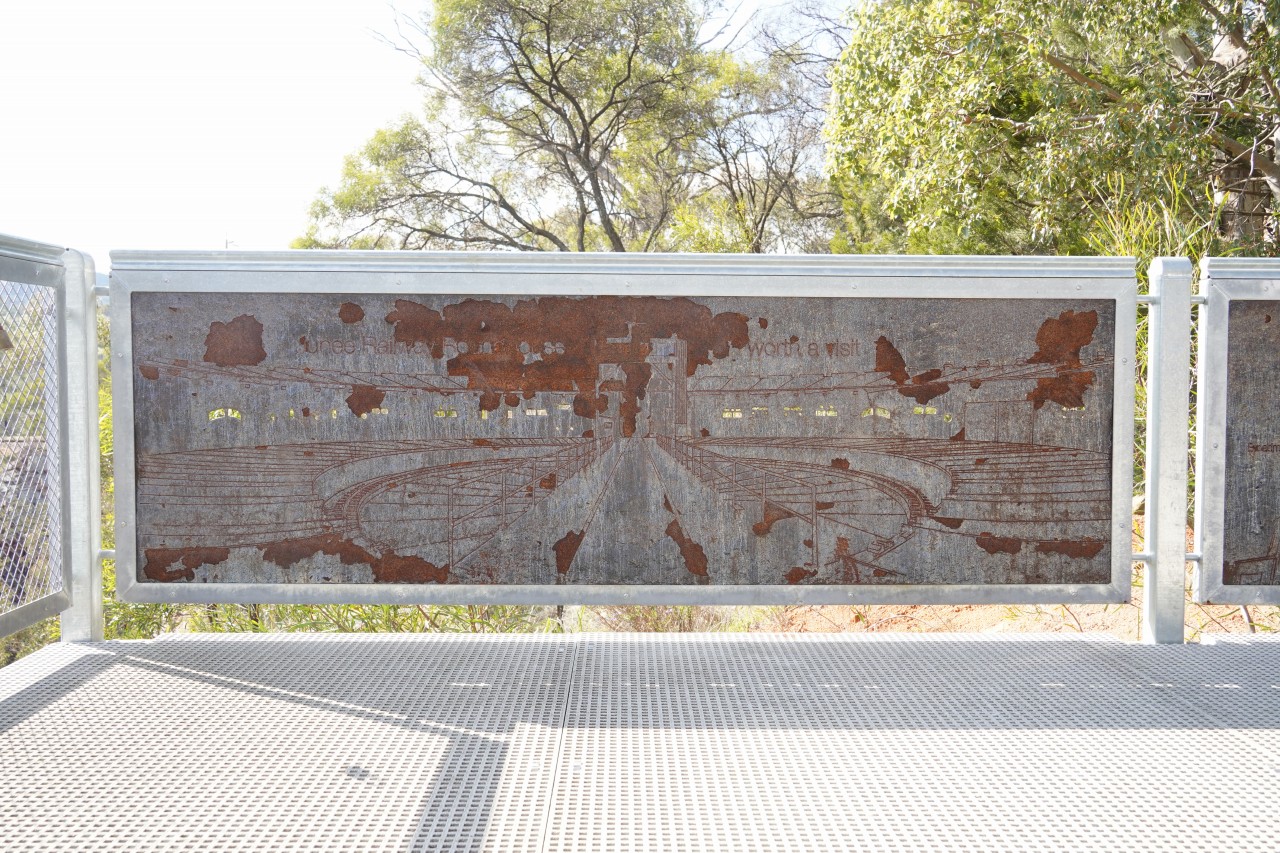
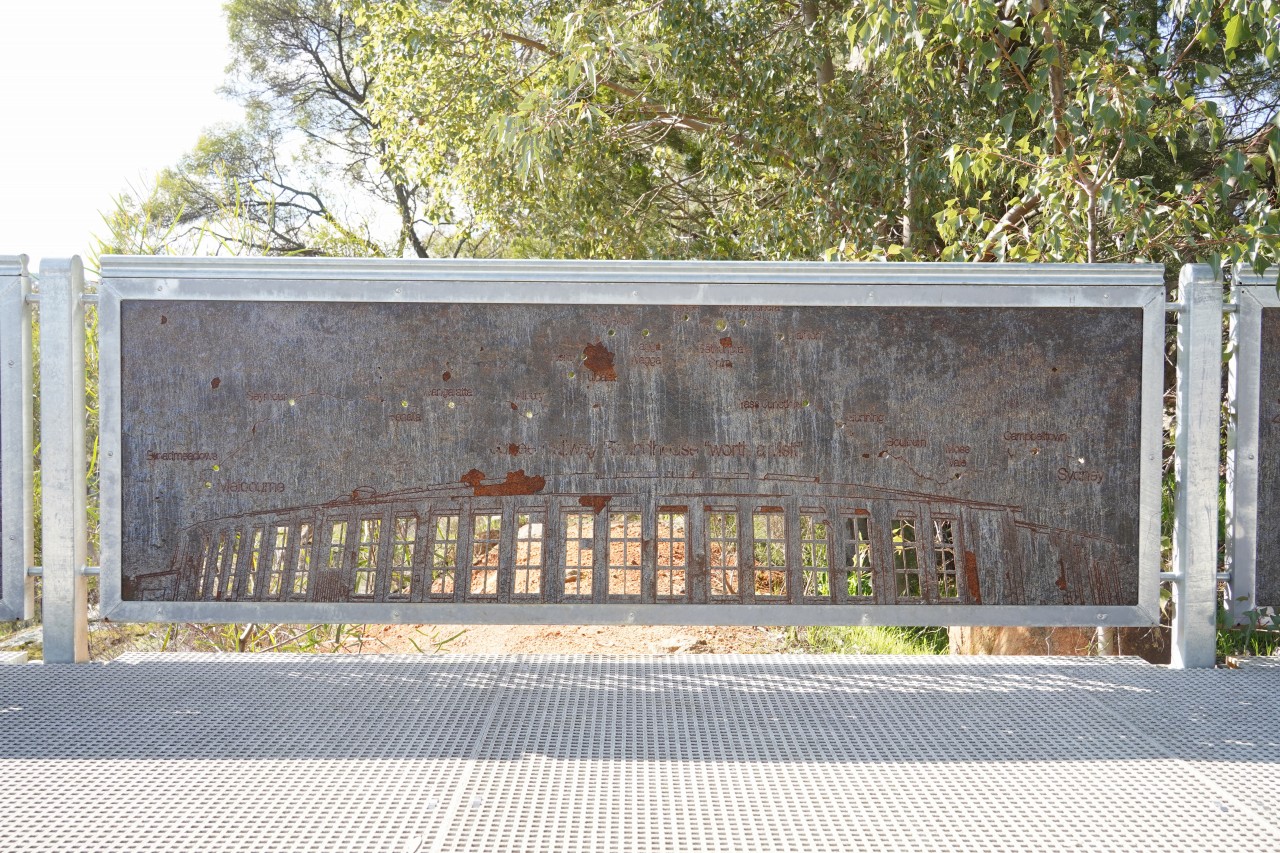
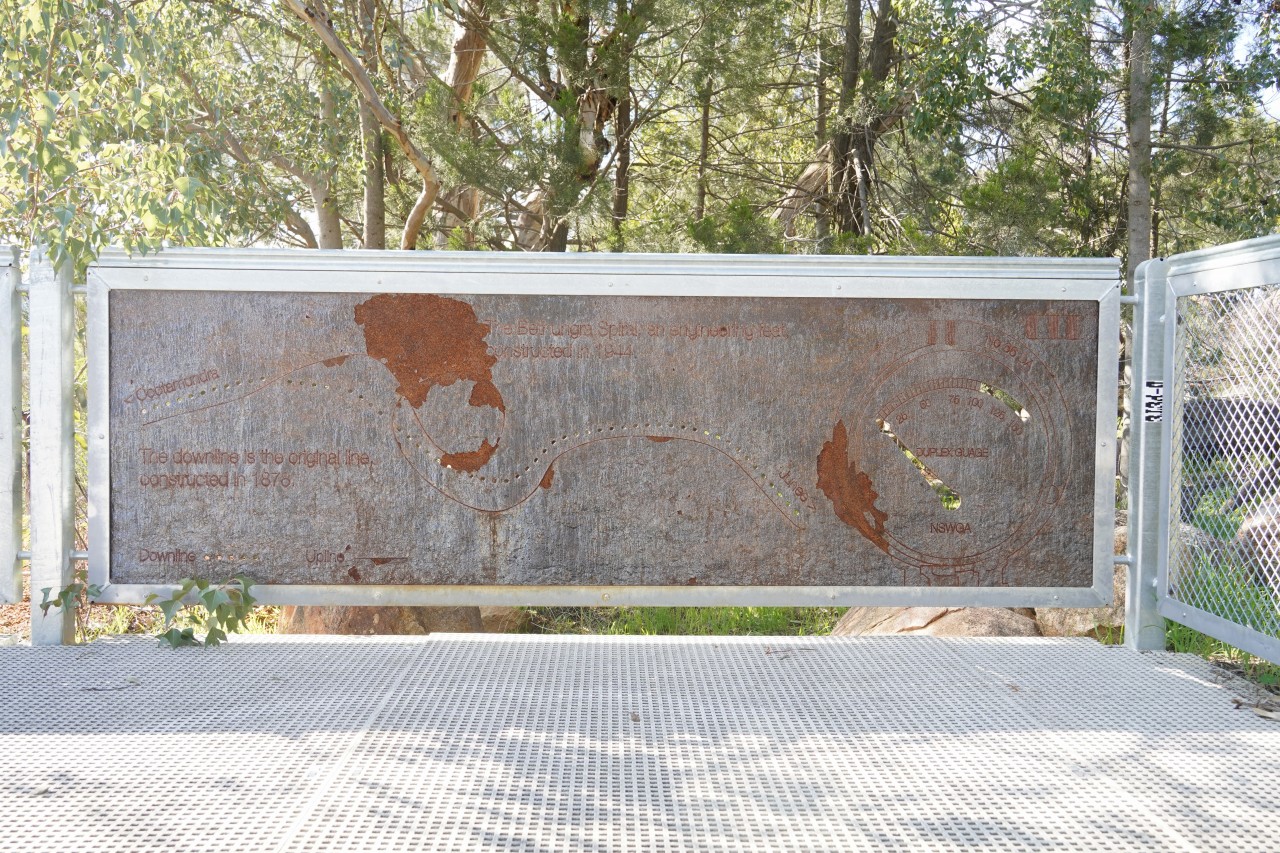
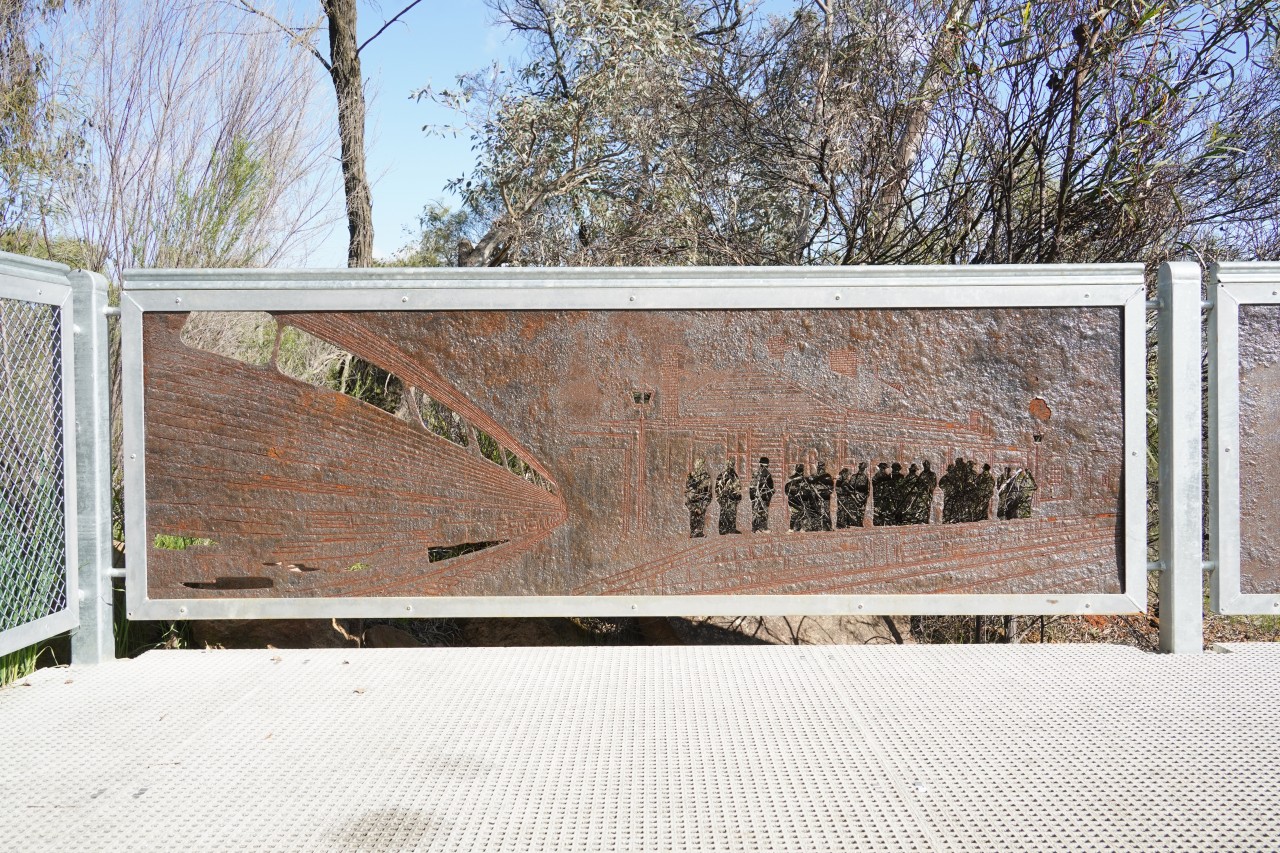
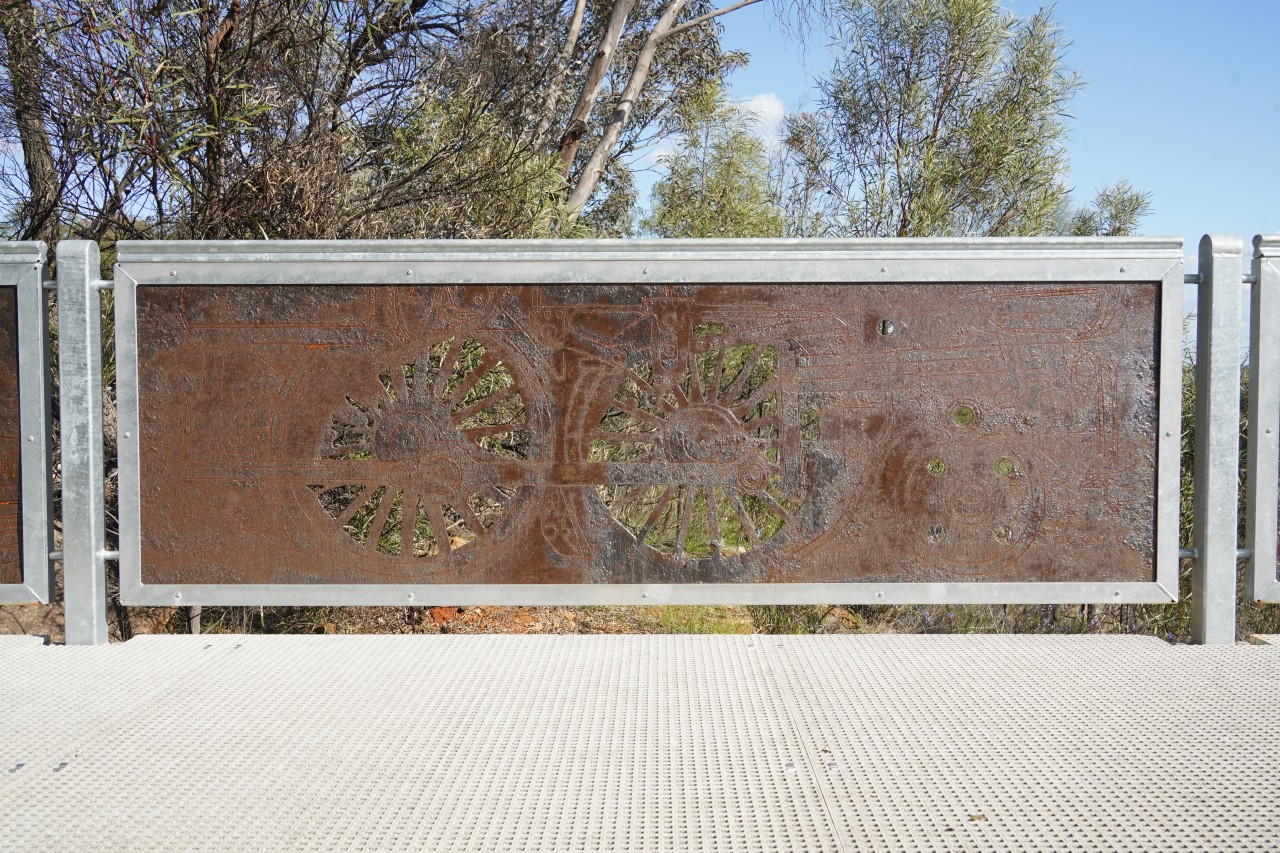
展望台の柵には、鉄道にちなんだ6種類のレリーフがはめ込まれています。
その中には、機関車を象徴する動輪やベサングラスパイラルの線路を描いたものなどがあります。
麓の街ジュニーは、シドニーとメルボルンを結ぶ鉄道の要衝として発展し、かつては大規模な鉄道施設が置かれていました。
現在も残るジュニー・ラウンドハウスは、1947年に開業した巨大な扇形車庫で、100フィート(約30.5m)のターンテーブルを中心に42本の線路を備えていました。
現在は一部が鉄道博物館として公開されている一方、残りの部分では機関車や鉄道車両の整備・修理が行われており、今も現役の鉄道施設として使用されています。
ベサングラスパイラルを描いたレリーフは劣化が進んでおり、一部は文字や図柄を読み取ることが難しくなっています。
The fences at the lookout feature six different railway-themed relief panels.
Among them are designs featuring a locomotive driving wheel and an illustration of the Bethungra Spiral.
The nearby town of Junee developed as an important railway centre on the Sydney?Melbourne railway, with extensive railway facilities once located here.
The surviving Junee Roundhouse was opened in 1947 as a large locomotive depot, featuring a 100-foot (approximately 30.5-metre) turntable and 42 tracks.
Today, part of the roundhouse is open as a railway museum, while the remaining section is still used for the servicing and repair of locomotives and rolling stock, allowing the historic facility to continue its original railway role.
The relief depicting the Bethungra Spiral has deteriorated considerably, and some of its lettering and details are now difficult to make out.
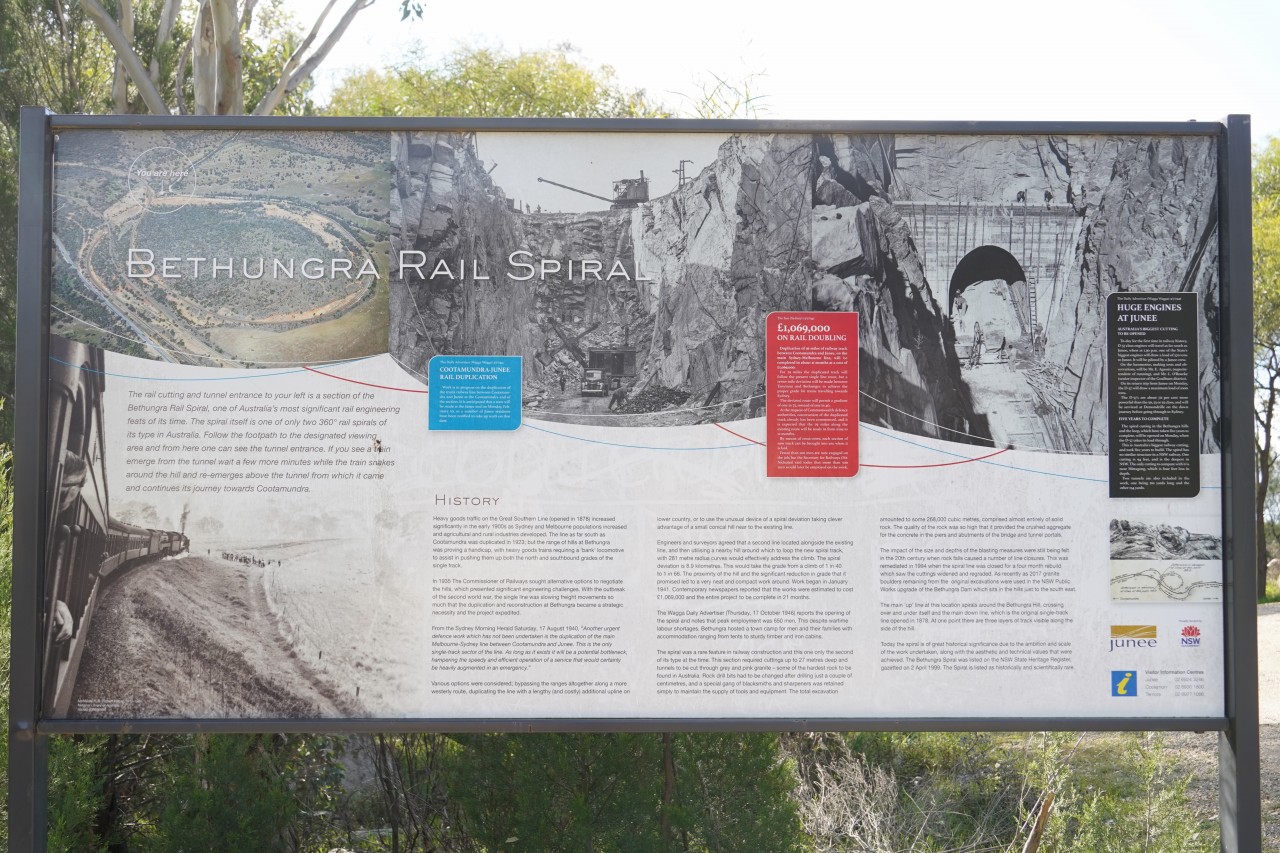
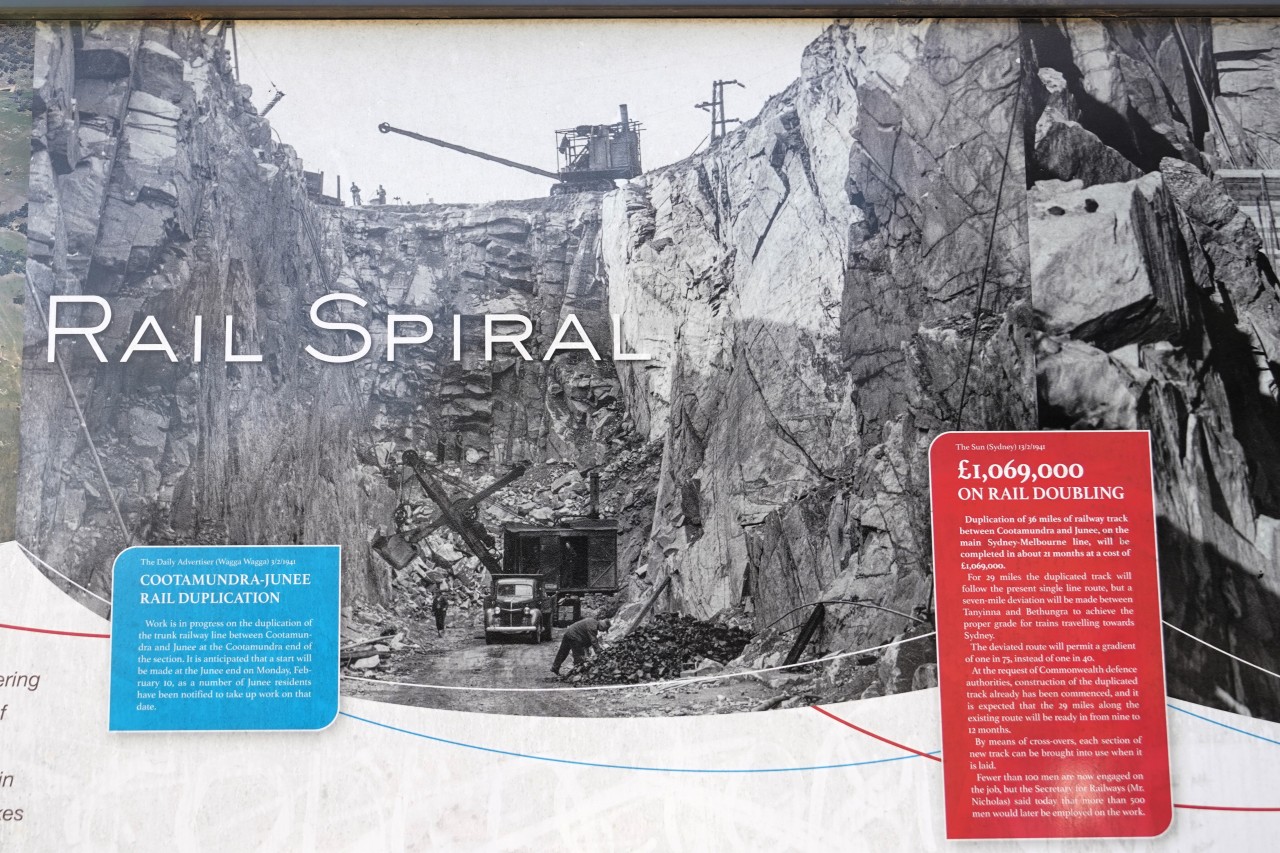
展望台には、ベサングラスパイラルの構造や歴史を詳しく紹介する案内看板も設置されています。
ベサングラスパイラルの歴史は、1878年に開通した旧線にまでさかのぼります。当時のシドニー方面への上り線は最大勾配1/40という急勾配で、特に重量貨物列車の運転には大きな制約があり、補助機関車による後押しも必要でした。
1940年代にシドニー~メルボルン間の鉄道を複線化する際、この急勾配を緩和するために建設されたのがベサングラスパイラルです。新設された上り線は山を大きく1周する8.9kmの迂回ルートとなり、距離を延ばすことで勾配を1/66まで緩和しました。
建設は第二次世界大戦中に進められ、硬い花崗岩を掘削するため大規模な切通しや2本のトンネルが造られました。完成したスパイラルは1946年7月15日にシドニー方面への上り線として開通しました。
その後も落石などの問題があり、1994年には「One Nation」プロジェクトの一環として約4か月間にわたる改修工事が行われ、切通しの拡幅や法面の再整備が実施されました。1999年にはニューサウスウェールズ州の州遺産登録簿に登録されています。
また、ニューサウスウェールズ州にはもう一つ、クイーンズランド州との州境近くにクーガル・スパイラル(Cougal Spiral)があります。1930年に開通したこのスパイラルは、険しいボーダー・レンジズを越えるために造られたもので、こちらもXPTが走行する鉄道スパイラルです。
An information board at the lookout provides detailed information about the structure and history of the Bethungra Spiral.
The history of the Bethungra Spiral dates back to the original railway line opened in 1878. The original Sydney-bound track had a ruling gradient as steep as 1 in 40, which placed severe limitations on train loads and often required assisting locomotives to push heavy trains uphill.
When the Sydney?Melbourne railway was duplicated in the 1940s, the Bethungra Spiral was constructed to ease this steep gradient. The new Up line follows an 8.9-kilometre deviation, making a large loop around the hillside and reducing the ruling gradient to 1 in 66 by adding distance to the climb.
Construction took place during the Second World War and involved extensive excavation through extremely hard granite, including deep cuttings and two tunnels. The completed Spiral opened to Sydney-bound traffic on 15 July 1946.
The Spiral has also required major maintenance over the years due to problems such as rockfalls. In 1994, the line was closed for approximately four months for reconstruction as part of the One Nation project, including widening and regrading the cuttings. It was added to the New South Wales State Heritage Register in 1999.
There is also another railway spiral in New South Wales, the Cougal Spiral, located near the Queensland border. Opened in 1930, it was constructed to overcome the steep terrain of the Border Ranges and is another railway spiral used by XPT services.
